Nederlands
Soft robot powered by compressed air reaches 4.72 metres per second without electronics
Researchers at the University of California San Diego have made a six-legged soft robot that runs on compressed air, without electronics. It is printed in one piece and can also swim and walk underwater. The next step is a version without a hose.
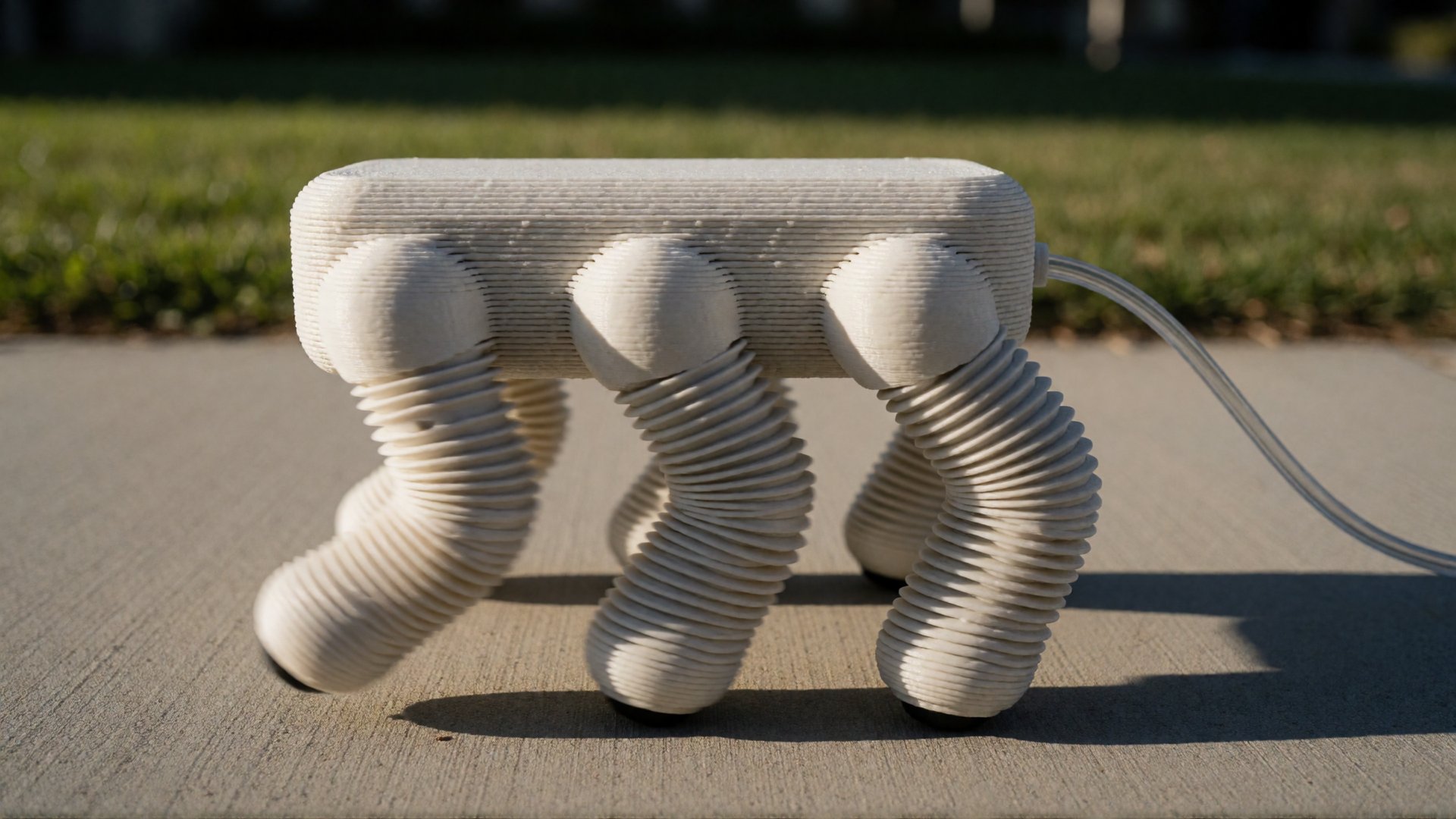
The robot from the University of California San Diego (UC San Diego) reaches a top speed of 4.72 metres per second, about 17 kilometres per hour. According to the researchers, that makes it the fastest robot made entirely of soft materials: it is built from flexible material, without hard parts such as motors or metal joints. It needs no electronics to move or to control its movements.
The team tested the robot on concrete, gravel, grass, wood chips and sand. It could walk down stairs, swim and keep working underwater.
Playing loads YouTube, which may set cookies. More information
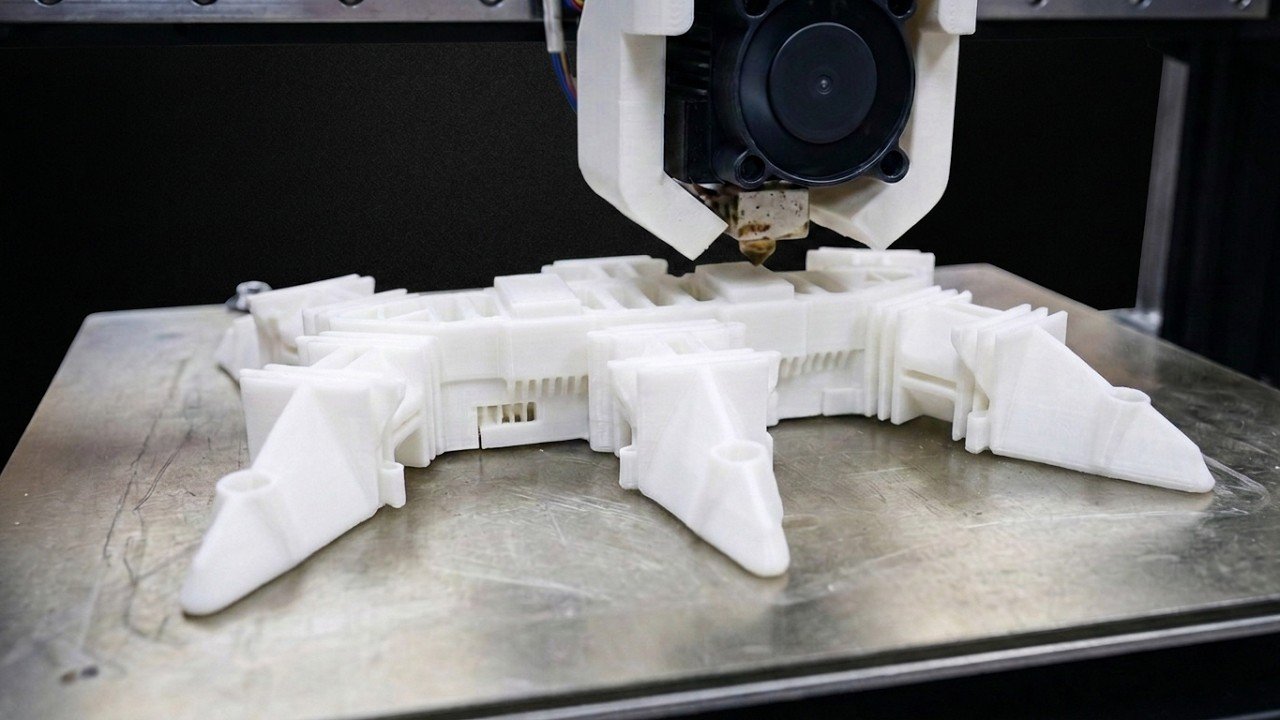
The robot is made in a single print run from a single material. Inside are chambers, valves and tubes that make the legs move when air under pressure flows through them. The shape of those channels does the work of a computer chip: it decides when each leg moves.
An idea from the steam engine
An earlier soft robot by the same team, developed in 2022, reached four centimetres per second. The air pressure and the amount of air that design could handle held it back.
For the new version, the researchers made the robot and the structures inside it bigger and stronger. This lets it handle higher pressure and a faster flow of air. To use the compressed air more efficiently, they took inspiration from the compound steam engine, an old type of steam engine in which the steam passes through several chambers one after another and so does more work.
In the robot, the air first enters smaller high-pressure chambers, which drive the valves. The same air then flows through larger low-pressure chambers, which move the legs. This way the air is used twice. The new robot is more than a hundred times faster than the first version.
For now, the robot is connected by a hose to a source of compressed air, such as a compressor. The next step is a design that uses less air and can work with a portable air cartridge. The researchers are also thinking about versions that can steer and pick up objects.
The research was led by Yichen Zhai and Professor Michael T. Tolley of the Bioinspired Robotics and Design Laboratory at UC San Diego. It was published in the journal Science Robotics. The researchers see uses in places where electronics struggle, such as areas with high radiation or strong magnetic fields, and in disaster response and space exploration.
What does this mean for the road to the singularity?
Robots that walk, run and climb stairs already exist. Almost all of them depend on chips, sensors and batteries. This design shows a different route: the movement lies in the shape of the material and the air channels themselves. If that line of work continues, a robot could go to places where chips break down, such as a nuclear power plant after an accident or a scanner with a strong magnetic field, and still do its job there.
Because the robot comes out of the printer in one go from one material, a new design is also quick to make and test. An obvious next step is for software to calculate thousands of variants of such air channels and have the best one printed, with its own shape for each task. Robots would then become not only smarter, but also cheaper and faster to build, precisely for the places where people would rather not go themselves.
What is the technological singularity? Read the explanation →