Nederlands
Surgeon operates remotely between two US hospitals for the first time
A surgeon in Florida used a robot to remove the prostate of a patient who was lying in another hospital more than 55 kilometres away. It is the first operation of this kind between two US hospitals. A clinical study will show whether it can be used more widely.
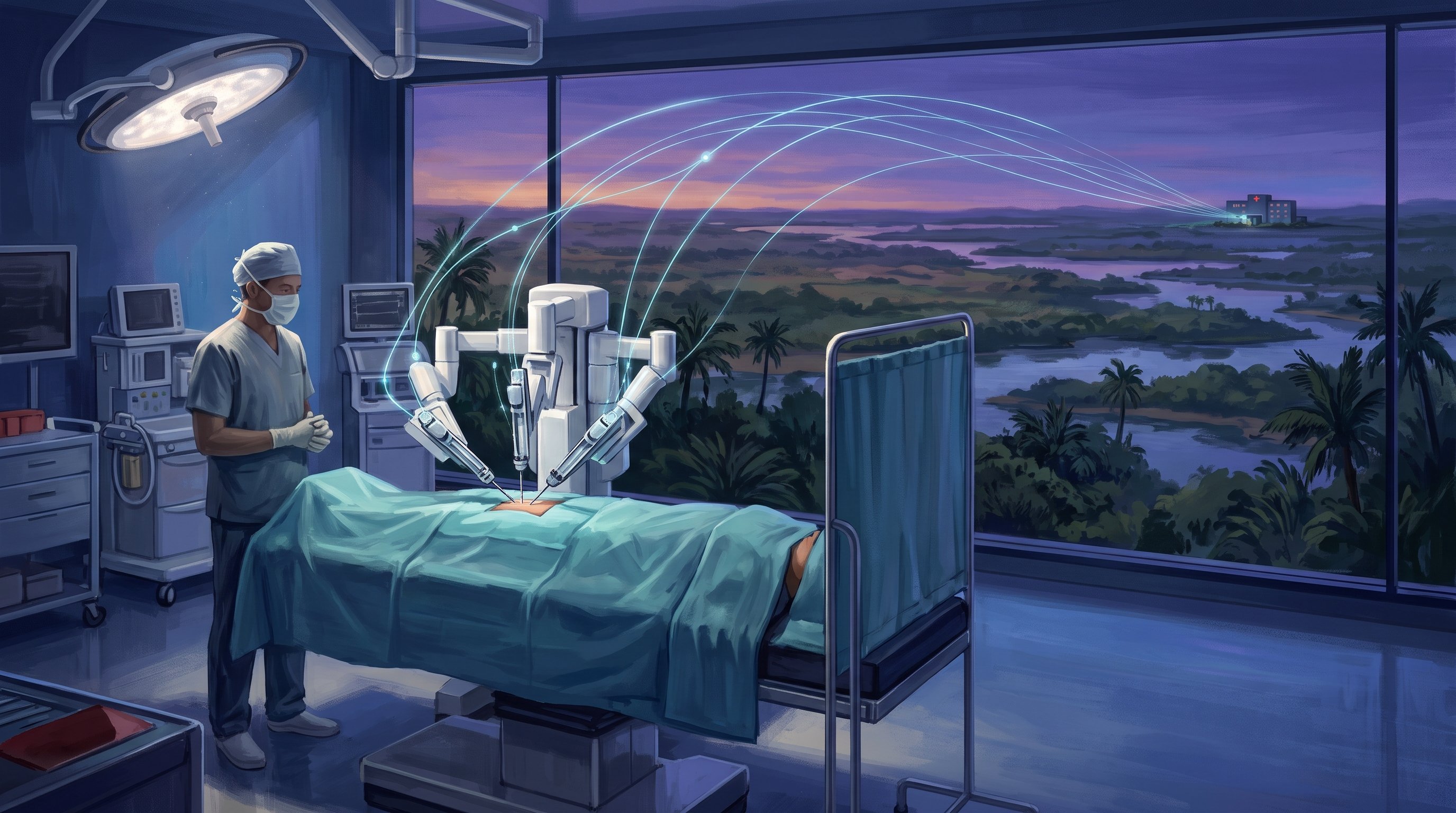
In the US state of Florida, a surgeon has operated on a patient who was lying in a different hospital. The doctor sat at the control console of a surgical robot in one hospital, while the robot arms did the work in the other. According to the hospital group involved and ABC News, this is the first remote operation between two hospitals in the United States.
The operation took place on Sunday 25 October 2026. The patient, a 66-year-old man with prostate cancer, was in AdventHealth Minneola. Surgeon Vipul Patel controlled the robot from AdventHealth Celebration, about 55 kilometres away. He removed the man's prostate, and according to the hospital the patient is doing well. In the operating theatre, a second surgeon stood next to the patient, ready to take over if needed.
Why operate from a distance?
Surgical robots are already common in hospitals. The surgeon normally sits at a console a few metres from the patient and controls the thin instruments with hand grips and a camera view. In this operation there was not a few metres between them, but dozens of kilometres. The camera view and the surgeon's movements travelled back and forth over a network connection.
The idea behind it: an experienced specialist no longer has to be in the same place as the patient. According to the hospital, Patel has already performed more than 21,000 robotic prostate operations. With this technology, such experience could also reach patients who live far from a specialised hospital.
Part of a study
The operation is part of a clinical study that the US regulator FDA gave permission for. Such permission means that a device that is not yet approved may be tested on patients; the system is therefore not officially approved yet. In the study, the doctors look at patient outcomes, safety, how well the connection performs, protection against hackers and what happens if the connection drops.
Patel used the Toumai, a surgical robot from the Chinese company MicroPort MedBot. He had already used it for ten remote operations between Orlando and Luanda, the capital of Angola, more than 11,000 kilometres apart. Now the technology is being tested within regular US healthcare.
What still needs to happen
The hospital stresses that one successful operation does not mean the method is already safe enough for wide use. The patient faces the same risks as in an ordinary prostate operation. According to Patel, important questions about safety, effectiveness and the technology are now being answered in the study.
What does this mean for the road to the singularity?
Robots that do precise work in the real world are an important step towards machines that can help people everywhere. This operation shows that a robot can take over the hands-on work of a top surgeon across dozens of kilometres, as long as the connection is reliable. If that becomes safe enough, good care will depend less on where someone lives. The ongoing study has to show whether the connection and the security are strong enough to take that step.
What is the technological singularity? Read the explanation →