Nederlands
Stem cell
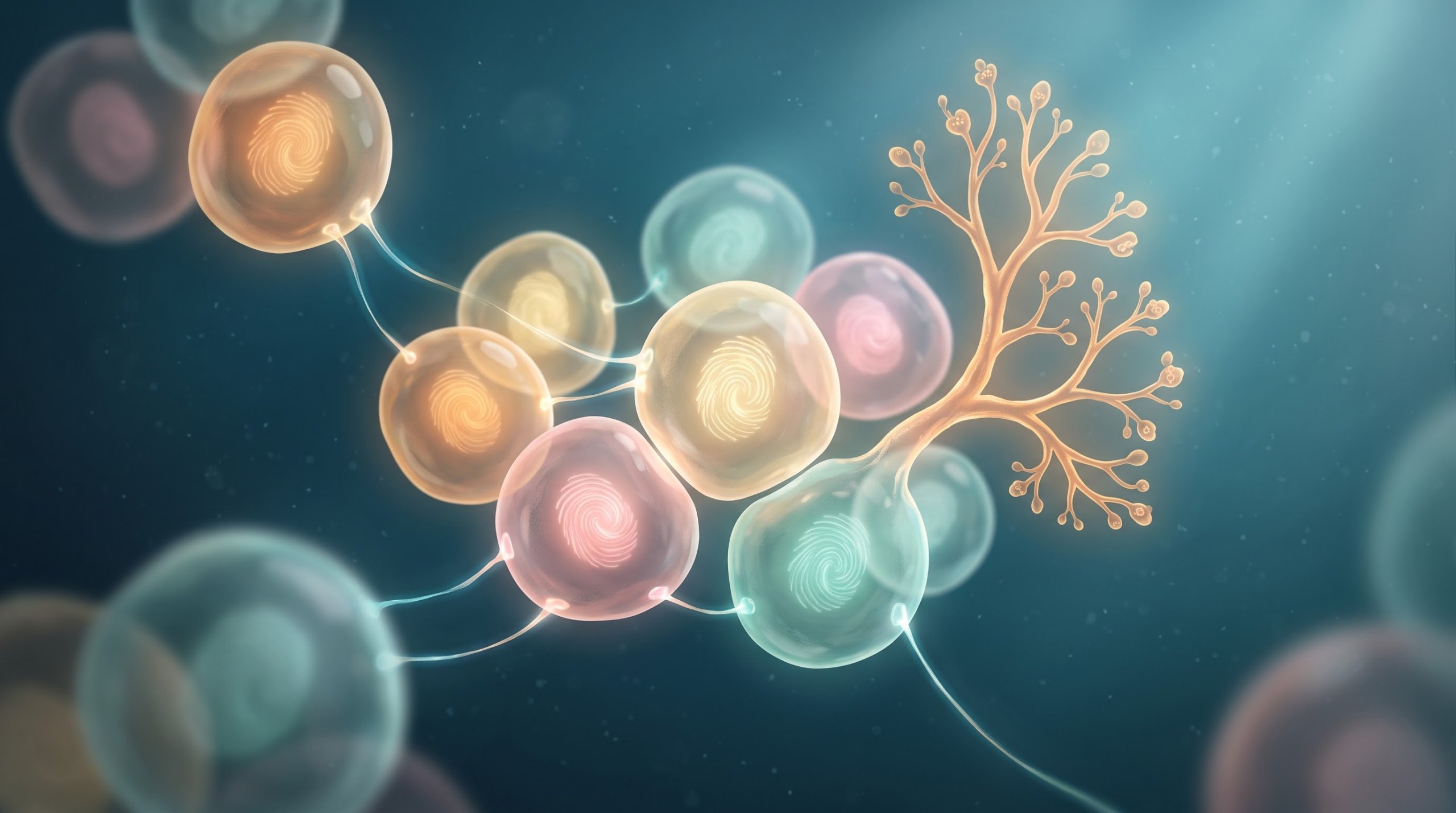
A stem cell is a cell that can keep dividing and can grow into other types of cells, such as skin, blood or nerve cells. That is why stem cells matter for research into tissue repair.
A stem cell is a kind of basic cell. It can divide and make new stem cells, and it can grow into a specialised cell, such as a muscle cell, a blood cell or a nerve cell. You can compare a stem cell to a lump of clay that can still change shape. A specialised cell is a lump that has already been given a fixed form.
How does it work?
There are roughly three kinds. Embryonic stem cells come from a very young embryo and can grow into almost any cell type. Adult stem cells are found in our body, for example in the bone marrow, and mainly make new cells of the tissue they sit in, such as blood cells. The third kind is made by researchers: induced pluripotent stem cells, iPS cells for short. They arise when an ordinary cell, for example from blood or skin, is sent back to a state in which it can become almost anything again.
Which cell a stem cell becomes depends on the signals it receives. The body uses those signals itself too, as an embryo grows. In the lab, researchers give the same kind of signals with nutrients and substances in a dish, so that they can grow the cells they want to study.
Why it matters
Stem cells are the raw material for much research into tissue repair and into diseases. That is also visible in WATTBA's news. In Bonn, researchers turned blood cells from an 80-year-old in the lab into neural stem cells with a molecular age of under 20 (link). In Parkinson's disease, researchers are testing an experimental cell therapy with brain cells made from stem cells. In twelve participants it gave signs of safety and better movement after four years (link). That is a small study without a comparison group. A large follow-up study has to show how well the treatment works.
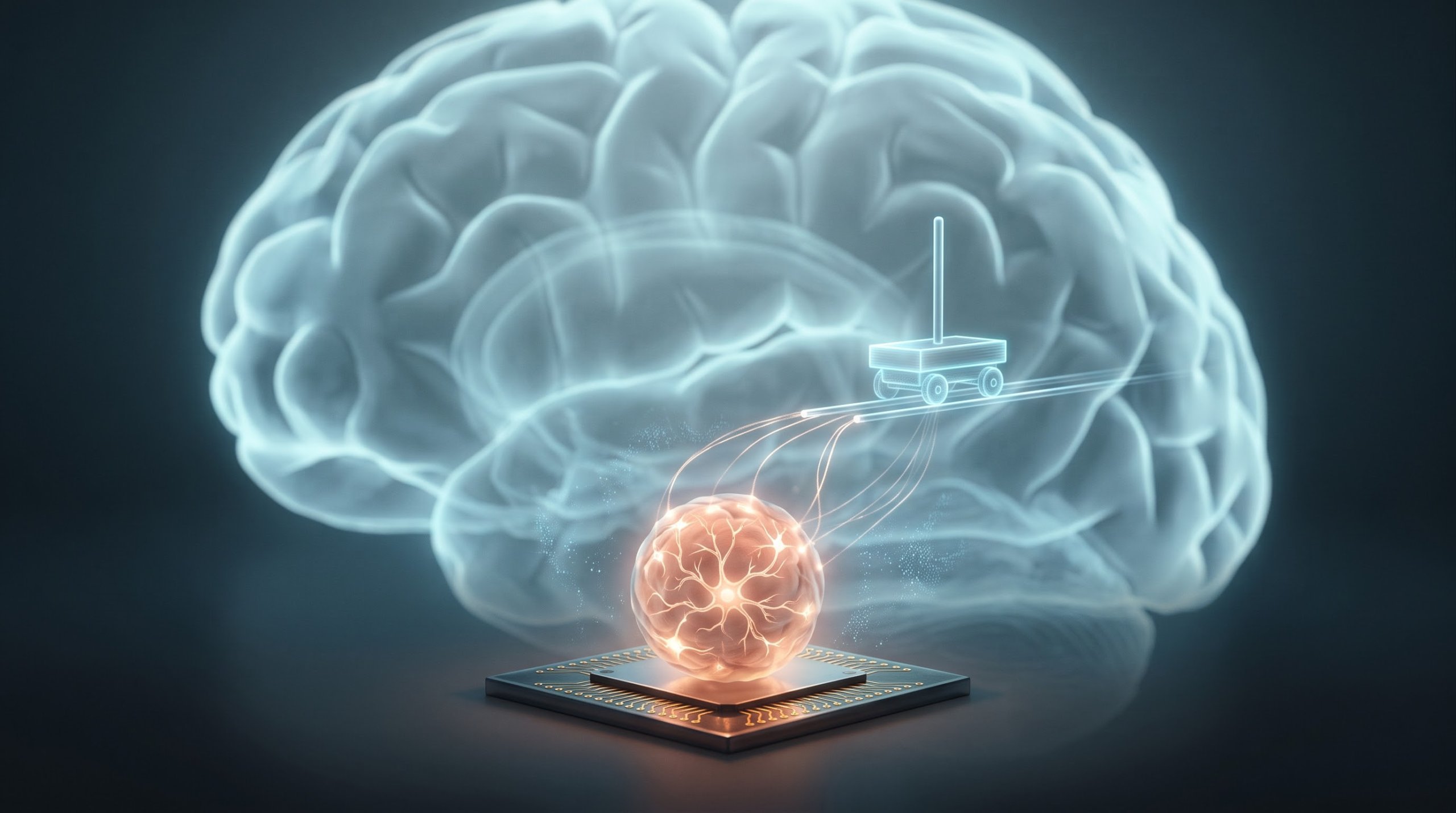
Stem cells are also the basis of organoids, small pieces of tissue from the lab. A team at UC Santa Cruz showed how cultured human brain tissue, with an AI algorithm as its coach, learns to keep a virtual pole upright on a cart (link).
Articles about Stem cell
-
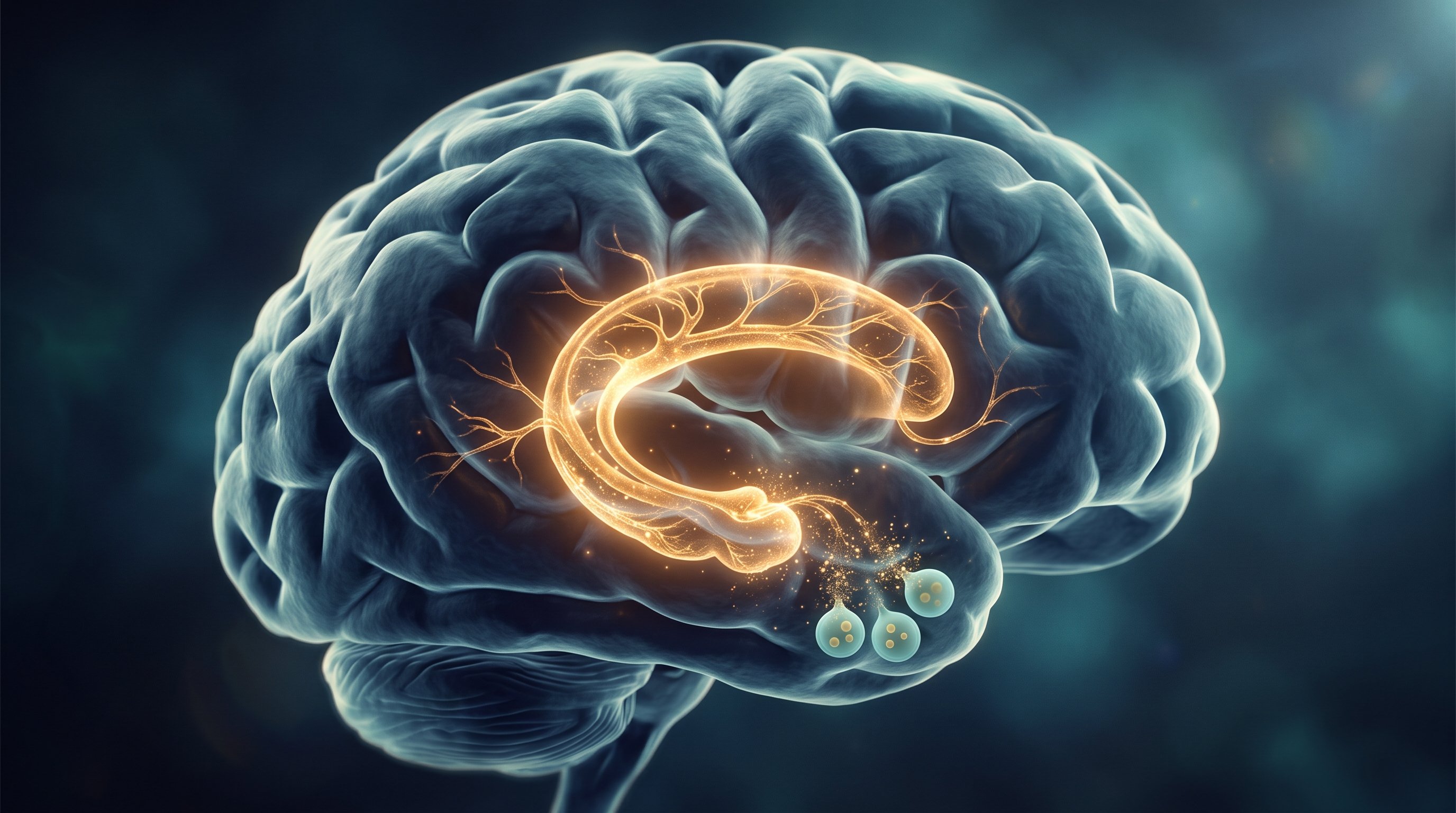
Cell therapy for Parkinson's shows signs of safety after four years
An experimental cell therapy for Parkinson's disease showed signs of safety and better movement after four years in twelve participants, especially at the highest dose. A large follow-up study should show how well the treatment works.
-
Cultured human nerve cells on a chip steer a robot dog to a target
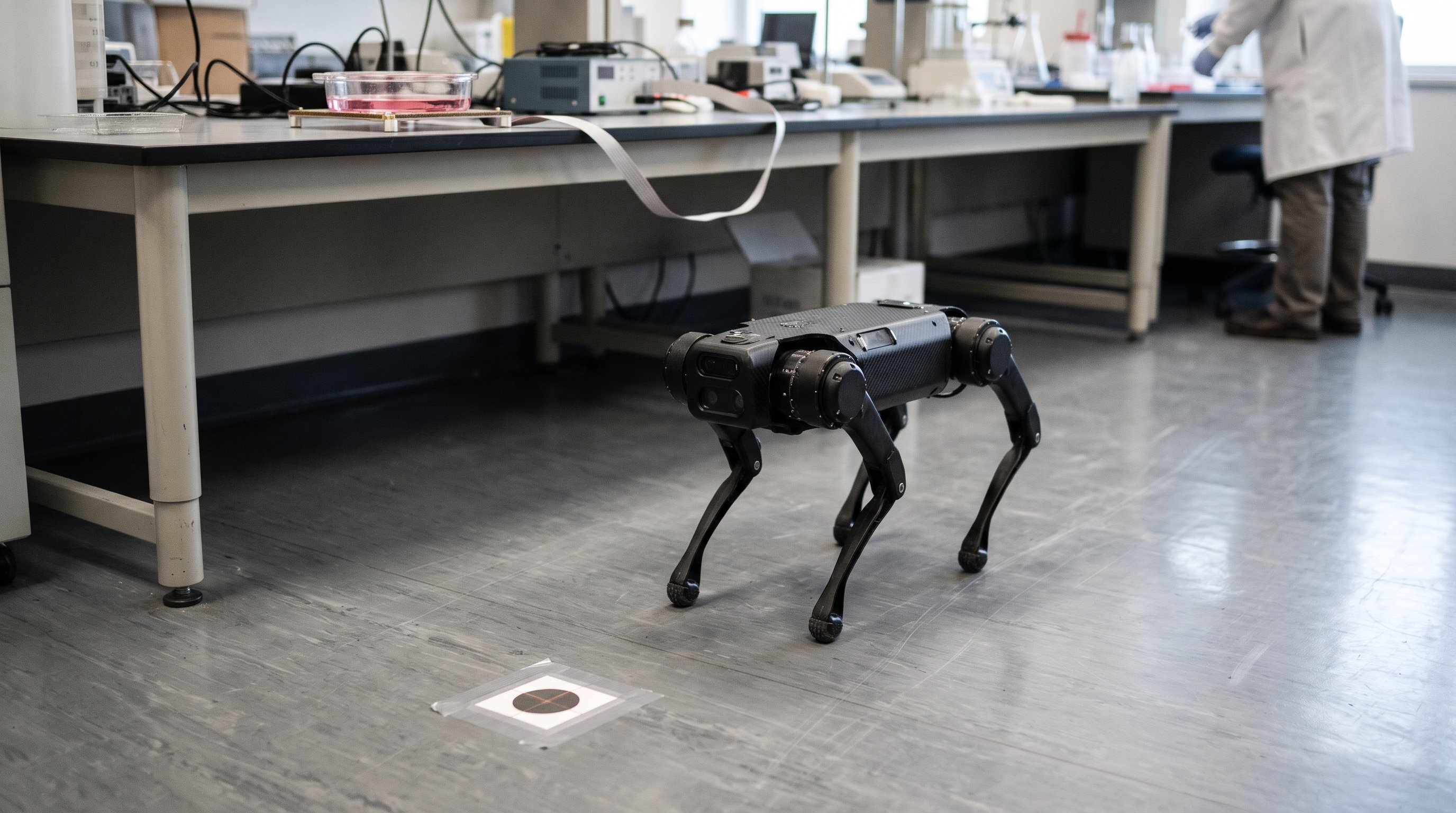
The Australian company Cortical Labs had cultured human nerve cells on a chip steer a four-legged robot to a target. Together with Honda, it worked out the best way to control such cells. In a virtual test, they scored higher than a well-known AI program with the same amount of practice.
-
Researchers wake up silent, healthy genes in Prader-Willi syndrome
In Prader-Willi syndrome a group of genes does not work, even though every cell has a healthy back-up copy. Researchers in Melbourne switched that copy back on by removing one protein, in patient cells and in mice. Work on a medicine is now under way.
-
Wafer-thin mesh draws electricity from beating human heart cells
Researchers in the US grew beating human heart tissue around a wafer-thin mesh that generates a little electricity with every heartbeat. The work has so far been done in the lab. The goal: implants such as pacemakers that no longer need a battery.
-
Precise DNA correction used inside a patient's body for the first time
Prime Medicine has for the first time treated a patient with prime editing directly inside the body. A single infusion is meant to repair a DNA error in the liver in Wilson's disease, an inherited copper disorder. The study has just begun; first results are expected in 2027.
-
Brain enzyme helps keep memory sharp in old age
Researchers in Boston have discovered an enzyme that the brain itself makes more of as we get older, and that seems to protect memory. In old mice, an extra dose kept memory in better shape. The next step is to find out whether this can also be done safely in humans.
-
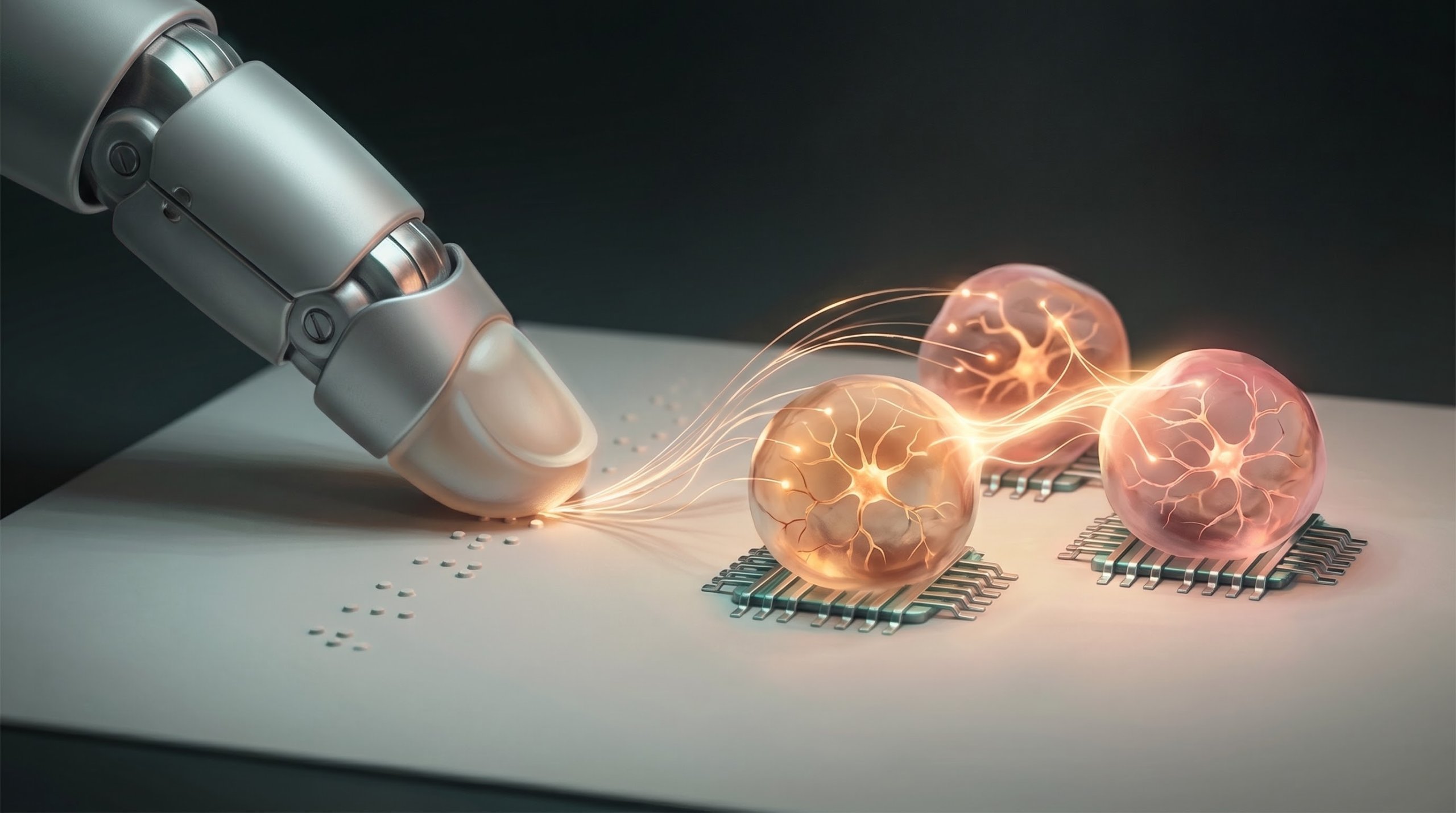
Researchers read braille with lab-grown brain tissue
Researchers at the University of Bristol sent braille, felt by a robotic finger, as small electrical pulses to lab-grown balls of brain tissue. From the response of three balls together, they read 83 per cent of the letters correctly. A first step towards energy-efficient biocomputers.
-
AI model IRIS reads which signals cells in an embryo have received
Researchers at MIT and the Whitehead Institute have built an AI model that can tell from a cell's gene activity which signals that cell received from its neighbours. With that knowledge, they have already improved a lab recipe for growing precursors of lung tissue from human stem cells.
-
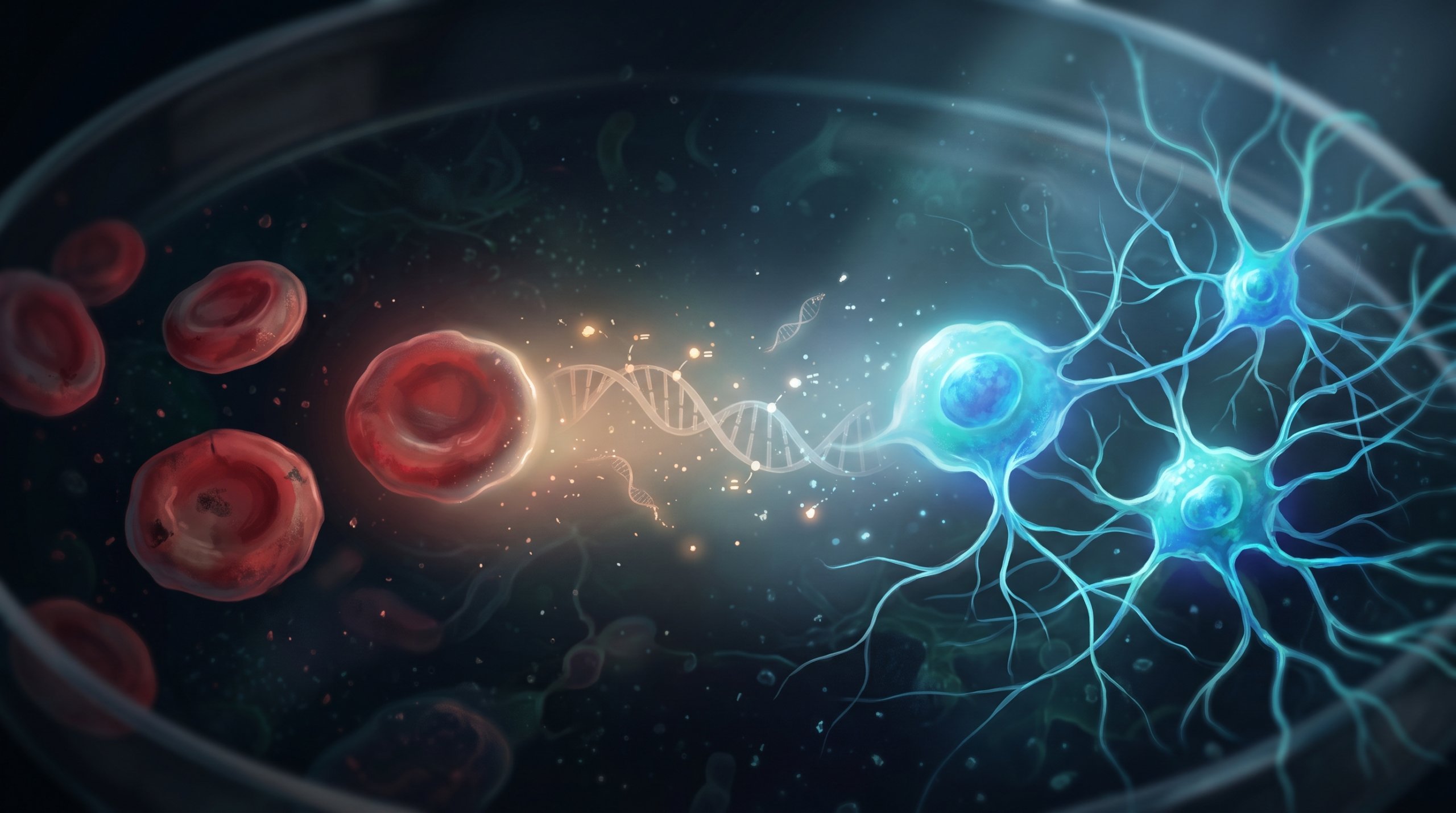
Blood cells from an 80-year-old become young brain stem cells in the lab
Researchers in Bonn have directly converted blood cells from an 80-year-old into neural stem cells with a molecular age of under 20. The rejuvenation happened gradually, and that is exactly what makes it a useful model for unravelling how cells become younger.
-
Lab-grown human brain tissue learns to balance a virtual pole with an AI coach
At a meeting in Silicon Valley, a team from UC Santa Cruz showed how cultured human brain tissue learns a classic control task: keeping a pole upright on a cart. An AI algorithm acts as the coach. A volunteer with a keyboard could barely keep up with the tissue.