Nederlands
Cultured human nerve cells on a chip steer a robot dog to a target
The Australian company Cortical Labs had cultured human nerve cells on a chip steer a four-legged robot to a target. Together with Honda, it worked out the best way to control such cells. In a virtual test, they scored higher than a well-known AI program with the same amount of practice.
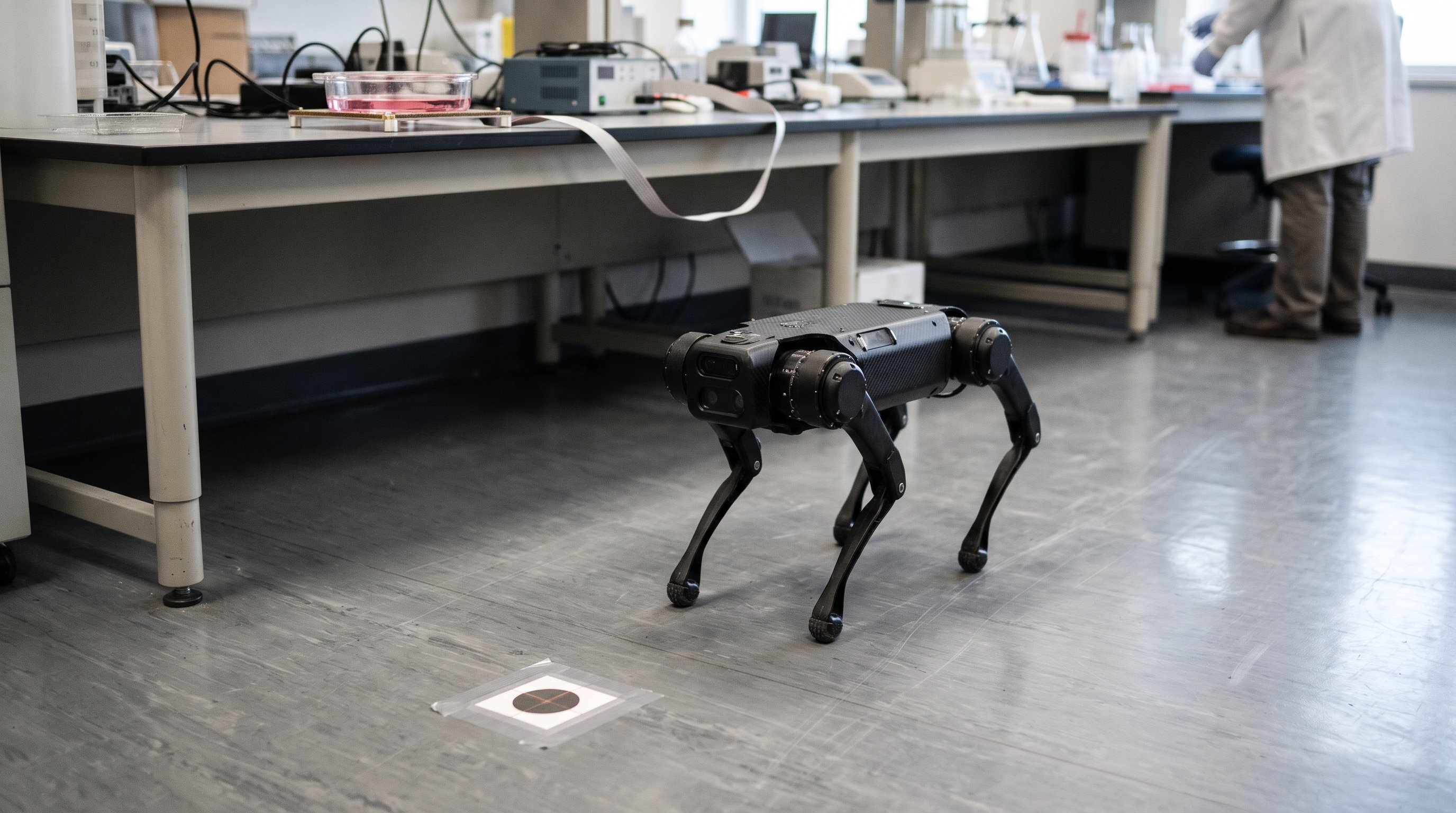
A robot controlled by living nerve cells instead of a computer chip: the Australian company Cortical Labs has done it. The company had a four-legged robot dog walk to a target on a simple map. The robot was steered by a small group of cultured human nerve cells.
These are nerve cells of the kind found in our brains: in the cerebral cortex and in the hippocampus, the part of the brain that is important for memory. They do not come from anyone's head. The researchers grow them from stem cells, which are made in the lab from ordinary human body cells. They are separate cells in a thin layer, not a piece of brain tissue.
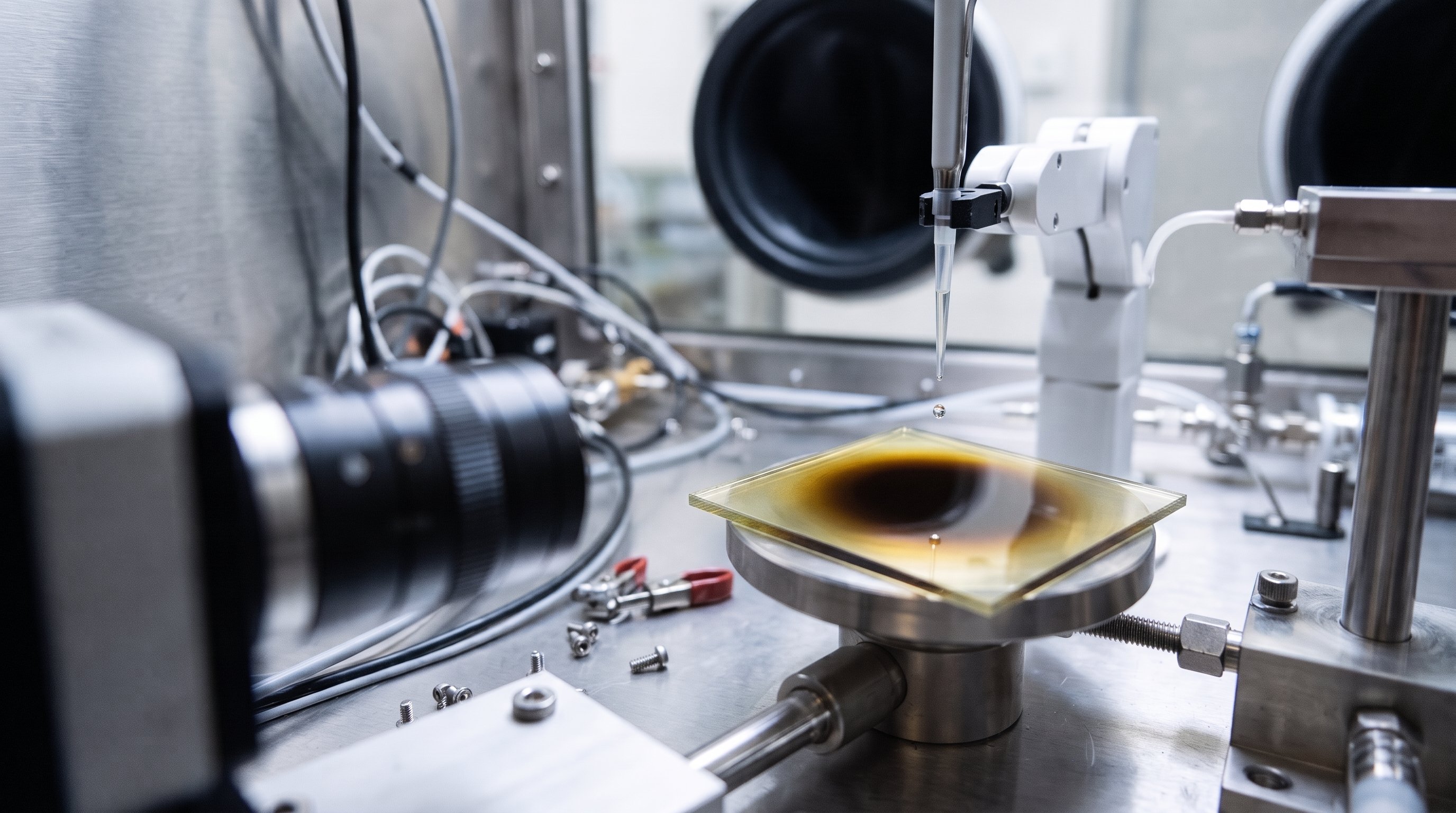
The cells grow on a chip with electrodes. The electrodes work in two directions: they give the cells small electrical pulses as input, and they measure the signals the cells produce themselves. The researchers translated the activity of the cells into movements of the robot. Through feedback with electrical signals, the robot reached its target.
According to Brett Kagan, chief scientist at Cortical Labs, this approach could in time help robots that have to make their own decisions in an unpredictable environment. The robot dog is mainly a demonstration: it shows that what works in the lab can also control a real device.
How do you talk to living cells?
The hardest part of computing with living nerve cells is the translation. A computer works with zeros and ones, while nerve cells work with small electrical pulses. How do you turn an instruction into pulses that the cells pick up, and how do you read their answer back? There are countless options: how strong the pulses are, how often they come and through which electrode.
Cortical Labs and the Honda Research Institute Europe worked this out systematically. In a virtual world, a small figure had to search a grid for a reward by following a kind of scent trail. The figure was controlled by living nerve cells in the CL1, the biological computer of Cortical Labs: about 200,000 cells on a chip with sixty electrodes. The researchers tried nearly 1,300 different ways of sending signals to the cells and reading them back, over more than 4,000 hours of practice time.
With twelve of those settings, the cells learned to find the way again and again. With the same number of practice rounds, they scored higher than Deep Q Network, a well-known AI program that learns by trying and being rewarded. The researchers themselves point out that this applies to this one task: it does not show that cultured nerve cells beat ordinary AI in general.
The research was presented at NeurIPS, one of the largest AI conferences in the world, and is available online on arXiv. The next step is review by other scientists.
A foundation under HIVE
This work underpins earlier news from Cortical Labs. At the end of October, the company presented HIVE, a system of fifteen CL1 machines that work together. There too, a small figure had to find its way across a grid to a target, and there too Deep Q Network was the comparison. HIVE shows that linked machines perform better together than a single machine. The new research goes one step back: how do you set up one small group of cells so that it learns reliably?
Other routes to computing with brain tissue
A robot dog with living cells is not entirely new, though. Other teams do not work with separate nerve cells, but with small spheres of cultured brain tissue: tiny lumps of a few millimetres in which cells grow together in three dimensions. In August 2025, researchers at the University of California San Diego used such a sphere to make a robot dog change direction. When the robot saw an obstacle, the tissue received a stimulus, and its response made the robot swerve within 50 milliseconds. The team used graphene, a layer of carbon one atom thick, which converts light into gentle electrical signals. This makes the tissue mature faster, without the cells having to be genetically modified. That work was about avoiding an obstacle, while Cortical Labs is about finding the way to a target.
Researchers in Bristol also work with such spheres of brain tissue, but on the input side. They had the tissue read braille: a robot finger felt the letters and sent them as electrical pulses to the tissue. From the response of three spheres together, they got 83 per cent of the letters right. Where Bristol studies how tissue recognises signals, Cortical Labs lets cells choose a movement.
Much still to discover
The technology is at the start. It is not yet fast or particularly economical, and the work required a lot of trial and error. The human brain does complicated things on about 20 watts, less than an ordinary light bulb. How much power a complete system with living cells uses, including the equipment that keeps the cells alive, has yet to be measured.
The researchers now want to build larger chips for harder tasks. They are also investigating how the cells retain information, and whether they have a kind of memory.
What does this mean for the road to the singularity?
Robots are now controlled by silicon chips. Cortical Labs is trying a very different route: living nerve cells that learn by themselves. The most important part of this news is not the robot dog itself, but the toolbox beneath it: a systematic way to find out how to communicate with cells so that they learn reliably. That step is needed before computing with living cells can take part alongside ordinary chips. If this can be scaled up, robots may one day get a piece of living brain that adapts quickly to a world that is never entirely predictable.
What is the technological singularity? Read the explanation →