Nederlands
Graphene coil draws power from the magnetic field of power cables: sensor works without a battery
Researchers from Arkansas and Michigan power a temperature sensor with energy from the magnetic field around power cables, using a component made of graphene. If the power goes out, the sensor keeps working for at least 24 hours.
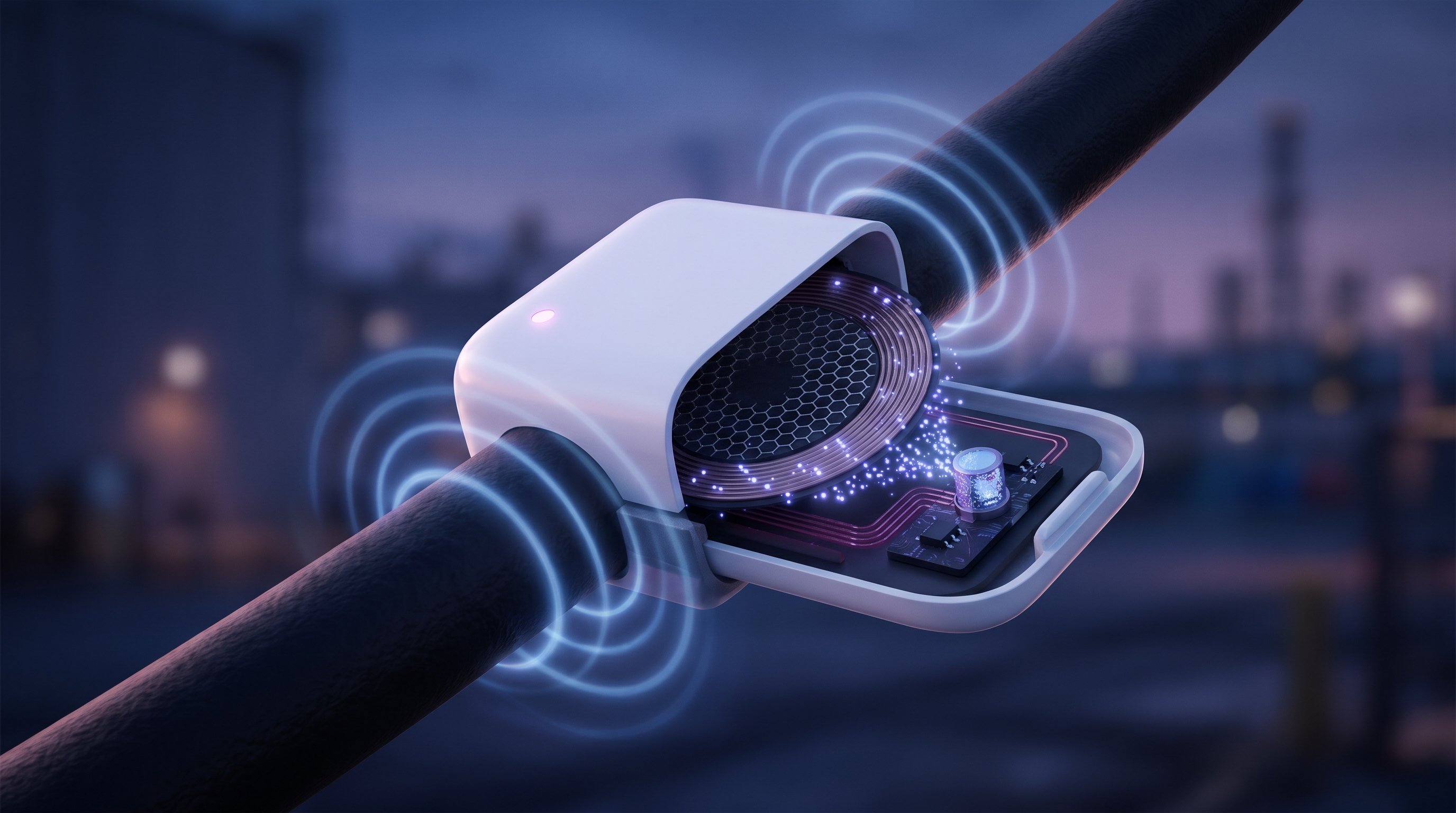
Sensors are everywhere: in factories, in refrigerated lorries, in the soil of farmland and in fitness watches. Most of them run on a battery. That battery has to be replaced one day, which costs time and money and creates waste. With thousands of sensors in hard-to-reach places, that quickly becomes a big problem.
Researchers at the University of Arkansas and the University of Michigan now present a temperature sensor that needs no battery at all. It gets its energy from the magnetic field around ordinary power cables. The research was published in the scientific journal Journal of Vacuum Science & Technology B. The first author is PhD student MD Rezaul Kabir. The invention comes from physicist Paul Thibado, who has been researching graphene for more than ten years: a layer of carbon exactly one atom thick.
How it works
Alternating current flows through a power cable. In the United States it changes direction sixty times per second (in Europe fifty times). Because of this, there is a constantly changing magnetic field around the cable. A coil nearby can capture a small amount of energy from it.
The team uses a coil made of graphene, tuned to those sixty changes per second. A specially designed circuit converts the captured alternating current into direct current. This charges capacitors: small stores of electrical charge, a kind of mini battery that charges quickly. The sensor itself uses very little power, in the order of nanowatts: billionths of a watt.
According to Thibado, charging is slow, but still faster than the sensor uses up the charge. So as long as current flows through the cable, the capacitors stay full. If the power goes out, the sensor lives on that store. Thibado estimates that it then keeps working for at least 24 hours, and probably even a week. He calls it "set it and forget it": put it up and never look after it again.
The team had set itself three requirements: the energy comes from the direct surroundings, power use stays at the level of nanowatts, and the sensor must work for years, perhaps even decades, without maintenance. According to the researchers, this sensor meets all three.
What the next step is
This is already the team's second sensor that supplies its own energy. The first ran on graphene solar cells. The final goal is one sensor that gets energy from several sources at once: sunlight, heat, sound, movement and the magnetic field of cables. If one source falls away, another takes over.
Thibado sees uses in tracking shipments and lorries, measuring air and soil, sports watches and medical devices. For now it is one prototype of a temperature sensor, tested by the researchers themselves. The next step is a sensor that combines several energy sources.
What does this mean for the road to the singularity?
The more sensors there are, the better machines and AI systems can follow the world around them. But every sensor with a battery needs maintenance, and that slows growth. Sensors that run for years on energy from their surroundings can be placed where nobody wants to replace them now: in walls, underground or high up a mast. If the team manages to combine several energy sources in one sensor, a world full of smart, maintenance-free measuring points comes a step closer.
What is the technological singularity? Read the explanation →