Nederlands
Small transportable nuclear reactor may be tested at full power in Idaho
The US Department of Energy has approved the safety analysis of Kaleidos, a 1-megawatt nuclear reactor that can travel by lorry. After one final check, the company Radiant may test the reactor for several months.
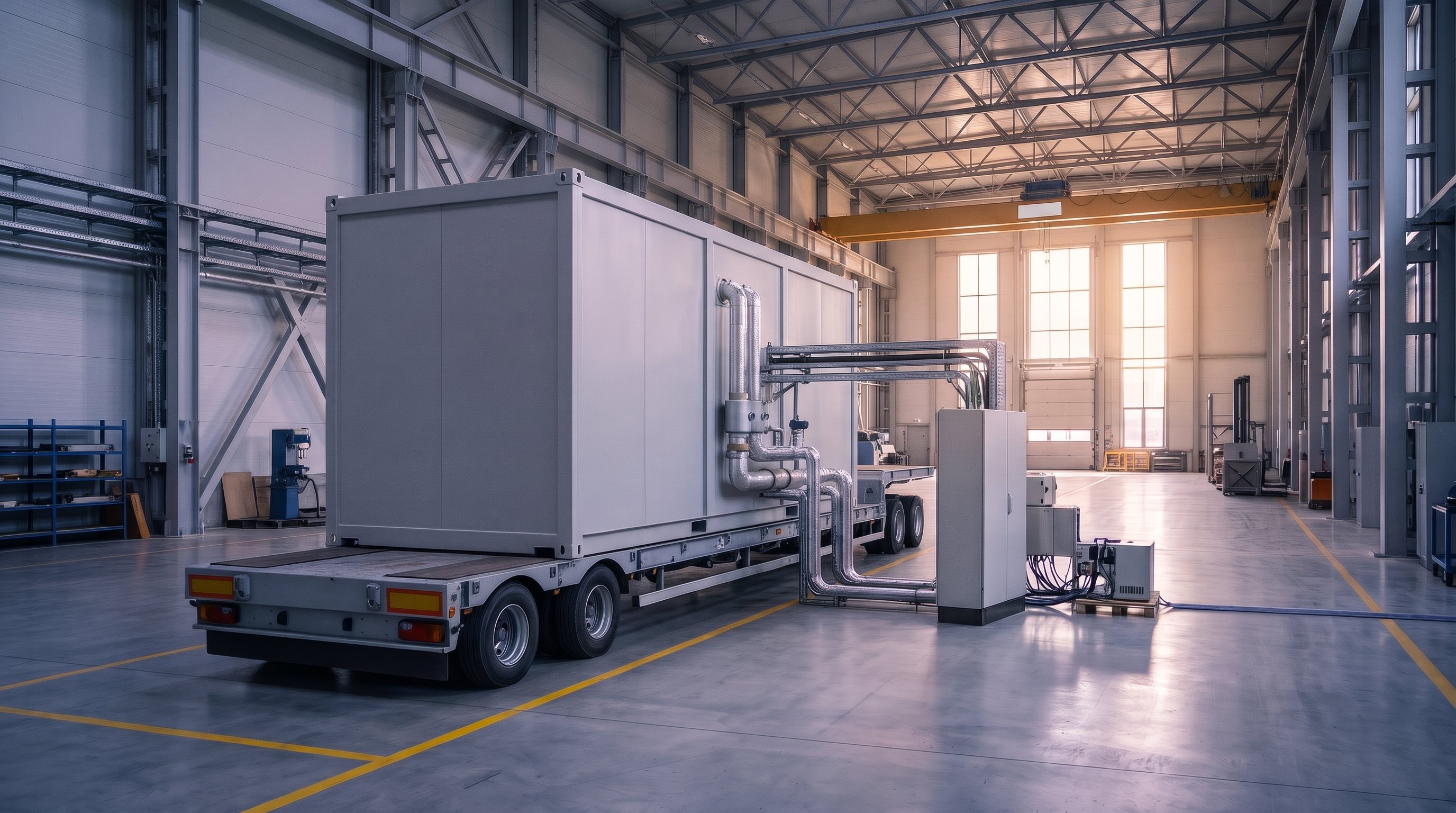
A nuclear reactor that can be loaded onto a lorry and set down wherever electricity is needed: that is what the Californian company Radiant is working on. On Thursday 29 October 2026, it received an important approval for this. The US Department of Energy (DOE) approved the safety analysis of Kaleidos, Radiant's small nuclear reactor. In such an analysis, a company describes what can go wrong and how the reactor is protected against it.
This means Radiant will be allowed to test the reactor at full power, and for a longer period. According to Radiant, that is a first: no other small nuclear reactor has previously been given permission for such a long test of the complete system. Rita Baranwal, Radiant's most senior nuclear officer, says the company can now test the whole reactor the way it will have to work later, and not just the start-up.
A 1-megawatt nuclear reactor
Kaleidos is designed to supply 1 megawatt of electricity. An ordinary nuclear power station supplies hundreds to well over a thousand times as much. Kaleidos is therefore meant for a single site: a military base, a factory or a remote location that needs reliable electricity, even when the power grid fails. According to Radiant, the reactor can be transported by land, by sea and by air.
The fuel consists of tiny uranium grains with a few protective layers around them, which keep the radioactive substances inside. X-energy also uses the same kind of fuel for its 80-megawatt reactor, which is meant to supply factories and data centres with electricity and steam. The difference is the scale: X-energy builds fixed power stations with several reactors side by side, Radiant a reactor that can be moved.
Radiant built the test reactor in El Segundo, California. In August 2026, it travelled by lorry more than 1,600 kilometres to Idaho National Laboratory, a research centre of the Department of Energy.
How the test works
The test takes place in DOME, a special test hall for small reactors at Idaho National Laboratory. It consists of five steps. First, the reactor goes critical for the first time: the nuclear reaction then keeps itself going. After that, the power is raised step by step, while technicians check the core, the measuring equipment and how all the parts work together.
The goal is a total of 60 days at full power, spread over several months. Those days do not have to be consecutive. In addition, the reactor must run at full power for at least 150 hours in a row without anyone having to intervene. According to Radiant, the design and the fuel closely resemble those of the reactors it wants to supply to customers. That way, the measurements say something directly about the reactors that will actually supply electricity later.
The next steps
One check is still to come: the Department of Energy will assess whether the reactor, the systems around it and the staff are ready. If that is in order, Radiant may load the fuel and start up the reactor. In February 2026, the department already approved a first, preliminary safety analysis.
After the test, Radiant wants to start building the reactors in series, in a factory in Oak Ridge, in the state of Tennessee. The first deliveries to customers are planned for 2028, to Buckley Space Force Base in Colorado and Fort Benning in Georgia. In late October 2026, the US Navy also chose Radiant to install a Kaleidos at Naval Weapons Station Crane in Indiana.
What does this mean for the road to the singularity?
Everything the future brings, from factories full of robots to the data centres in which AI runs, needs electricity that is available day and night. Small nuclear reactors that can be built in a factory and delivered by lorry can supply that electricity in places where the grid is too weak or missing altogether. The step now is that such a reactor may, for the first time, run at full power for a long time as a complete system. If the reactor reaches the 60 days and the 150 hours without intervention, Radiant will have the proof it needs to scale up. The first deliveries in 2028 will then show how quickly small nuclear reactors find their way into practice.
What is the technological singularity? Read the explanation →