Nederlands
Artificial leaf from Singapore uses sunlight to make hydrogen from seawater and clears up a poison at the same time
Researchers in Singapore built an 'artificial leaf' that, without power from outside, gets hydrogen from polluted seawater and at the same time breaks down the toxic substance hydrazine. It is a first working prototype; the next step is a larger and longer-lasting device.
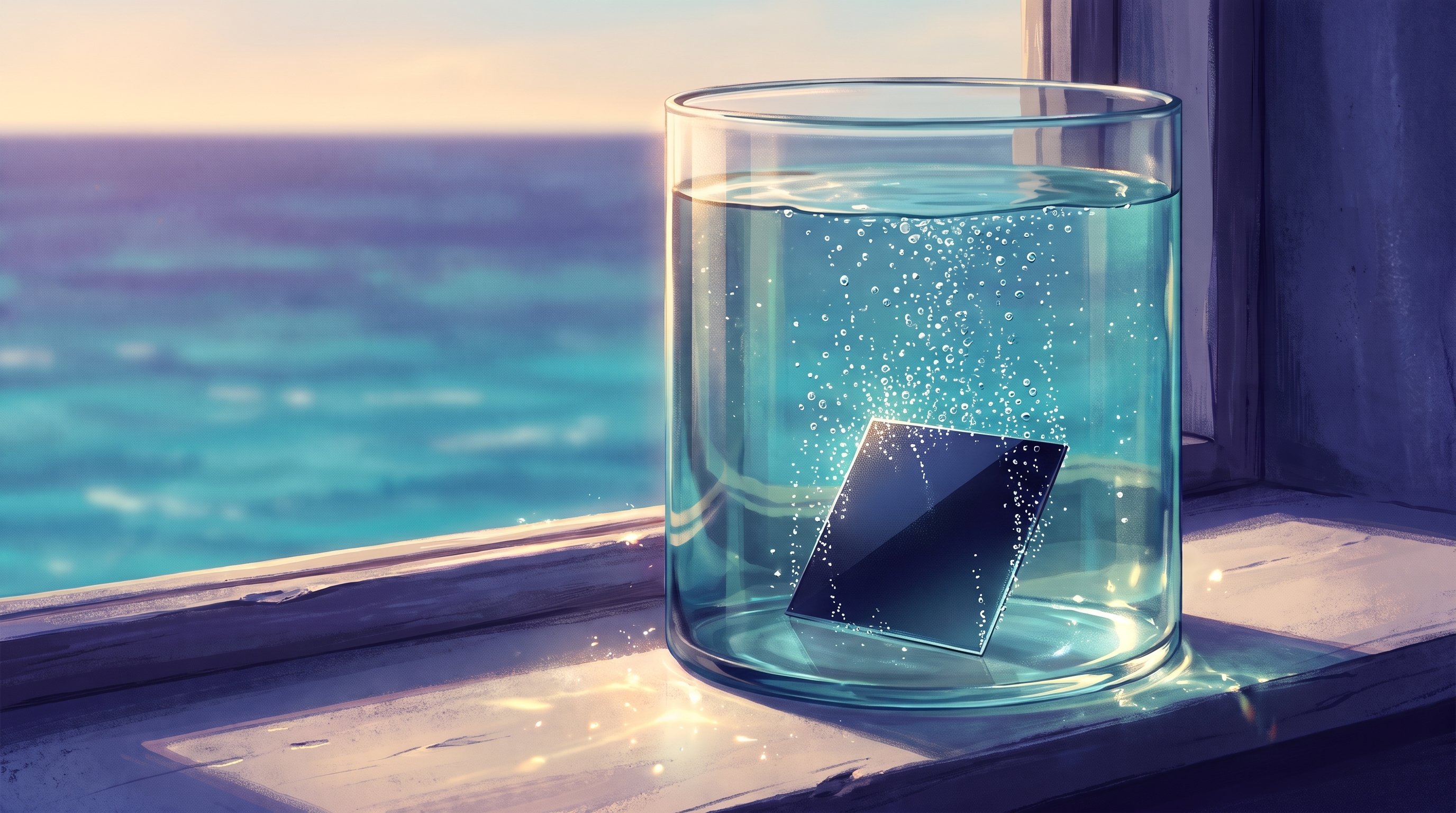
Hydrogen is a clean fuel: when you burn it or use it in a fuel cell, only water is left. But making hydrogen takes a lot of electricity, and usually also pure fresh water. A team from Nanyang Technological University (NTU) in Singapore has now made a device that gets around both problems. It runs on sunlight, uses seawater and cleans polluted water at the same time.
The research, led by Professor Lydia Wong, appeared in May 2026 in the journal Nature Communications. The researchers call their invention an artificial leaf: just like a real leaf, it turns sunlight into fuel.
Solar cell, hydrogen factory and purification in one
The device combines three things that are normally separate: a small solar cell, an electrolyser (a device that uses electricity to split water into hydrogen and oxygen) and a water purifier. No power socket is needed.
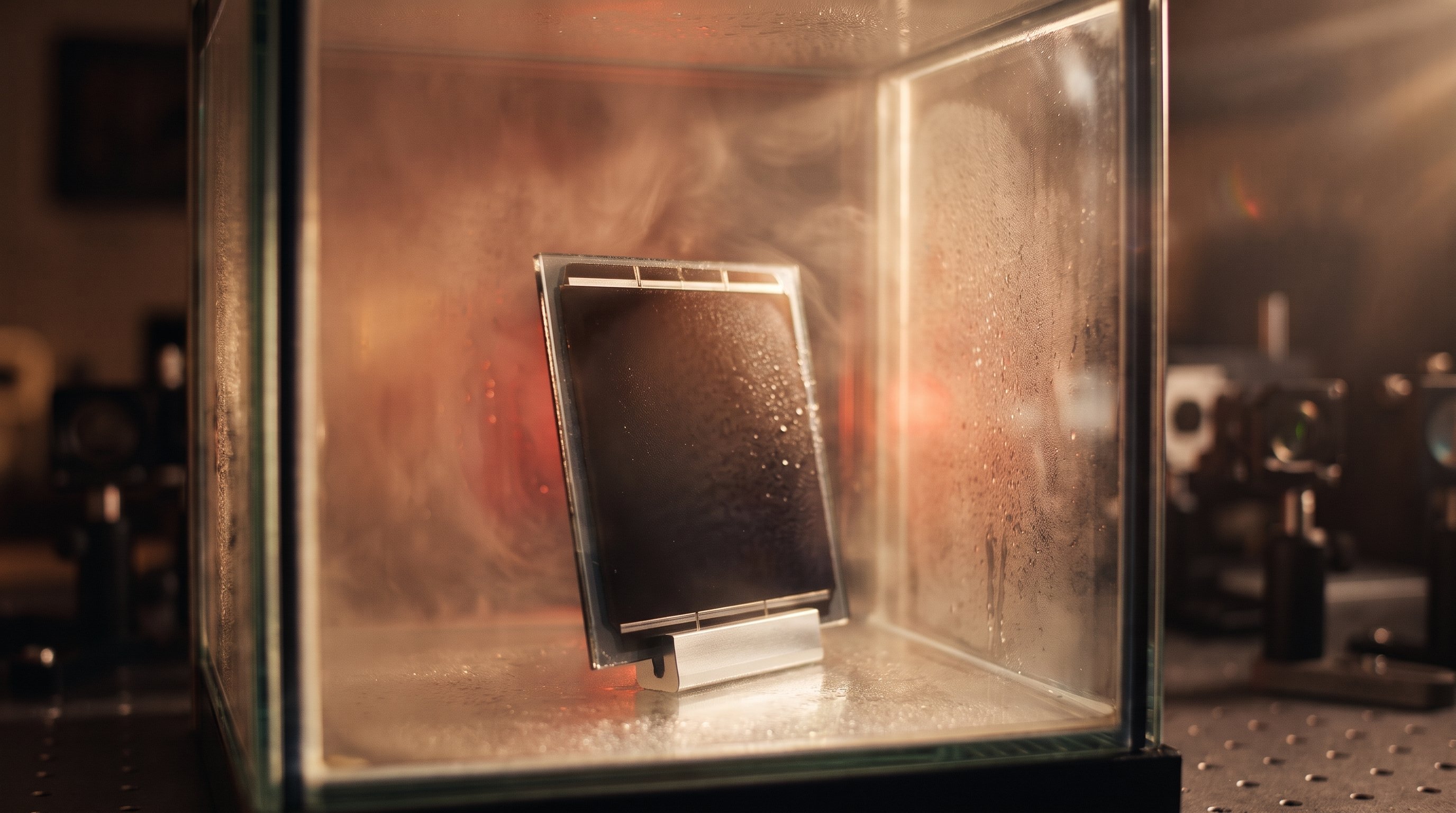
On one side there is an electrode made of perovskite. This is a cheap material that turns sunlight into electricity, also known from new kinds of solar panels. It supplies the electricity for the whole device. Perovskite quickly breaks down in water, so the researchers wrapped it in protective layers, including a conductive glue with silver and copper particles and a thin layer of titanium.
The clever trick: a poison as a helper
The cleverest part is on the other side. In ordinary hydrogen production, oxygen forms there, and that takes a lot of energy. In seawater it also often goes wrong: the salt then creates toxic chlorine compounds that attack the electrodes.
The team therefore uses a different reaction there. A catalyst of iron, cobalt and chromium (a substance that speeds up a reaction without being used up itself) breaks down hydrazine. Hydrazine is a toxic substance that ends up in industrial waste water. The catalyst turns it into harmless nitrogen gas, and according to the researchers also extra hydrogen. This reaction takes less energy than making oxygen, and the harmful chlorine compounds are largely avoided.
What the tests showed
The researchers tested the device in artificial and real seawater containing hydrazine, under a lamp as strong as the sun on a clear day. It kept working well for more than 72 hours, so three days. According to the team, the perovskite side delivers more electricity per surface area than almost all earlier comparable electrodes with lead perovskite.
A larger version, with a light-sensitive surface of about 6 square centimetres instead of half a square centimetre, removed almost all hydrazine from the water in about 30 hours. The amount fell from about 1.6 per cent of the weight to 0.5 parts per billion. That is more than twenty times lower than the limit of 10 parts per billion used by the US Environmental Protection Agency (EPA). It also worked outdoors, in real sunlight: visible bubbles of hydrogen and nitrogen formed.
James Durrant, professor of photochemistry at the University of Oxford and not involved in the research, sees it as a practical route towards devices that do several tasks at once, combining benefits for the environment with economic value.
The next steps
The device is a first working prototype. Because the reaction needs hydrazine, it is meant for water polluted with that substance, not for making hydrogen from ordinary seawater. The perovskite contains lead, so it must stay well wrapped even after years of use. The researchers are now working on a device that lasts longer, can be made larger and captures the hydrogen properly. It also has to prove that it works with the changing composition of real seawater and industrial waste water. In addition, the team is developing catalysts that break down other pollutants and turn waste into fuel or raw materials for industry.
The Singapore team is not the only one trying to make hydrogen with less electricity from the grid. In Groningen, researchers built a ceramic cell that gets twice as much hydrogen from steam with the same amount of electricity. There, the hot waste heat from factories does part of the work. In Singapore the electricity comes from the sun, and breaking down hydrazine replaces the oxygen reaction that normally costs a lot of energy. So two very different routes, with the same goal: clean hydrogen that costs less energy.
What does this mean for the road to the singularity?
A future with much more computing power, robots and industry calls for a lot of clean energy. Hydrogen can play a big part in that, if it can be made cheaply. This artificial leaf shows that it can be done differently: with sunlight instead of electricity from the grid, with seawater instead of scarce fresh water, and with a waste substance that makes the work easier instead of harder. It is still a small device in the lab. But the idea of making clean fuel while cleaning water at the same time may soon help solve two problems in one go.
What is the technological singularity? Read the explanation →