Nederlands
Drone with spring-loaded arms folds up to fly through a narrow gap
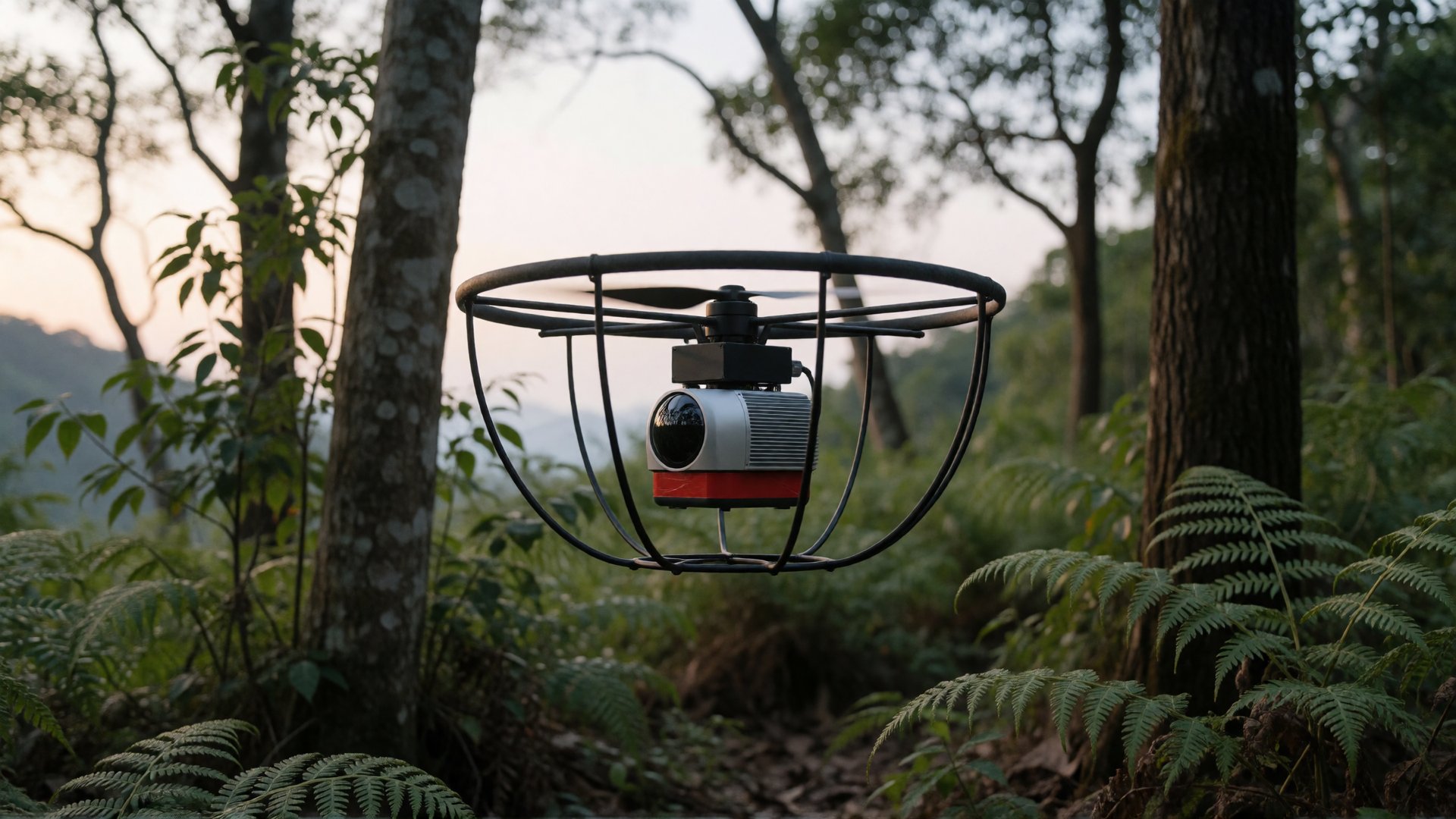
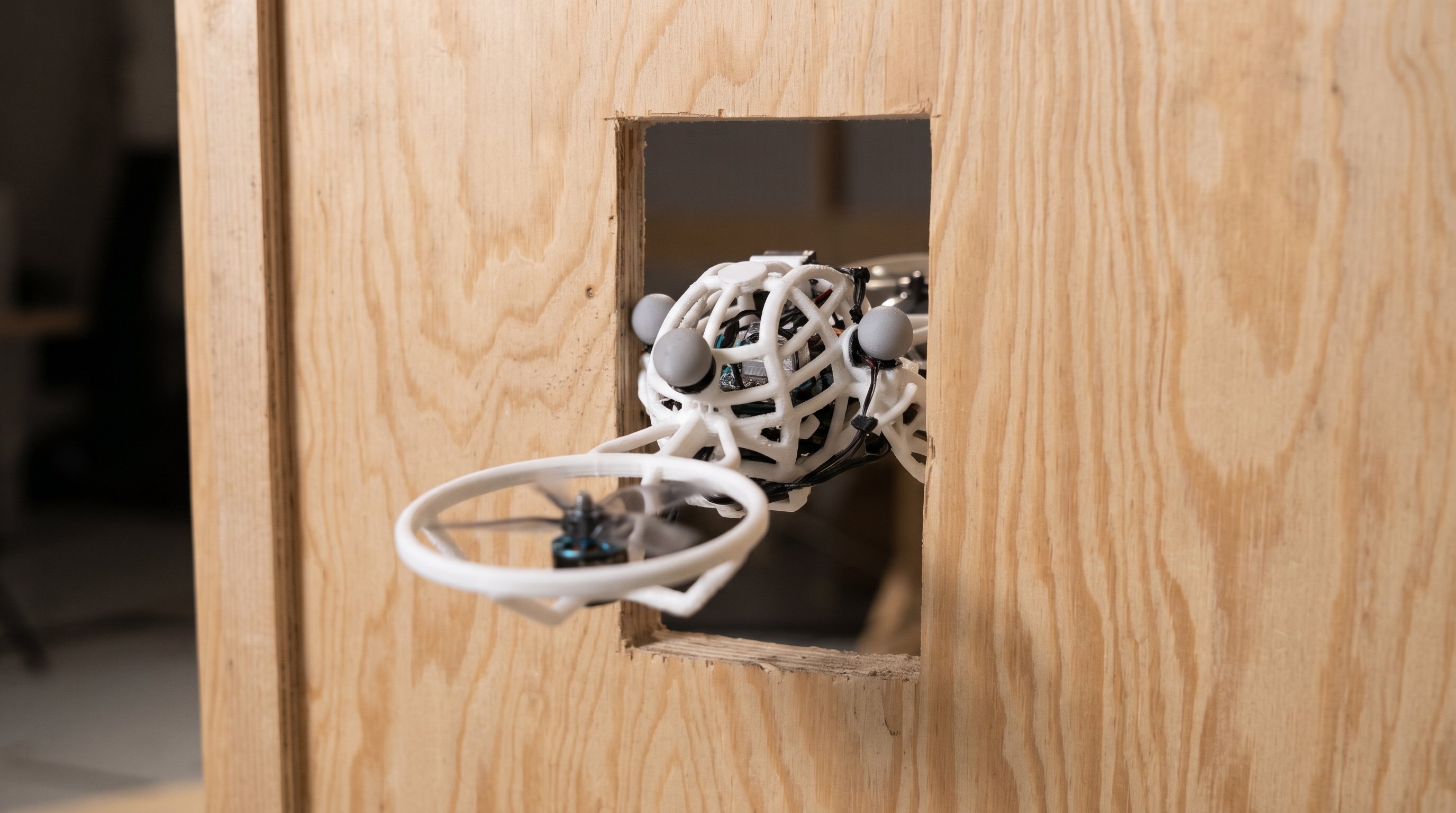
Researchers from Norway and Switzerland built a drone whose two arms fold inwards on contact and then spring back. In a test it flew through an opening of 15 centimetres, less than half its own width.
A drone with four propellers, a quadcopter, usually has a rigid frame. To get through a narrow opening it has to aim precisely, and an opening that is narrower than the drone itself is impossible. There are drones that can fold in their arms with small motors, but those motors make them heavier and more complicated.
Researchers from the Autonomous Robots Lab of the Norwegian university NTNU, the Swiss technical university ETH Zürich and the University of Bonn took a different approach. Their drone has two arms on spring-loaded hinges. When an arm touches the edge of an opening, that contact pushes it inwards. Afterwards it springs back by itself. There is no motor for the folding.
Through a hole of 15 centimetres
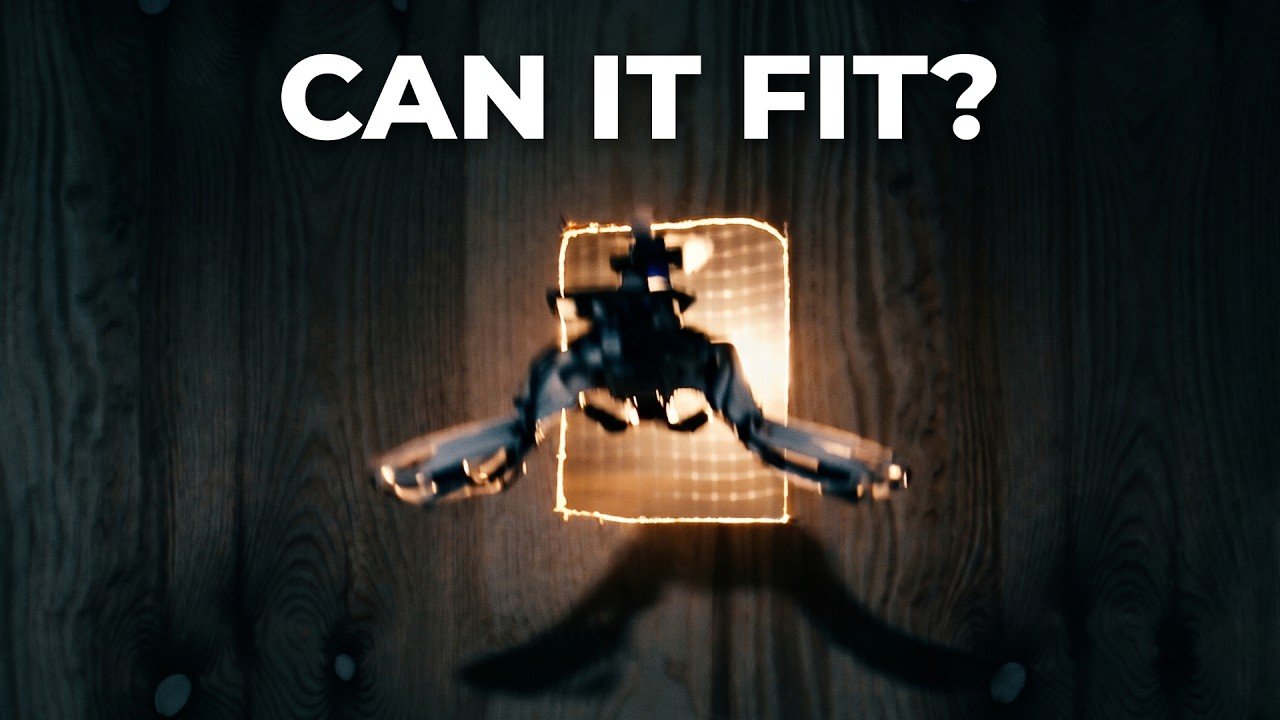
Unfolded, the drone is 31.3 centimetres wide; folded, it is 14.1 centimetres. In a flight test it went through an opening of 15 by 20 centimetres at a speed of about 2 metres per second. While doing so it tilted by up to 94 degrees and dropped 56 centimetres, before the arms sprang back and it was flying upright again within a few seconds. The drone also flew through a tube 40 centimetres long and 22.5 centimetres wide; the arms stayed folded inside it until it came out again.
The drone does not have to fly straight at the opening. With an opening of 20 centimetres, it worked up to an angle of 30 degrees off course; at that angle an arm slipped out of position in 1 of the 20 attempts. At 35 degrees that happened more often, and at 40 degrees not a single passage succeeded.
Playing loads YouTube, which may set cookies. More information
A computer searched for the design
Each hinge consists of two round, springy discs with small teeth, which roll against each other without slipping. The shape of those discs decides how stiff the arm is in every position. Too soft, and the arm already folds in during normal flight; too stiff, and the drone collides instead of folding.
That is why the team let a computer program search for the shape of the drone and the stiffness of the hinges at the same time. The program tried out 800 designs in a simulation, in which a control program steered the drone through openings of 15 to 25 centimetres. How often a design made it through decided which design the program tried next. The search took about 18 hours on a laptop. The code is freely available on GitHub, so others can search for designs for other openings.
The spring-loaded arms cost almost nothing in normal flight. Compared with an identical drone with rigid arms, it strayed from its route by an average of 2 millimetres more and used less than 1 per cent more electricity. The research has been online as a preprint since 6 November 2026.
Two of the researchers, Luca Girardi and Stefano Mintchev, previously worked on FlexiQuad, a drone with a flexible ring as its frame that absorbs collisions. It could squeeze itself to 70 per cent of its width. The new drone goes further and gets through an opening of less than half its width.
What does this mean for the road to the singularity?
Drones that fly on their own are already common, but they treat every touch as an accident. This drone turns contact into a tool: the edge of the opening does the folding. As a result, the drone does not need to know exactly how wide a gap is. That is useful in places where nobody knows this in advance, such as a collapsed building or the cramped spaces of a ship.
If that line continues, designers can build a robot whose body does part of the thinking, so the control system has less to do. The design then no longer has to be worked out by hand: a computer tries out hundreds of variants overnight for exactly that one task. In this way, robots can be tailored more quickly to a rescue job or an inspection, and reach places where today only a person with a torch can look.
What is the technological singularity? Read the explanation →