Nederlands
Gut villi inspire bacteria battery with higher power per volume
Researchers at Binghamton University built a bacteria battery with an electrode shaped like intestinal villi. In a test, it delivered more than eight times as much power per volume as their flat electrode.
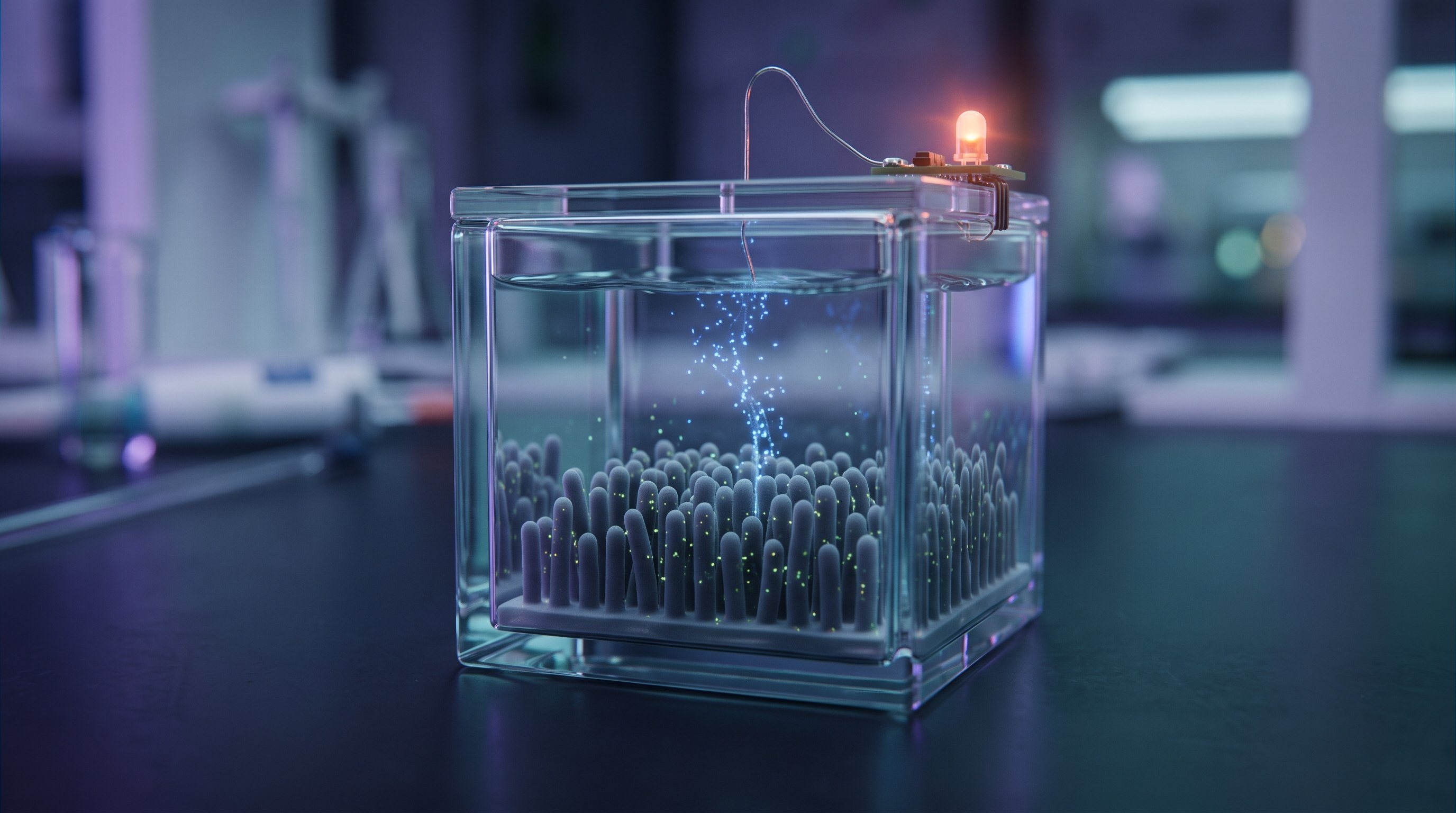
A battery that uses bacteria to generate electricity needs space where those bacteria can live and feed. Researchers at Binghamton University have made an electrode with small protrusions for this purpose. The design is inspired by the villi in the small intestine.
In a test, the new electrode delivered about 8.3 times as much power per volume as a flat electrode of the same volume, New Atlas reports. This is a comparison with the researchers' own flat design, not with all existing bacteria batteries.
The research appeared in the scientific journal Small. The team consists of Professor Seokheun Choi and doctoral students Ruohan Zhang and Botian Wang.
More room for bacteria
The battery is a so-called microbial fuel cell. In it, bacteria extract energy from organic material, and electrons are released. An electrode catches those electrons. They then travel through a circuit to a second electrode and so deliver electricity.
A flat electrode offers limited surface for bacteria. Material with many small openings offers more room, but according to Choi those openings can become blocked by layers of bacteria. Nutrients then reach the bacteria less well and waste products build up.
Villi are small, finger-shaped protrusions that increase the surface for absorbing nutrients in the small intestine. The researchers made flexible little pillars with a similar shape. This gives the bacteria more room, while nutrients and waste products can flow past the pillars.
The pillars are made of a conductive gel that holds water. It contains dormant spores of bacteria. When they receive a suitable nutrient solution, the bacteria become active and produce electricity.
The first tests
According to New Atlas, the electrode with protrusions reached a power of 66.45 microwatts per cubic centimetre. The flat electrode reached 8.04 microwatts per cubic centimetre at the same volume. A microwatt is one millionth of a watt. That is too little for a phone, but according to the university enough for small lights or very low-power sensors.
In another test, according to the university, the battery held a voltage of about 0.75 volts for at least 14 hours while nutrient liquid was supplied continuously.
The researchers also tested flexible designs in a simulated wastewater pipe. For this they used a nutrient solution that imitated wastewater, not real wastewater. The idea is that bacteria will later use the organic material in wastewater to power sensors in such pipes. The next step is tests with real wastewater and real sensors.
The team is also working on a printing method to make the batteries in one step and on a larger scale. The researchers also want to imitate the environment of the gut better, so that the bacteria stay active for longer.
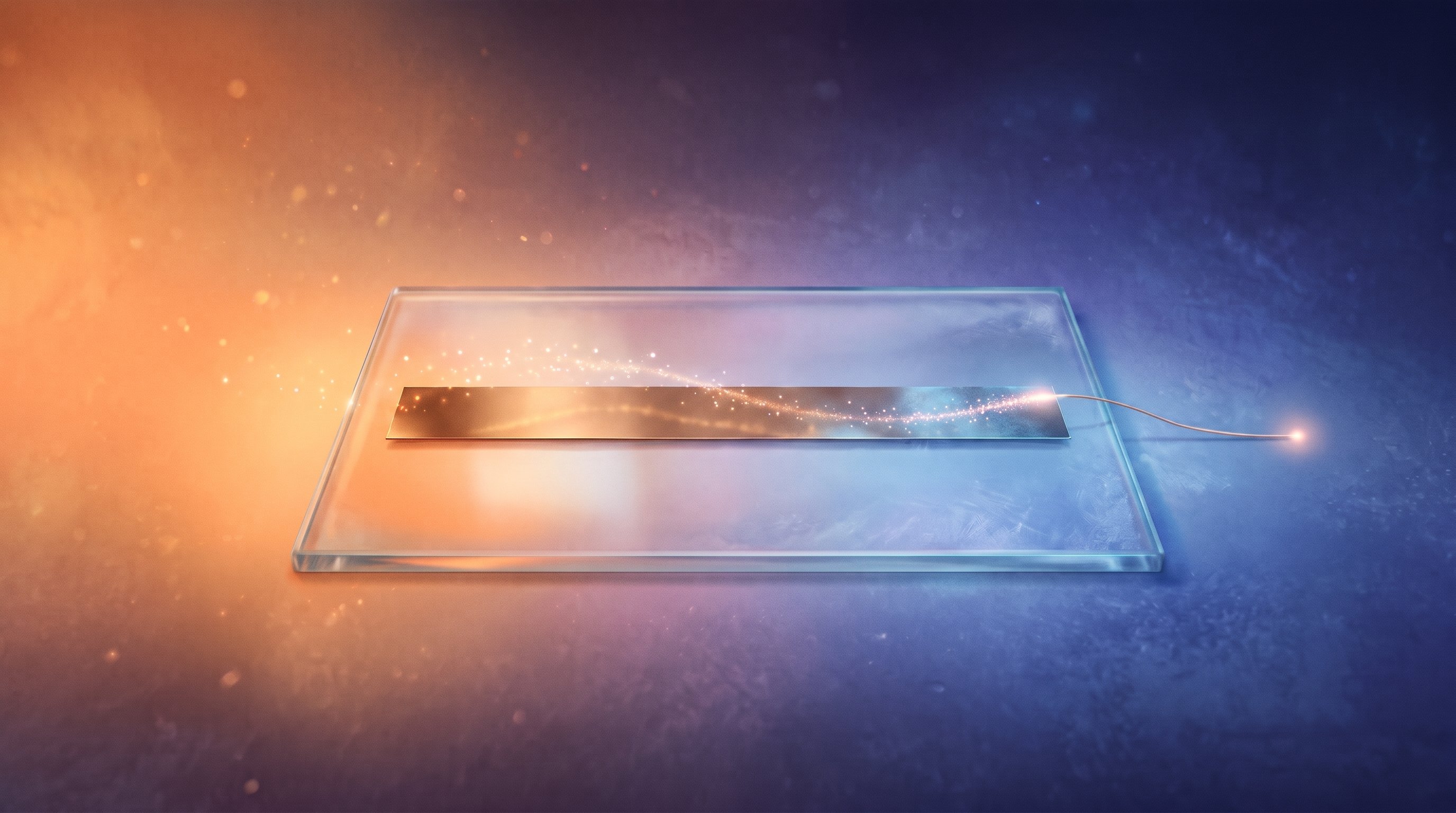
A very different way to generate power on a small scale is converting heat directly into electricity with a thin layer of material. With the bacteria battery, the energy comes instead from the organic material that the bacteria take up.
What does this mean for the road to the singularity?
More and more small sensors measure what happens in pipes, rivers and buildings. All these sensors need power, and replacing batteries in hard-to-reach places is difficult. A bacteria battery that feeds on whatever already flows through the pipe could power such a sensor by itself for years. This test shows that a clever shape from nature can greatly increase the power of such a battery. Tests with real wastewater must show how far that goes in practice.
What is the technological singularity? Read the explanation →