Nederlands
Implant removes excess sugar from the blood of mice using a little electricity
Researchers at ETH Zurich built an implant that converts excess blood sugar into a substance the body passes out in urine, without drugs. In mice with diabetes and obesity, blood sugar returned to normal within 90 minutes and the animals lost weight. Tests on larger animals are the next step.
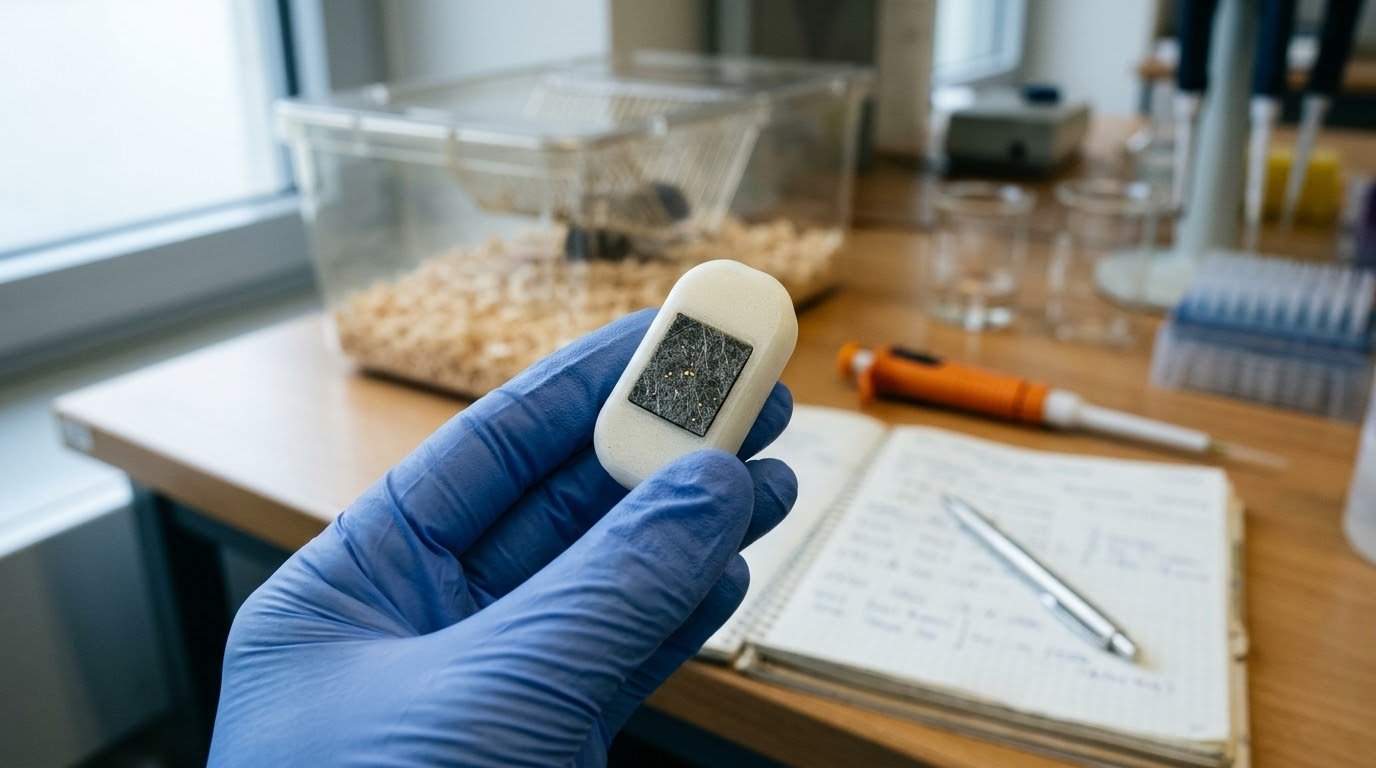
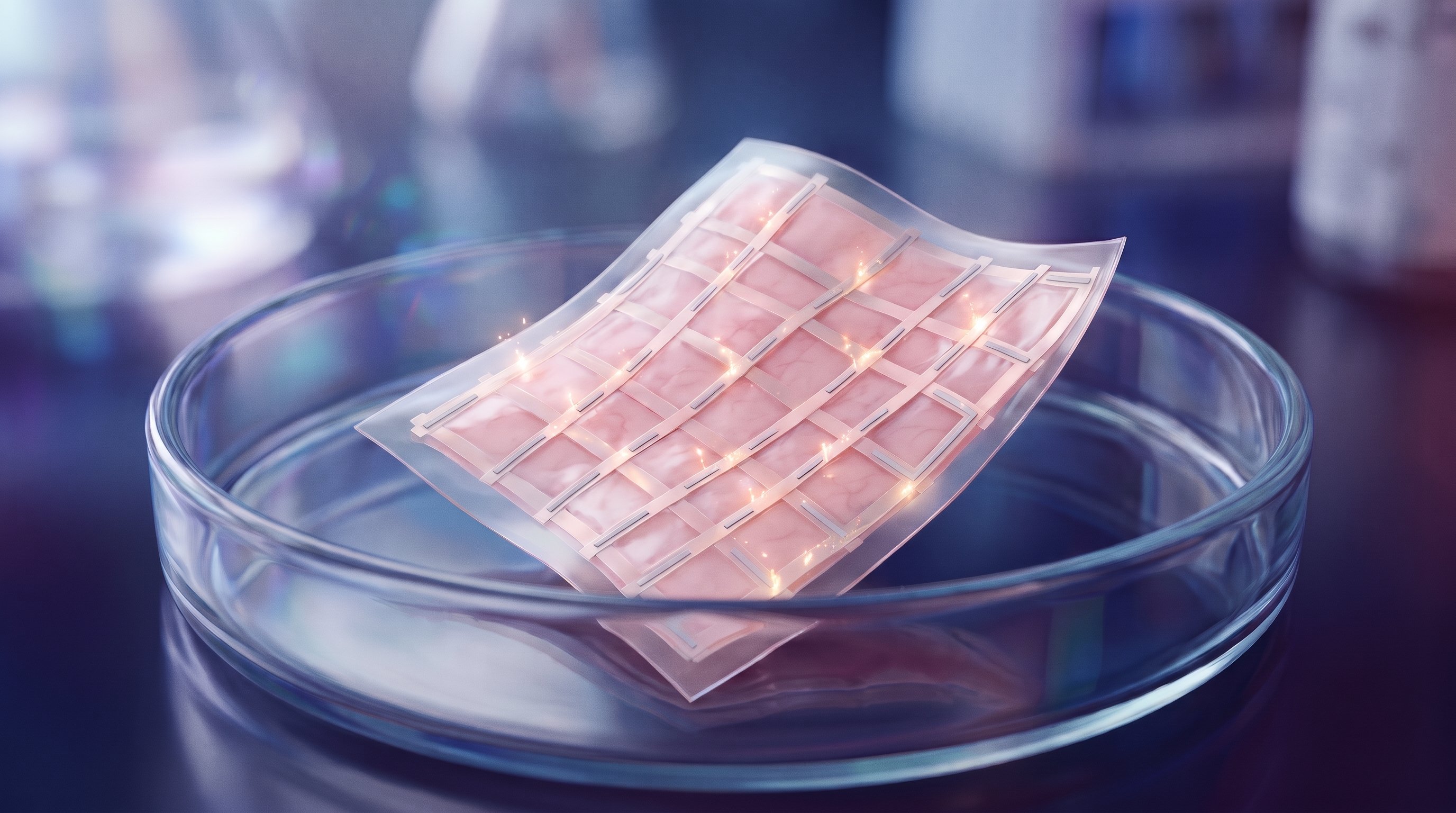
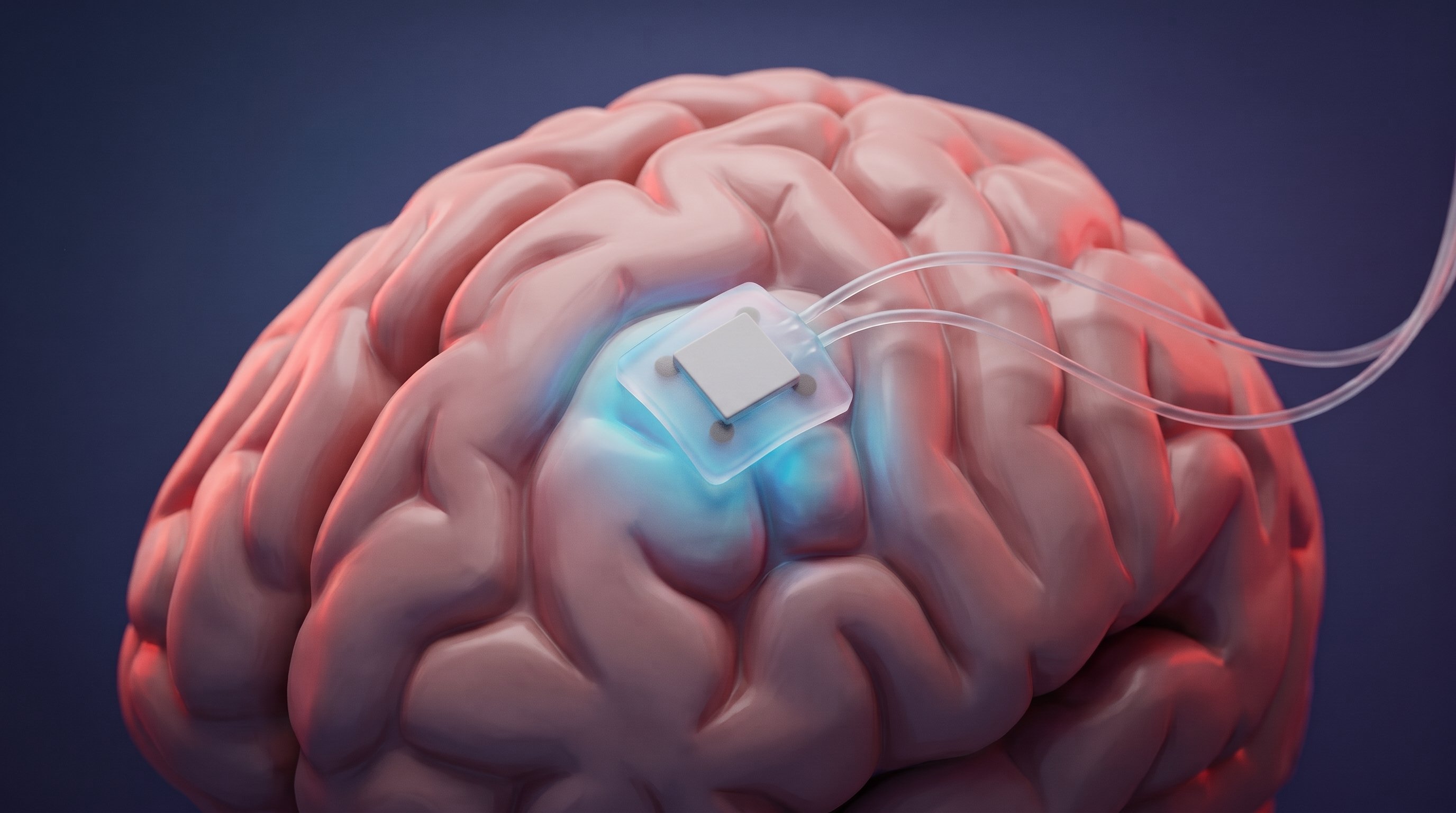
Researchers at ETH Zurich have made a small implant that removes excess sugar from the blood, without drugs. A thin layer of gold and platinum uses a very low electrical voltage to convert the sugar into a substance that the body passes out in urine. In mice with diabetes and obesity, the implant brought blood sugar back to a normal level within 60 to 90 minutes, and the animals lost weight. The team of Professor Martin Fussenegger published the results on 22 October 2026 in the scientific journal Science. The implant has not yet been tested in people.
Too much sugar in the blood
After a meal, sugar (glucose) enters the blood. The hormone insulin normally makes sure that the body's cells take up that sugar. In type 2 diabetes, the body responds less well to insulin, so the sugar stays in the blood. Over time, high blood sugar damages blood vessels and organs. Patients therefore take medicines or inject insulin. The disease often goes together with obesity.
Fussenegger takes a different approach. He does not help the body to absorb the sugar, but removes the excess chemically. "We have now shown that we can bring glucose under control directly, with electronics instead of drugs," he says.
How the implant works
The key part is a catalyst: a substance that helps a chemical reaction along without being used up itself. Here it is a small piece of graphite felt, graphite being the material in pencil lead. On it sit tiny clumps of gold, sprinkled with even smaller particles of platinum. When a low electrical voltage is applied to that surface, it converts glucose into gluconate, a substance that is chemically similar to sugar. According to the researchers, the kidneys remove the gluconate in the urine. Sugar converted in this way can no longer be burned by the body or stored as fat.
The implant contains no living cells or proteins, only materials and electronics. It is about 3 centimetres long and receives its power wirelessly from outside the body. The electronics sit in a 3D-printed housing.
Blood sugar that is too low is also dangerous. The implant therefore switches on only when needed. An ordinary glucose sensor on the upper arm measures the sugar. If it rises too high after a meal, the sensor sends a signal by Bluetooth to a smartphone or smartwatch, which switches the implant on. When the sugar is back at the desired level, the implant switches off by itself. "The catalyst only becomes active when the glucose is too high," says Fussenegger.
The results in mice
First, the team tested a larger version in the lab, in a tank holding five litres of liquid with sugar in it. That is roughly the amount of blood in an adult's body. The catalyst converted the sugar in that volume as well.
The mice came next. According to the trade journal Science News, the automatic system, with sensor and phone, ran for two weeks in eight mice. Over six weeks, the implant kept working well and the animals tolerated it well; the researchers saw no periods of low blood sugar. After six weeks, the mice weighed up to 10 per cent less and had less fat in their blood. The researchers think the body uses more of its fat reserves because there is less sugar to burn. They also found more fat breakdown products in the blood. The catalyst itself was still converting sugar after three months under the skin.
According to Fussenegger, the system works at a very low voltage, and the researchers saw no tissue damage from current or heat.
From mouse to human
The parts for the wireless power supply and the control system are already available commercially. The team now wants to develop the system into a medical device. According to Science News, tests on pigs and sheep come first, and only after that tests on people.
David Klonoff, a diabetes physician at the Mills-Peninsula Medical Center in California who was not involved in the research, told Science News that he finds the method promising. He does point to risks that must be ruled out first. For example, it is not yet known how well the kidneys can cope with large amounts of gluconate. If it builds up, it can upset the acidity of the blood. And with the gluconate, the body can lose salts such as sodium and potassium. Scale is also a challenge: according to Klonoff, a person eats about 250 grams of carbohydrates a day, a mouse about 2 grams. People would therefore need a much larger implant, or several.
What does this mean for the road to the singularity?
This research shows that a small piece of electronics inside the body can tackle a metabolic problem itself. Sensor, phone and implant work together like a thermostat with a heating system: measure, switch on when needed and switch off again. The fact that it works without living cells or drugs makes the system simple, in principle, to build and to control.
It is a first step, in mice. The next steps are larger animals, a safe way to remove the gluconate, and a version that can handle the sugar of an adult human. If that succeeds, people with type 2 diabetes may one day get an extra aid alongside their medicines, one that switches itself on and off.
What is the technological singularity? Read the explanation →
Sources
- ETH Zürich: Tackling diabetes with an electronic implant
- Science: Wireless electrocatalytic closed-loop system for drug-free management of diabesity
- Science News: A drug-free diabetes treatment? An implant lowers blood sugar in mice
- Medical Dialogues: Wireless implant controls blood glucose without insulin in animal studies