Nederlands
Peptone prepares AI-developed prostate cancer drug for testing in people
Biotech company Peptone is starting the final tests for PEP-5089, a prostate cancer drug developed with AI and its own measurements. It targets a moving part of a protein. In mice it slowed tumours; research in people is the next step.
Prostate cancer grows on signals from male hormones, such as testosterone. Those signals come in through the androgen receptor: a protein in the cancer cell that catches the hormone and then switches on genes for growth. Existing hormone blockers work by blocking the spot where the hormone attaches to that receptor. Over time, many tumours find a way around this.
Some cancer cells, for example, make a shortened receptor that lacks that spot completely. Such a receptor is switched on anyway. The existing drugs then no longer have any grip on it.
The biotech company Peptone therefore targets a different part of the receptor. That part has no fixed shape and moves all the time. A moving piece of protein like this is hard to target. A drug usually fits a fixed shape, like a key in a lock.
A drug for the moving part
, Peptone announced that it is starting the final tests for PEP-5089. These are the lab and animal tests that a regulator wants to see before a drug may be tested in people. After that, the company wants to test the drug in patients with prostate cancer.
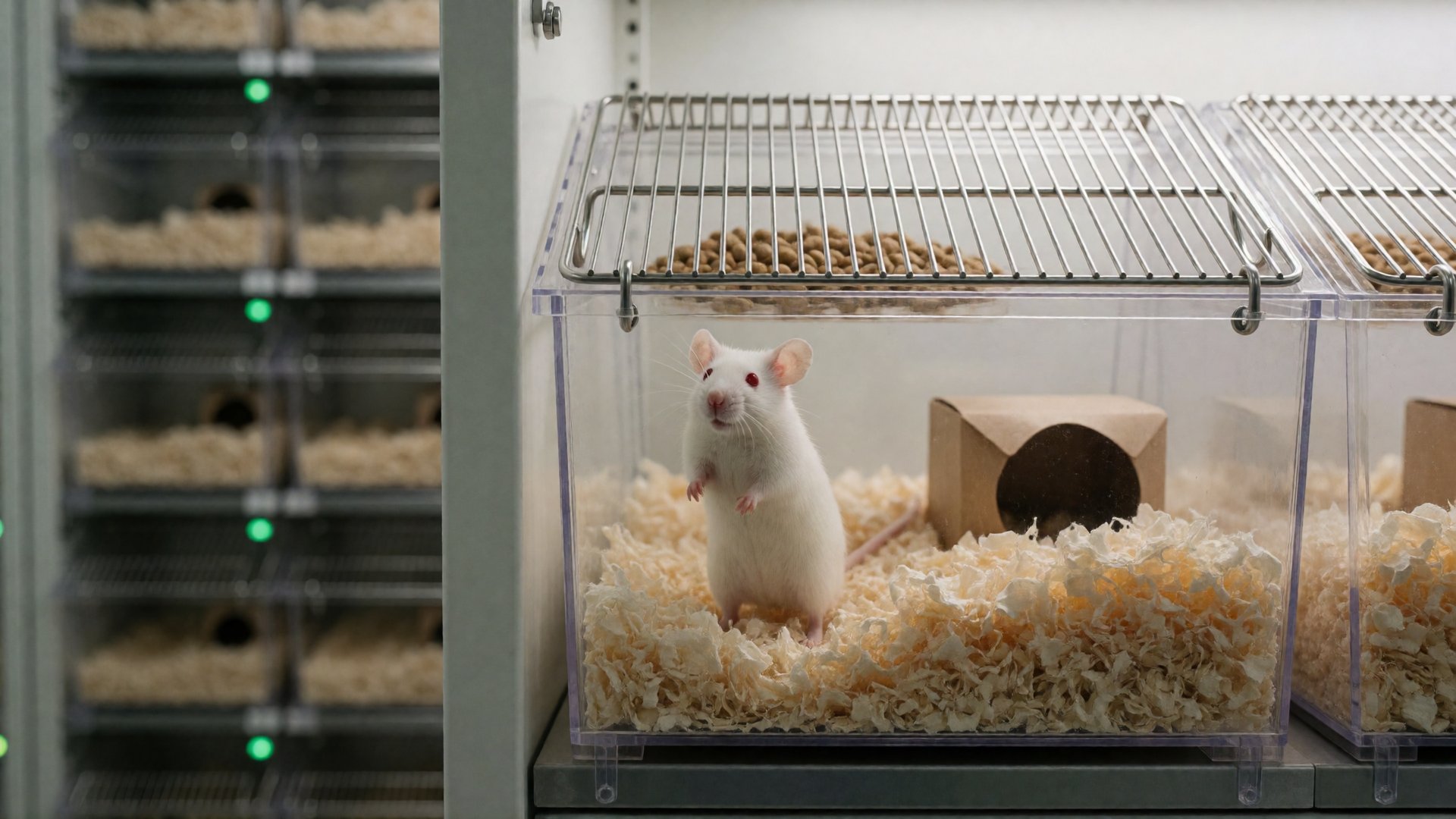
PEP-5089 is a small molecule that can be taken by mouth. In lab tests it blocked both the normal receptor and the shortened form, according to Peptone. It also kept working against six altered forms of the receptor, where existing drugs largely fall short. In mice with human prostate tumours it slowed the growth of the tumour. The level of PSA also dropped: a substance in the blood that doctors use to monitor prostate cancer.
These are tests in the lab and in animals. Research in patients has to show whether the drug is safe and works in people. It took eighteen months from the first idea to the choice of this candidate, says chief executive Kamil Tamiola. That period already included important animal tests.
At the same time, Peptone appointed Deepak Sampath as chief scientific officer. He previously led research at the biotech company Ultragenyx and worked at Genentech and Wyeth. He helped develop two approved cancer drugs, venetoclax and inavolisib.
AI with its own measurements
Peptone combines AI models with measurements in its own lab. The company built its own equipment that records, in a fraction of a second, how moving proteins change shape. With that data, the AI models search for spots where a drug can hold on to such a protein. Peptone does not say exactly which AI models it uses.
With the same approach, the company is working on two more drugs, which are at an earlier stage. One targets a protein that drives growth in many types of cancer. The other targets a protein that clumps together in the nerve disease ALS.
Researchers at the University of Michigan are also looking for a way out when hormone blockers stop working. Their substance clamps the androgen receptor to a helper protein in the wrong way, so that the two no longer work together properly. Peptone takes a different route: a drug that attaches to the moving part of the receptor itself.
What does this mean for the road to the singularity?
An AI model learns from data. There is a lot of data about proteins with a fixed shape, but much less about moving proteins. That is why measuring itself becomes an advantage. A company with its own measuring equipment has data that a competitor cannot download. If Peptone's approach works, other developers will also have to start measuring themselves, or work with those who already can. This could start a race for in-house lab data, alongside the race for better AI models.
If that trend continues, a group of proteins that drug makers have had to leave alone until now comes within reach. Diseases in which exactly such proteins are the culprit then get a new chance of treatment, from resistant prostate cancer to ALS. There is also a downside: if the best data stays with a few companies, so does the knowledge. Shared measurement data, for example through universities, could solve that later. First, PEP-5089 has to show that the route works in people.
What is the technological singularity? Read the explanation →