Nederlands
Printed brain-inspired chip dissolves in six minutes after use
Researchers in China have printed a flexible chip that, like our brain, calculates and remembers in the same place. It recognises handwritten digits almost as well as ordinary software and dissolves in six minutes after use.
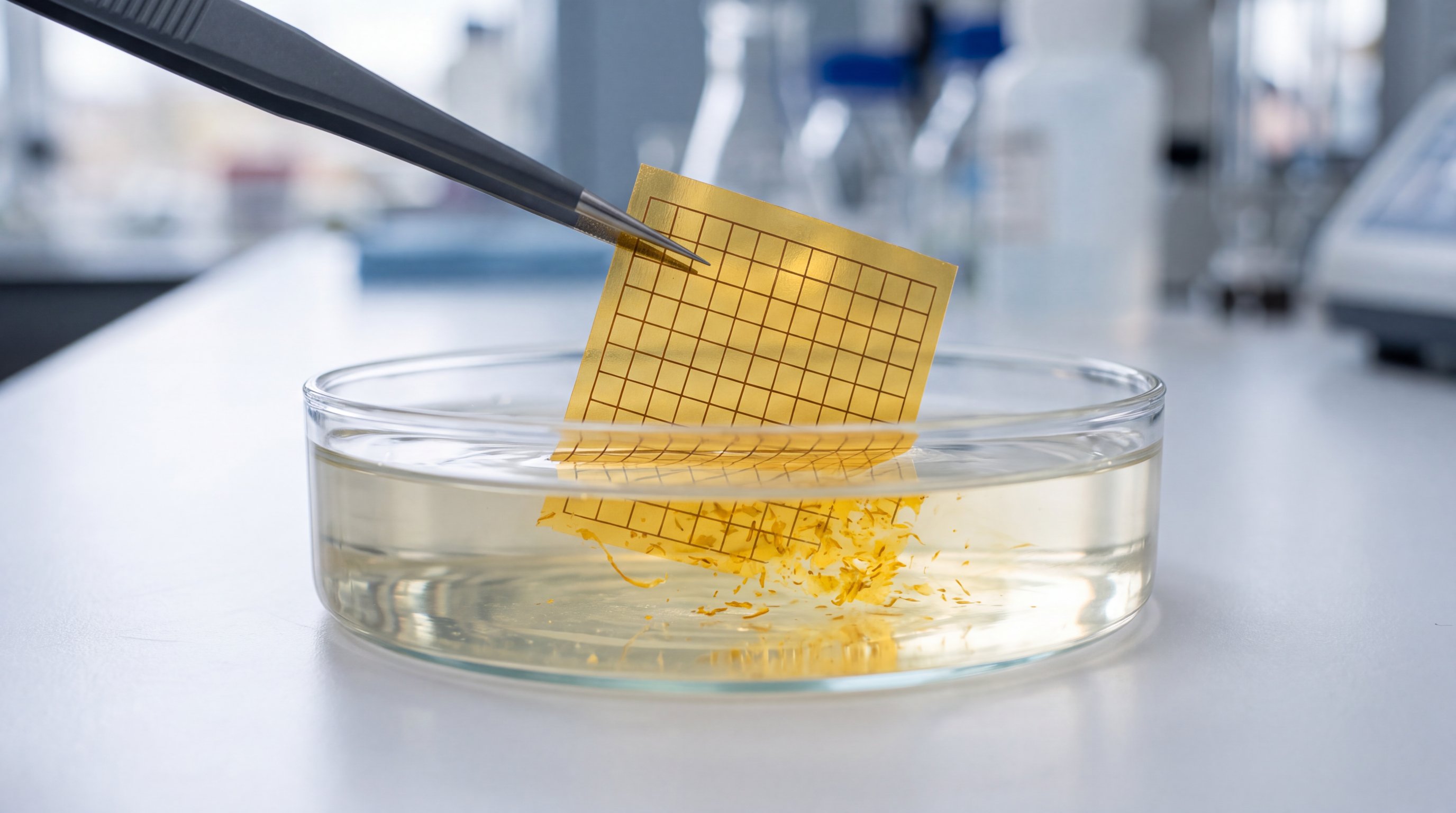
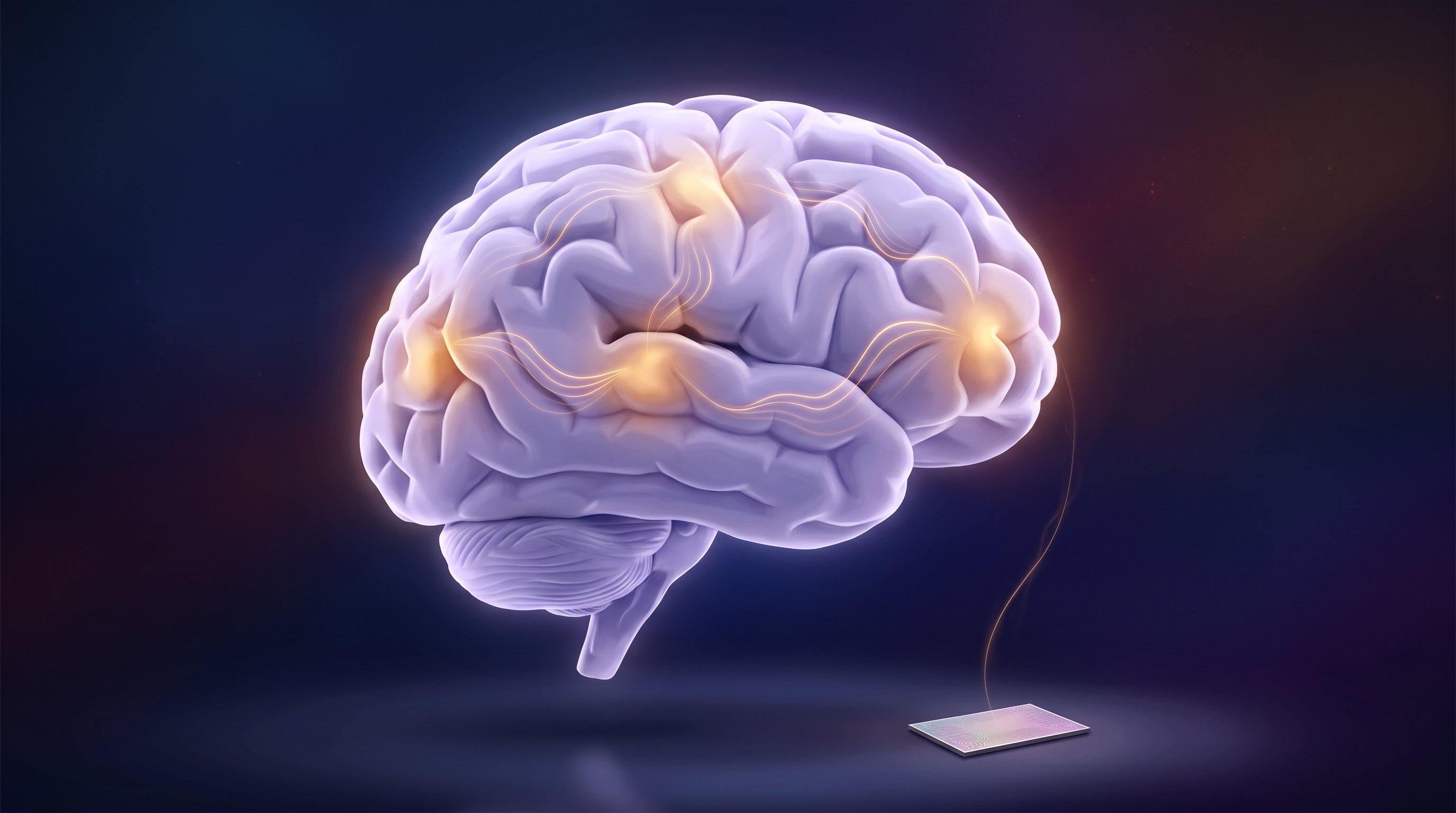
Our brain does something that computers still find difficult: it calculates and remembers in the same place. An ordinary computer constantly sends data back and forth between the calculating part and the memory, and that uses a lot of electricity. Our brain runs on about 20 watts, as much as a weak light bulb.
Researchers are trying to imitate this with artificial synapses. A synapse is the connection between two brain cells. The more often that connection is used, the stronger it becomes; that is how we learn and remember. Artificial versions are usually made of silicon and metals, in expensive dust-free factory halls. After use they end up on the pile of electronic waste.
A team led by Yang Li of Suzhou University of Science and Technology in China has now made an artificial synapse that is printed entirely with liquid ink, at room temperature. After use, the chip can be dissolved in six minutes. The research appeared in the International Journal of Extreme Manufacturing.
Molecules like a neat stack of sheets
The heart of the chip is a thin layer of dye molecules from the same family as the part of our red blood cells that holds on to oxygen. The researchers let these molecules arrange themselves into flat sheets. Weak chemical bonds hold them in place, a bit like Velcro. The sheets lie on top of each other like a stack of paper, with a distance of 0.35 nanometres between each sheet. That is more than a hundred thousand times smaller than the thickness of a hair.
That neat arrangement makes the synapse fast and reliable. A small pulse of current in one direction pushes electric charge to fixed spots in the material. After that, current flows through it more easily: the connection has become stronger. A pulse in the other direction removes the charge again. It works like a dimmer switch that remembers how far it is turned up. According to the researchers, the synapse holds ten different settings and switches in 26 nanoseconds, or 26 billionths of a second.
Recognising handwriting
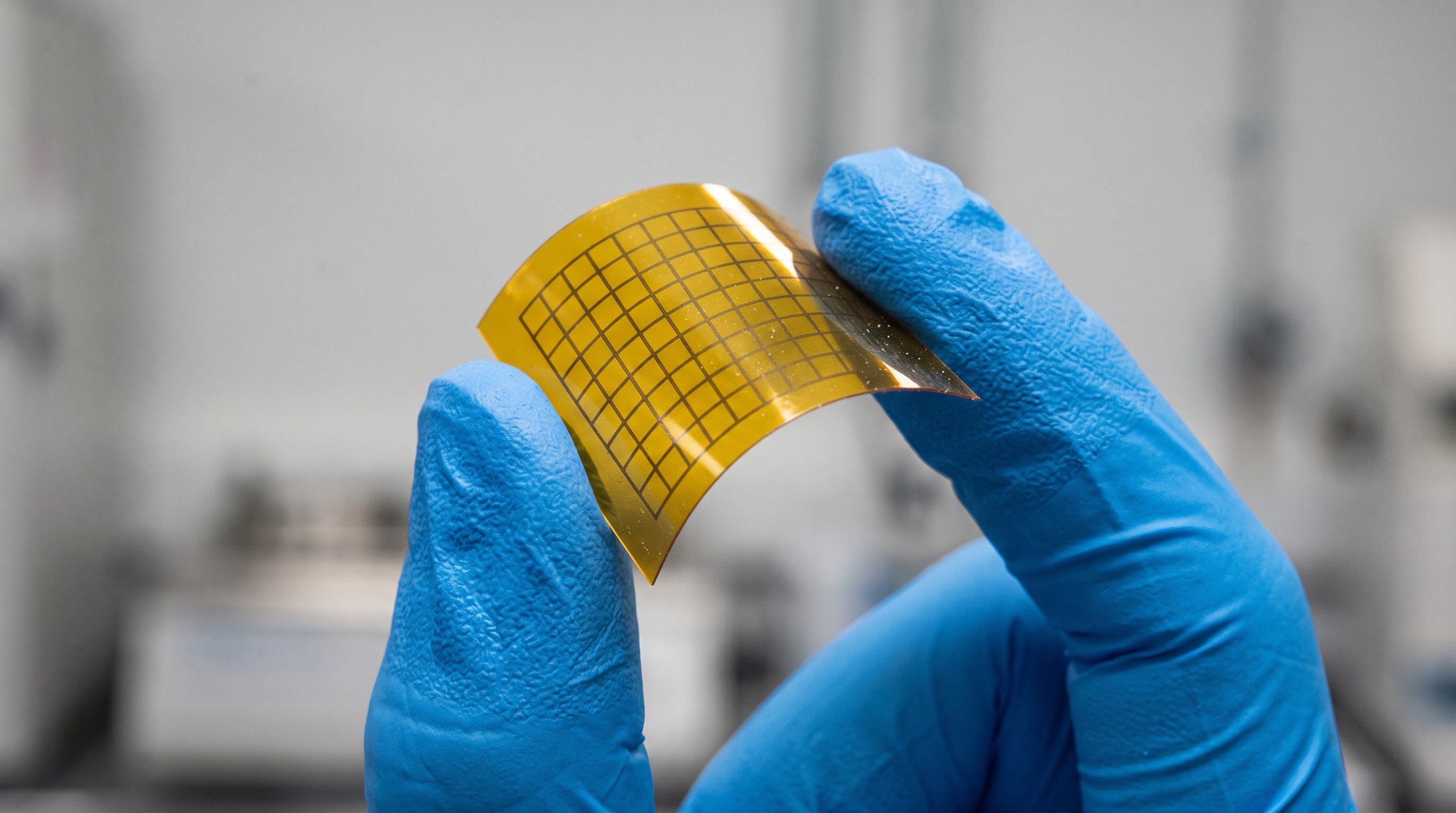
To test whether the synapses can really calculate, the researchers printed a hundred of them in a grid of ten by ten on a flexible sheet of plastic. With it, they had a neural network recognise handwritten digits. A neural network is the kind of computing model that AI also runs on. According to the team, it got it right in 97.2 per cent of cases. Ordinary software on a normal computer scores 99.2 per cent on the same test.
The sheet also kept working after it had been tightly bent 200 times in a row, in a curve of 5 millimetres.
Dissolving in six minutes
The chip's electrical connections are also printed with ink; there are no metal electrodes in it. The plastic underneath is a material whose chemical bonds can be undone again. When the researchers put the chip in a warm chemical bath, the plastic and the molecular layer fall apart in six minutes into separate building blocks that dissolve. According to the team, only a small amount of residue that no longer reacts is left behind.
Because everything is applied with ink, such chips can in principle be made with ordinary spray and inkjet printers. The vacuum equipment of chip factories, costing millions, is then not needed. The researchers are thinking first of flexible medical patches and wearable meters for short-term use. These could process health data directly on the body and then neatly disappear. They also see opportunities for data security: a chip that dissolves completely leaves no data behind.
The next steps
A hundred synapses is a first step; our brain has trillions. The team is now working on larger grids. Because the material is sensitive to moisture, the researchers are also developing a wafer-thin protective layer, so that the chips also keep working reliably in humid outdoor air.
What does this mean for the road to the singularity?
AI demands more and more electricity, and a large part of that goes into pumping data back and forth. Chips that, like the brain, calculate and remember in the same place can reduce that considerably. This research shows that such chips do not necessarily have to come from an expensive factory: they can be printed cheaply and disappear again after use.
This brings small, energy-efficient AI closer to the body, for example in a patch that analyses measurements itself without sending everything to a data centre. And AI can in turn help to find materials like this. Countless variants of such molecular frameworks can be imagined. AI models that oversee chemistry, physics and electronics at the same time could in future point out more quickly which ones work best as an artificial synapse. In this way, AI can help build the energy-efficient hardware on which the AI of tomorrow will run.
What is the technological singularity? Read the explanation →