Nederlands
US data centres plan more than 100 gas power plants of their own
In the United States, more than 100 gas power plants have been announced to supply data centres directly, together over 115 gigawatts. Builders want to avoid waiting years for a grid connection. A small share is already running or under construction.
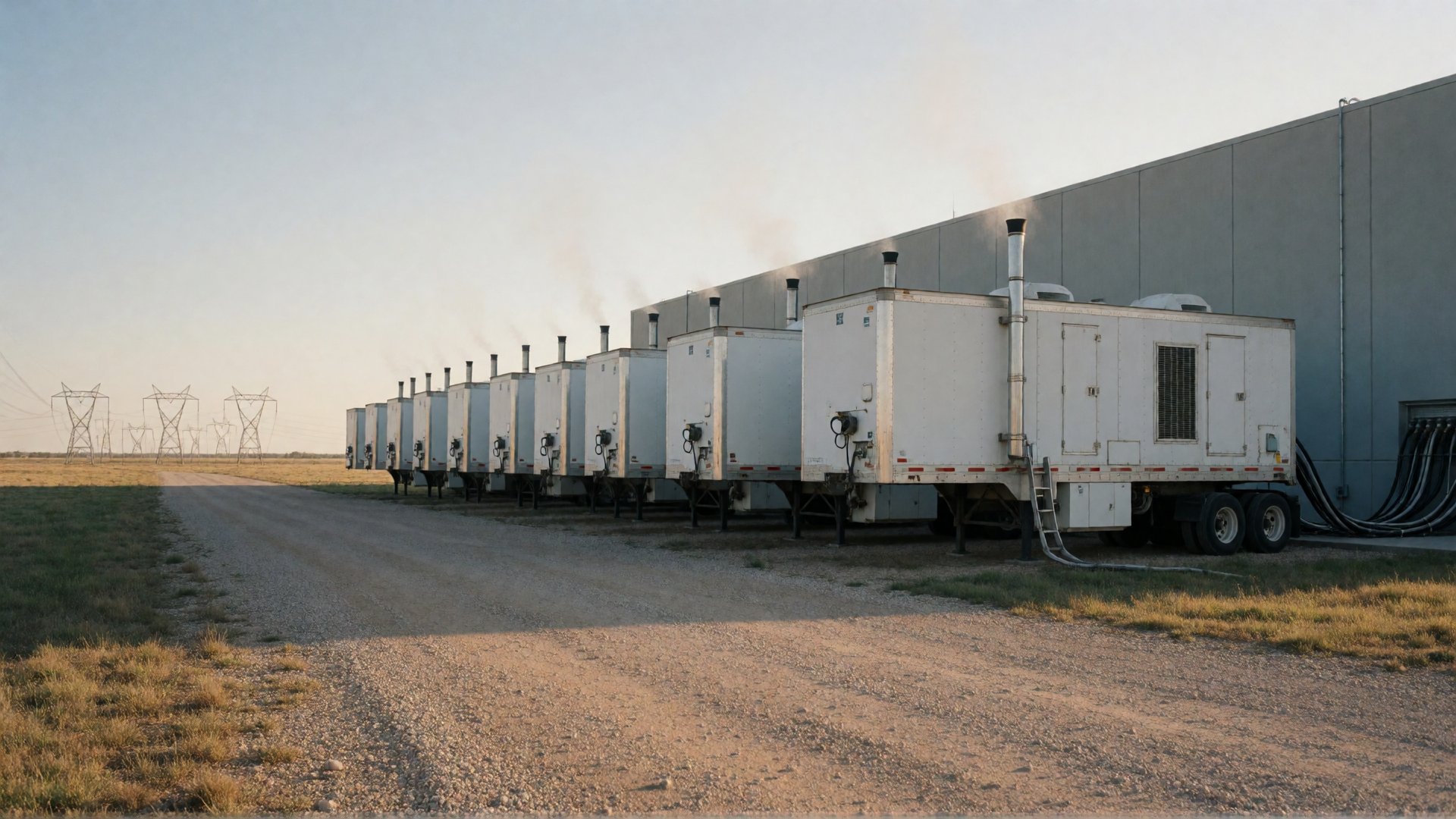
In the United States, a new data centre can wait up to ten years for a connection to the electricity grid. More and more developers are therefore building their own gas power plant next to the data centre, which supplies the electricity directly. This lets them start sooner, although an on-site plant usually costs more than a grid connection.
According to data from the American research firm Cleanview, more than 100 of these plants had been announced by October 2026, together over 115 gigawatts. That is more than twice the highest electricity demand of the entire state of California. Most of the plans have been announced since the start of 2025. About 4.9 gigawatts is already running and 15.8 gigawatts is under construction. So it is quite possible that many of the plants will never be built.
Having its own plant does not always mean that a data centre stays off the grid for good. Some developers want to connect later after all and then keep the plant only as a backup.
Who is building, and with which turbines?
An earlier Cleanview report, from mid-2026, counted 59 data centres with plans for their own power supply, together about 90 gigawatts. That is more than a quarter of all planned capacity of American data centres. They include projects by Meta, Microsoft, Amazon and Oracle. Between them, OpenAI and Anthropic have signed leases for more than 10 gigawatts of on-site power at data centres.
The most efficient large gas plants are hard to get, because turbine makers cannot keep up with demand. Developers therefore also choose mobile generators on lorries, turbines originally designed for aircraft and warships, and large gas engines. These get less electricity out of the same amount of gas.
More emissions, higher gas prices
About 40 per cent of American electricity comes from nuclear power plants and renewable sources. A grid connection therefore usually means lower emissions than a data centre that runs entirely on its own gas plant. The research firm BloombergNEF calculated that the planned American plants, if they are all built, could together emit 345 million tonnes of greenhouse gases a year in 2035. That is 152 million tonnes more than if the same data centres used electricity from the grid, and more than the whole of the Netherlands emits in a year.
Extra demand for natural gas can also push up the gas price. About 60 per cent of American households heat their homes or cook with gas. Matthias Fripp of the American think tank Energy Innovation says that solar and wind power with batteries could be a cheaper way to supply data centres with electricity quickly.
Permits can also slow down construction. In the state of New Mexico, the authorities blocked a gas pipeline that was to feed a 2.45-gigawatt on-site plant at a large data centre project of OpenAI and Oracle.
What does this mean for the road to the singularity?
For AI companies, electricity is now as much of a bottleneck as chips. A company that gets a new data centre running a few years earlier can train larger models sooner. If one company does this with its own power plant, the others feel the pressure to do the same, even if it costs more: whoever waits for the grid falls behind.
Once a gas plant has been built, it often stays in use for decades, even if the grid becomes available after a few years. That is why it matters what gets built next to the turbines. If solar, wind and large batteries at data centres become cheap and quick enough to build, computing power for AI can keep growing without emissions growing with it. Then AI's hunger for electricity becomes a boost for clean energy.
What is the technological singularity? Read the explanation →