Nederlands
US research labs let AI run X-ray experiments on its own
Five US national laboratories let AI build X-ray images in real time, pick interesting spots in a chip by itself and operate the measuring equipment in plain language. This helps researchers get more out of scarce measuring time.
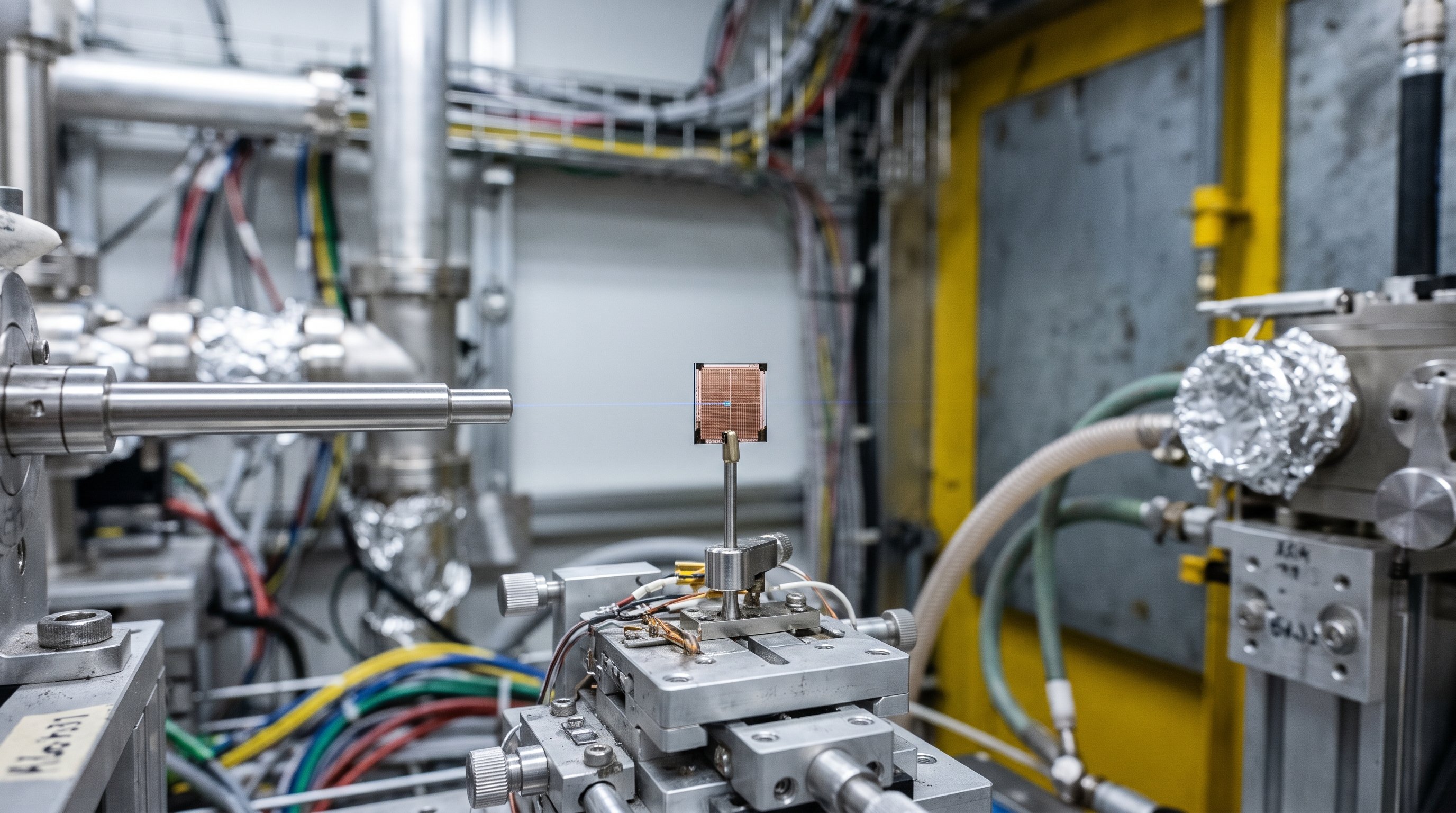
Anyone who wants to know what a computer chip or a battery looks like on the inside can scan it with very bright X-ray light. That light comes from a particle accelerator, and measuring time there is scarce. Such measurements also produce so much data that researchers often need hours or days of computing before they have an image. Only then do they find out where they should have looked more closely.
Five national laboratories of the US Department of Energy now show that AI can do this work during the measurement itself. They work together in the SYNAPS-I project, led by the Advanced Light Source at Lawrence Berkeley National Laboratory. Argonne, Oak Ridge, SLAC and Brookhaven are also taking part. Brookhaven National Laboratory reported the latest results on 4 November.
AI chooses where to look next
At Brookhaven's NSLS-II X-ray source, an AI system looked at the images as soon as they came in. It picked the interesting spots in a complex sample by itself and then had them measured in high resolution, with no human involved. According to Daniel Allan, who leads the data engineering group at NSLS-II, a measurement can therefore run on its own for hours and collect a lot of data only at the important spots.
From hours of computing to real-time images
A second test was about a technique that combines very many small X-ray images into one sharp 3D image. This normally takes a lot of computing, because the computer has to refine the image step by step. The researchers replaced this with an AI model trained at Argonne. Together with chipmaker NVIDIA, they showed that it can build 200 images per second while the measurement is still running.
Another AI model, trained at NSLS-II, produced an image of a microchip using a little less than a tenth of the measurement data normally needed. This works best for thin, flat samples. Measuring less means a shorter measurement and less radiation on the sample.
To automatically recognise which material or component sits where in the 3D images, the team trained a freely available image recognition model from Meta, Segment Anything Model 3. According to Hanfei Yan, lead researcher at one of the NSLS-II measuring stations, this helps anyone who needs to look into materials quickly and sharply: from hidden faults in chips to wear in batteries.

Playing loads YouTube, which may set cookies. More information
Operating the measuring station in plain language
At Argonne, the researchers went one step further. There, the AI receives an instruction in plain language, instead of code or technical commands. The system then works step by step by itself: it makes an image, looks at it, decides where to go next and keeps searching until it has found the requested spot. After that, it switches to a sharp measurement by itself. The AI carries out simple steps on its own; for steps that carry more risk or doubt, it first asks a human for permission.
The team tested this on a chip, where the AI had to find the boundary between two regions, starting from a point deep inside the component. According to the researchers, the same approach also works for catalysts, metals and quantum components.
Next steps
The team wants to train the AI models on more kinds of data so that they become more reliable, and to extend the approach to other 3D techniques. The big goal is that the 3D image forms during the measurement and keeps getting sharper, and that the AI decides by itself where to measure next. According to Alexander Hexemer of Lawrence Berkeley National Laboratory, who coordinates the project, no single lab can do this alone.
What does this mean for the road to the singularity?
Here, AI does not only analyse the data afterwards but steers the experiment itself: measuring, making an image and deciding where to look next all happen in one loop. This is a concrete step towards laboratories that run most of their experiments themselves. Because this is research into chips, batteries and new materials, it could speed up exactly the research on which tomorrow's technology depends.
What is the technological singularity? Read the explanation →