Nederlands
European physics prize for the discoverers of a third kind of magnetism
Three physicists receive the Europhysics Prize 2026 for altermagnetism: magnets that attract nothing from outside, yet sort electrons like an ordinary magnet. This opens the way to smaller, faster and more energy-efficient computer memory.
The discoverers of a new kind of magnetism are receiving one of the most important European prizes in physics. The European Physical Society (EPS) is awarding the Europhysics Prize 2026 to Jairo Sinova of Johannes Gutenberg University Mainz, Libor Šmejkal and Tomáš Jungwirth. They showed that, besides the two known kinds of magnets, a third kind exists: altermagnetism. The prize will be presented on 22 September during a physics conference in Graz, Austria.
The Europhysics Prize has existed since 1975 and is being awarded for the 42nd time this year. According to the Czech Institute of Physics, where Jungwirth works, fourteen earlier winners later also won the Nobel Prize in Physics. It is the first time the prize goes (partly) to the Czech Republic.
Two kinds of magnets, and now a third
Every electron behaves like a tiny magnet pointing in a certain direction. This property is called spin. How all these tiny magnets in a substance are arranged relative to each other determines what kind of magnet it is.
In an ordinary magnet, like the one on the fridge, they all point the same way. Together they form one strong magnet. Such magnets are found, for example, in hard disks and in some kinds of computer memory.
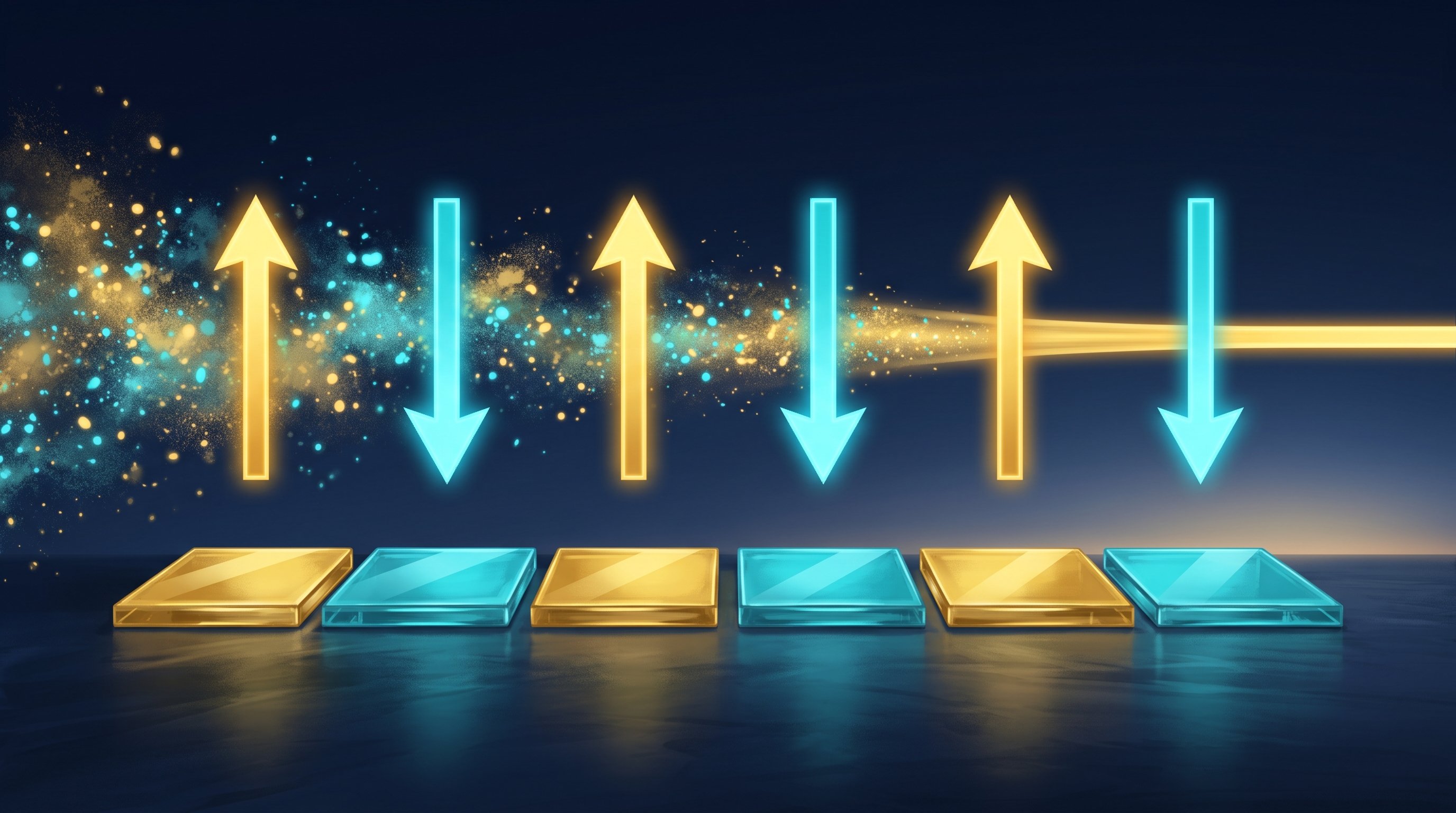
In a so-called antiferromagnet, the tiny magnets point in alternating, opposite directions. They cancel each other out, so nothing can be noticed from outside. For more than a hundred years, physicists assumed that every magnet of this type belongs to one of these two kinds.
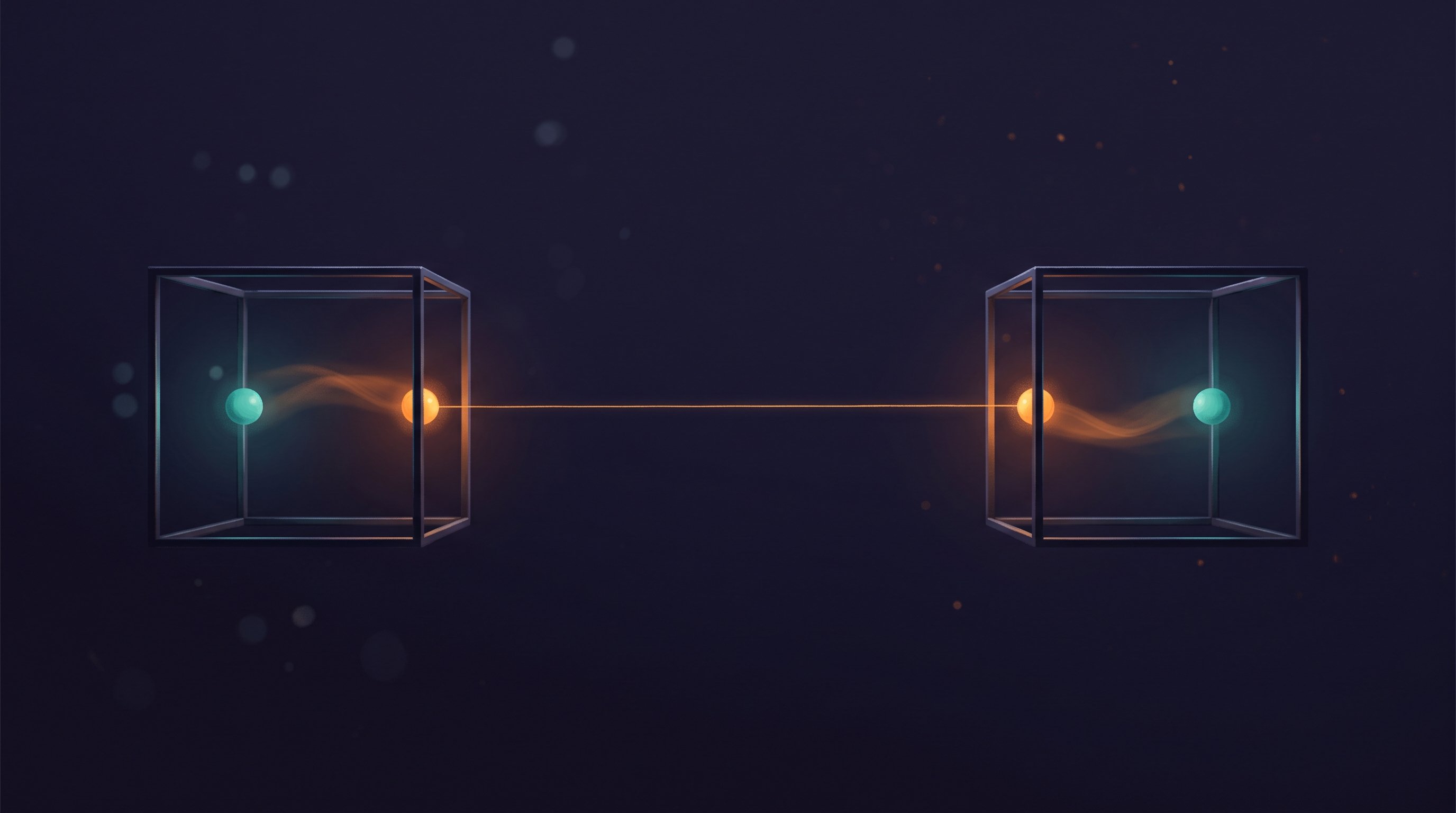
An altermagnet turns out to be a third possibility. As in an antiferromagnet, the tiny magnets cancel each other out, so the material attracts nothing. Yet the electrons flowing through it behave as in an ordinary magnet: they are sorted by the direction of their spin. According to the researchers, altermagnets can also switch magnetic state very quickly.
From theory to proof
The work began on paper. In 2019, Sinova's team in Mainz predicted the existence of these magnets. Šmejkal worked in that group from 2016 to 2024, first as a PhD student and later as a researcher, and also held a position in Prague. According to the university, he did much of the decisive theoretical work, in close collaboration with Jungwirth's group at the Institute of Physics of the Czech Academy of Sciences.
In 2022 the team published a complete classification of altermagnets, with hundreds of materials that qualified. In early 2024 the first direct proof followed. Researchers examined manganese telluride with bright light from a particle accelerator. For decades this substance had been regarded as an ordinary antiferromagnet, but it turned out to show the typical behaviour of an altermagnet. The journal Science then put altermagnetism on its list of the most important scientific breakthroughs of 2024.
Altermagnetism is now one of the fastest-growing research areas in physics, with hundreds of publications in a few years and research groups in Europe, North America and Asia.
Why this matters
Altermagnets are especially interesting for spintronics: electronics that uses not only the electric charge of electrons, but also their spin. This makes it possible to store and read out information. Ordinary magnets do this well, but they interfere with each other when placed very close together, as in a chip with billions of memory cells. Altermagnets do not have that problem, because they are not magnetic from outside. That makes smaller, faster and more energy-efficient memory chips conceivable.
According to the researchers, the discovery also touches on other big questions in physics, such as superconductivity: conducting electricity without any resistance. The next step is to find out which altermagnets work best and how to build them into chips. Work on this is now under way around the world.
What does this mean for the road to the singularity?
Ever more powerful AI demands ever more computing power, and a large part of the energy in computers is used to store data and move it back and forth. A new kind of magnet that can hold information compactly, quickly and efficiently is therefore a building block for the computers of the future. It also shows that even an old field such as magnetism can still produce fundamental surprises.
Here AI itself can come to play a big role. The theory points to hundreds of candidate materials, and calculating and comparing them all is exactly the kind of work at which AI models are quickly getting better. Such models combine knowledge of chemistry, crystals and electronics that, among humans, is often spread over different specialists. AI agents have already gone looking for related magnets for computer memory. The faster such predictions are tested in the lab, the sooner this third kind of magnet will find its way into real chips.
What is the technological singularity? Read the explanation →
Sources
- ScienceDaily
- Johannes Gutenberg-Universität Mainz: persbericht Europhysics Prize 2026 (24 juli 2026)
- European Physical Society: aankondiging Europhysics Prize 2026
- FZU (Fysisch Instituut, Tsjechische Academie van Wetenschappen): prijs voor het eerst naar Tsjechië
- FZU: altermagnetisme experimenteel bevestigd in MnTe (Nature, februari 2024)
- JGU Mainz: Science noemt altermagnetisme een doorbraak van 2024