Nederlands
Chip
A chip is a small piece of silicon with billions of tiny switches, the transistors, on which a computer calculates and remembers. AI chips are built to do the huge amount of computation behind AI models quickly.
A chip, or integrated circuit, is a small slice of silicon carrying billions of minuscule switches: transistors. By switching them on and off, a computer calculates and remembers data. Every phone, car and server contains dozens of chips. You can think of a chip as a city on a postage stamp, with streets, junctions and storerooms that all work together.
How does it work?
Chips are made by printing patterns with light onto a wafer of silicon, layer by layer. Sizes are expressed in nanometres, billionths of a metre. The smaller the components, the more fit in the same space. That usually makes a chip faster and more economical, although it also depends on the design.
Running an AI model means a great deal of computation that can be done at the same time. That is why data centres use chips that are good at this, such as Nvidia's graphics chips. In addition, companies design their own AI chips. A chip also needs memory, and the closer that sits to the computation, the faster things go.
Why it matters
Chips determine how fast and how cheap AI can become. At a major data centre trade show, the American company d-Matrix showed that an AI model answers faster when ordinary graphics chips and its own chips share the work, each doing the part it is good at (link).
It is also about who can make the chips. Japan gave TSMC the go-ahead to make 3-nanometre AI chips in Kumamoto from the end of 2028, the first time in that country (link). Meanwhile China is showing how far it has got with its own chips: there, the company Sugon linked 100,000 domestically made computing cards into a computing cluster (link). Reports like these show that chips are not just technology, but also decide where computing power for AI becomes available.
Articles about Chip
-
Gemini gets a real desktop app, with a shortcut to Google's programming agent
Google now has a Gemini app for Mac and Windows. Since 13 October, one button on the Mac also opens Antigravity, Google's AI programming environment. This gives Google its own answer to ChatGPT with Codex and Claude with Claude Code, although it is not yet all in one app.
-
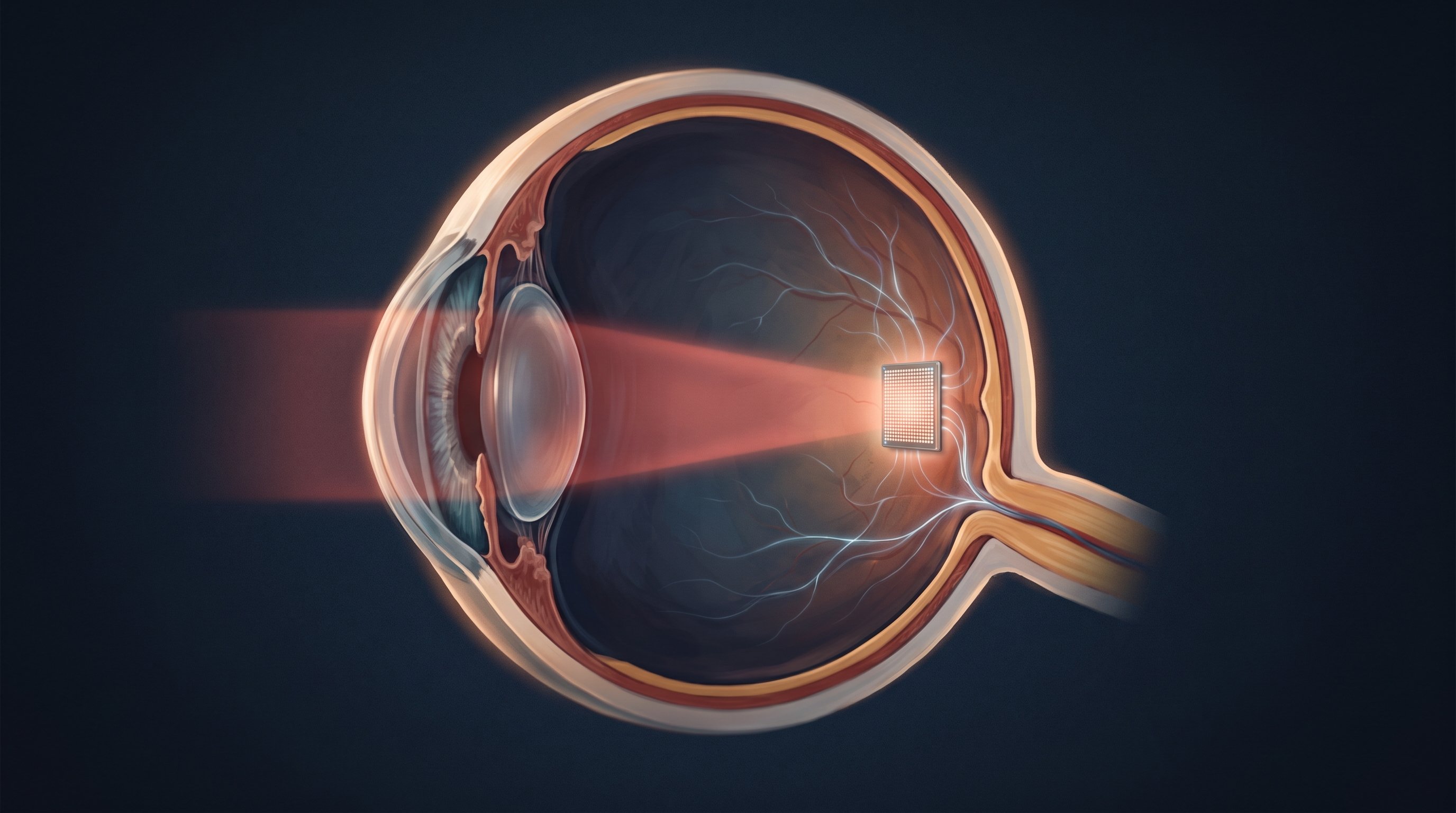
Retinal implant lets people with macular degeneration read again
Science Corporation's Prima implant has been allowed in Europe since July for an advanced form of macular degeneration. In a study, more than 80 per cent of participants could read clearly more letters after a year. In the US, the application is still under way.
-
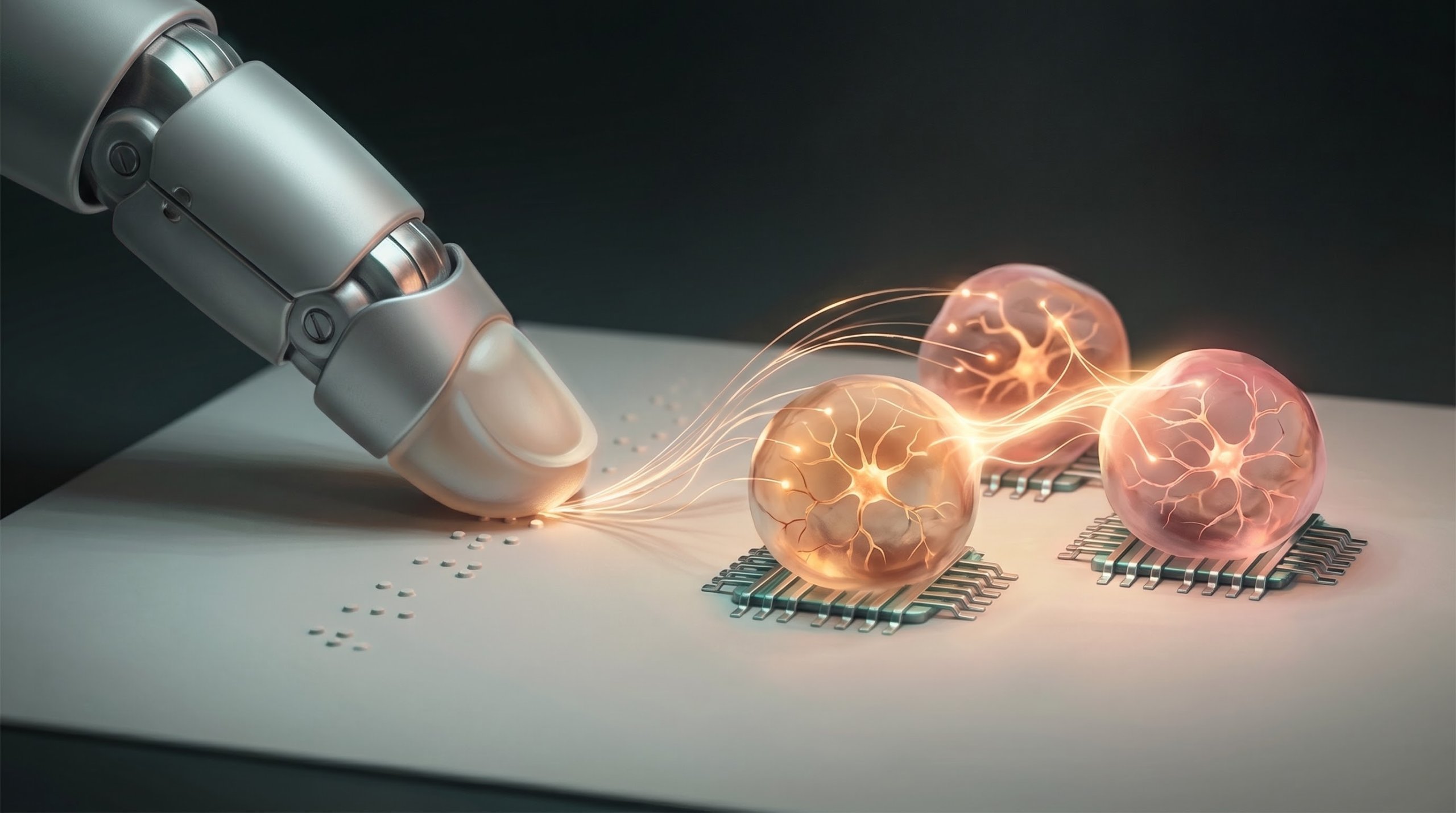
Researchers read braille with lab-grown brain tissue
Researchers at the University of Bristol sent braille, felt by a robotic finger, as small electrical pulses to lab-grown balls of brain tissue. From the response of three balls together, they read 83 per cent of the letters correctly. A first step towards energy-efficient biocomputers.
-
Meta releases Muse Spark Open: a large AI model for programming that also runs on your own computers
Meta has released Muse Spark Open, a large AI model for programming and independent agent tasks that anyone can download. According to Meta, it is the strongest American open model so far, and it even runs on two Mac Studios.
-
AI designs new materials better when it also looks at the electrons
Researchers at the University of Tokyo taught Microsoft's AI model MatterGen to design the distribution of the electrons along with each new crystal. As a result, the model more often comes up with materials that are both stable and new.
-
Northwestern builds glasses whose sensors generate their signal from facial movements
Researchers at Northwestern University built GlassTENG: glasses with sensors that generate their signal from facial movements. They recognise the pulse, firm blinking and jaw movements, and the readout electronics use almost no power. A battery-free version is the next step.
-
AI agents find two candidate magnets for a new kind of computer memory
More than ninety Claude Opus 5.5 agents at Vals AI spent three days calculating magnets for future computer memory. They arrived at two candidates, including a substance from 1999. It remains calculations only: nobody has measured the predicted properties yet.
-
European physics prize for the discoverers of a third kind of magnetism
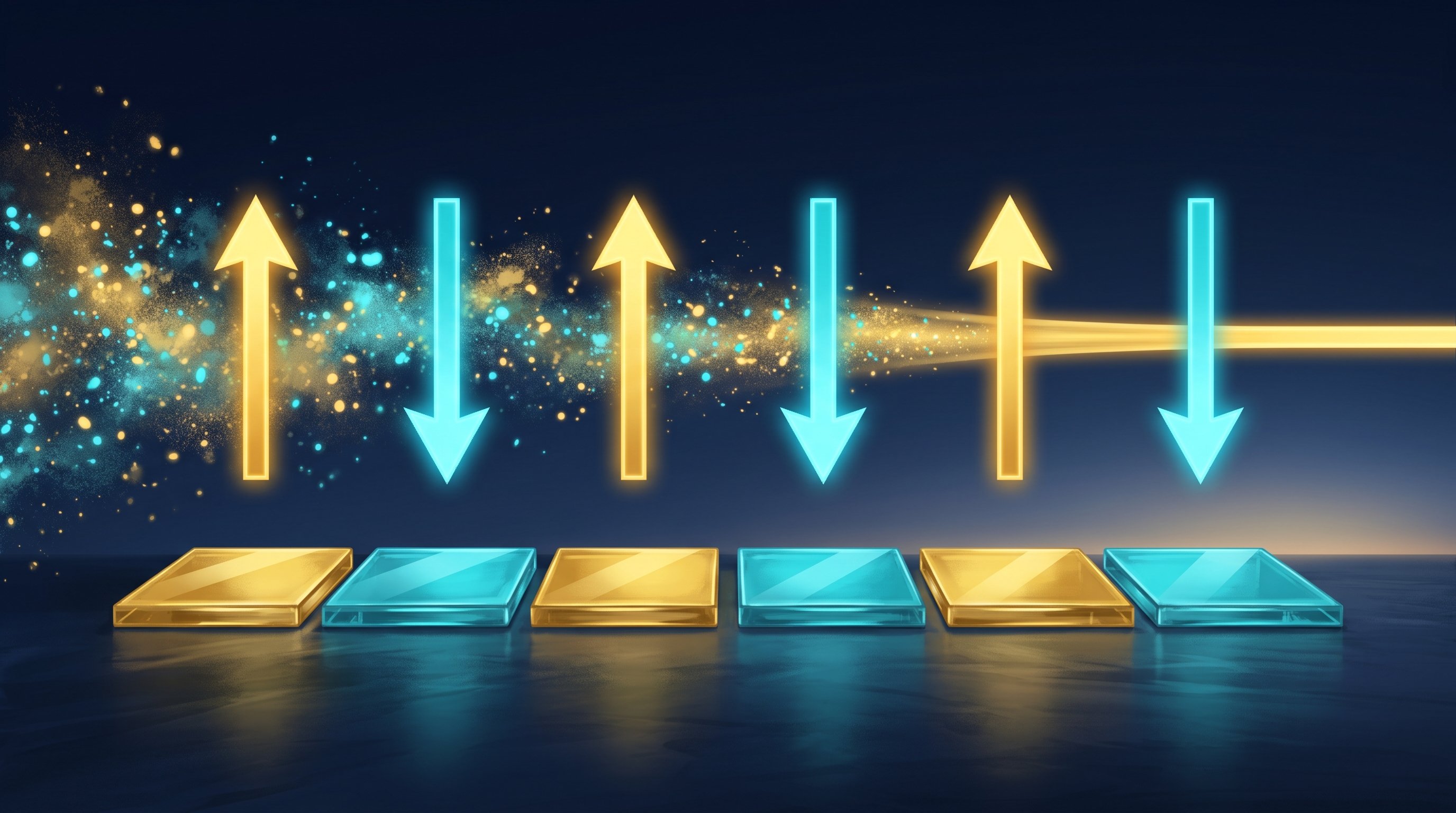
Three physicists receive the Europhysics Prize 2026 for altermagnetism: magnets that attract nothing from outside, yet sort electrons like an ordinary magnet. This opens the way to smaller, faster and more energy-efficient computer memory.
-
Lab-grown human brain tissue learns to balance a virtual pole with an AI coach
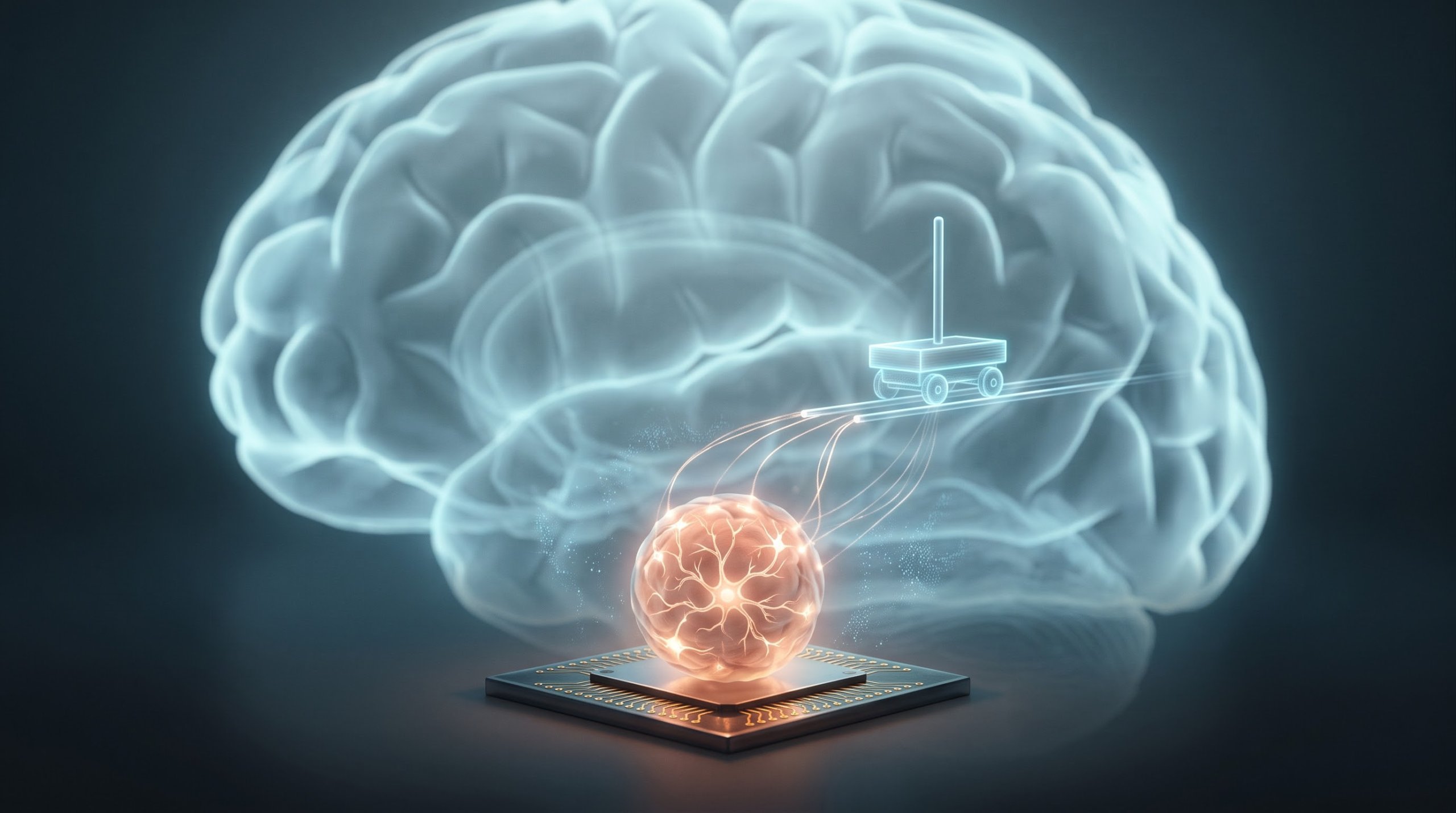
At a meeting in Silicon Valley, a team from UC Santa Cruz showed how cultured human brain tissue learns a classic control task: keeping a pole upright on a cart. An AI algorithm acts as the coach. A volunteer with a keyboard could barely keep up with the tissue.