Nederlands
Machine learning
Machine learning is a way of getting computers to learn from examples instead of fixed rules. A model finds patterns in lots of data on its own and uses them for new cases.
With machine learning, nobody writes out all the rules of a program. Instead, the computer is given many examples and finds the patterns itself. You can compare it to how a child learns what a dog is: not from a definition, but by seeing a great many dogs.
How does it work?
It starts with training data: a large collection of examples, such as photos with the right name attached, or weather maps from the past. A model, often a neural network, makes a prediction. It checks how far off it was and adjusts small settings within itself, the parameters. This repeats millions of times, until the predictions are good enough. A neural network has many layers of such settings. When a network has many layers, we speak of deep learning.
After training, you use the model on new cases it has never seen. It can do more than just recognise things: language models predict the next piece of text, and other models can design images, proteins or materials.
Why it matters
Almost all the AI that makes the news is machine learning. The idea is older than you might think: as early as 1950, Alan Turing proposed building not an adult mind but a childlike machine that you bring up. In doing so he wanted to replace the question of whether machines can think with a test: can an interrogator, using a teleprinter, tell a machine from a human (link)?
Today AI learns from the most varied kinds of data. Researchers at Microsoft, MIT and the European weather centre ECMWF, among others, taught a computer to recognise and correct the fixed errors of weather models. As a result, forecasts two to six weeks ahead get considerably better (link). Chinese researchers did very different work: they trained a model on nearly four million fossils. That mapped the history of life in unprecedented detail, and it suggests that three of the five great mass extinctions unfolded more gradually than thought. Other palaeontologists are somewhat more cautious (link). In every case the result is only as good as the examples the model learned from.
Articles about Machine learning
-
Fifteen computers built with human brain cells work together and do better than one
Australian company Cortical Labs linked fifteen computers that use lab-grown human brain cells. In early tests they did better together than a single machine and a common AI program. The results are preliminary and come from the company itself.
-
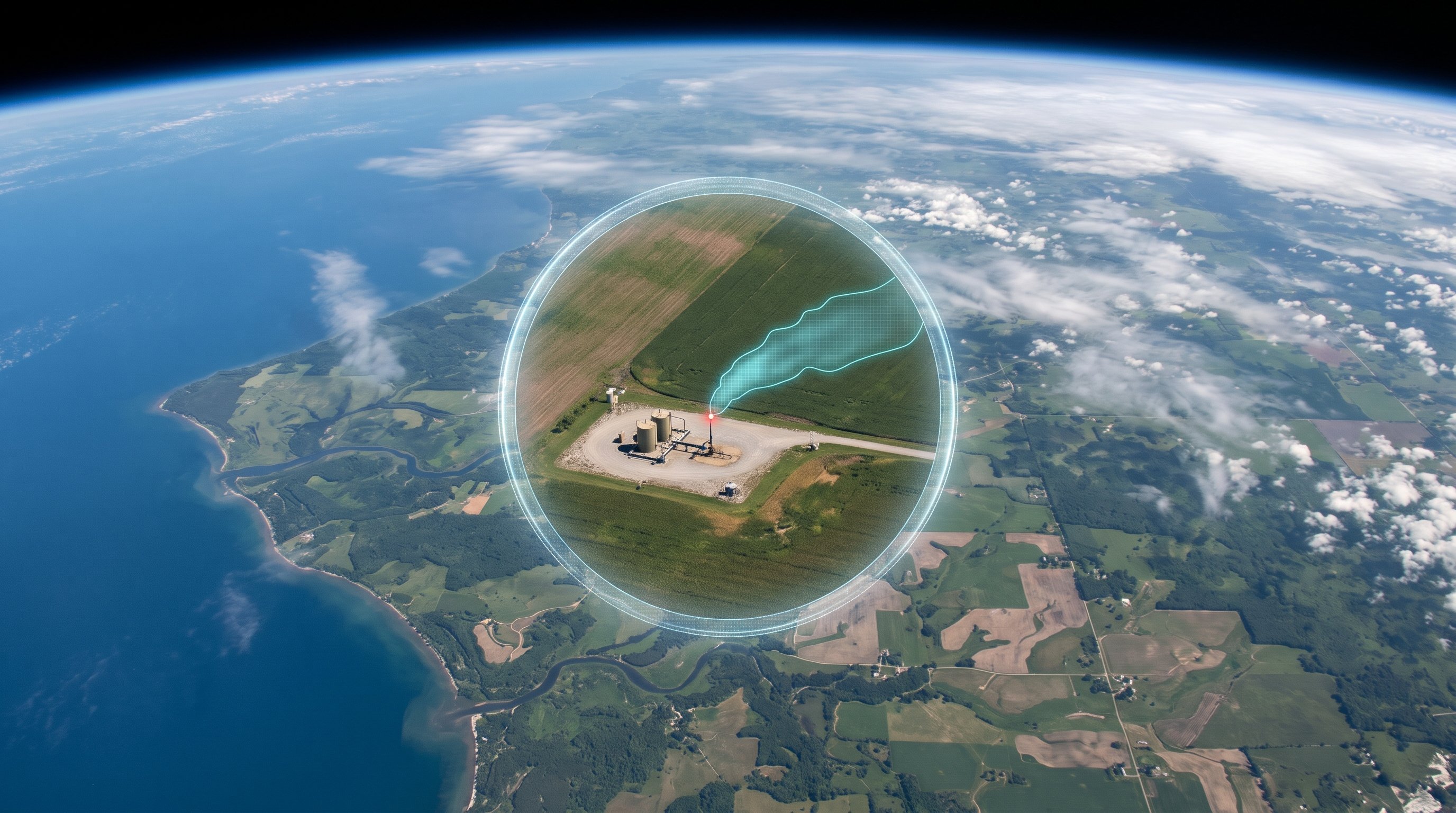
AI from Google and NASA finds many more methane leaks in satellite images
Google Research and NASA built an AI model that detects methane clouds in measurements from the International Space Station. In a test it found about 50% more likely methane plumes than human analysts. The model, code and map are freely available.
-
Free tools take the brakes off Nvidia graphics cards: up to twice as much AI computing power
Free open-source tools remove a brake that Nvidia built into the firmware of its GeForce graphics cards. For AI calculations, some cards become up to twice as fast. In practice the gain is smaller, and the tools are still experimental.
-
AI model designs experiments better than 24 experienced AI researchers
On a new test by P-Zero Research, Claude Opus 5.5 designs better AI experiments than the best of 24 human experts. The model needs less than half the computing time to do so and costs about one thirtieth as much.
-
AI estimates biological age and cancer survival chances from a single face photo
Researchers at Mass General Brigham built AI that estimates, from a single ordinary face photo, how old someone's body is and how likely a cancer patient is to survive. This could help doctors better assess how much treatment a patient can take. Further research is needed first.
-
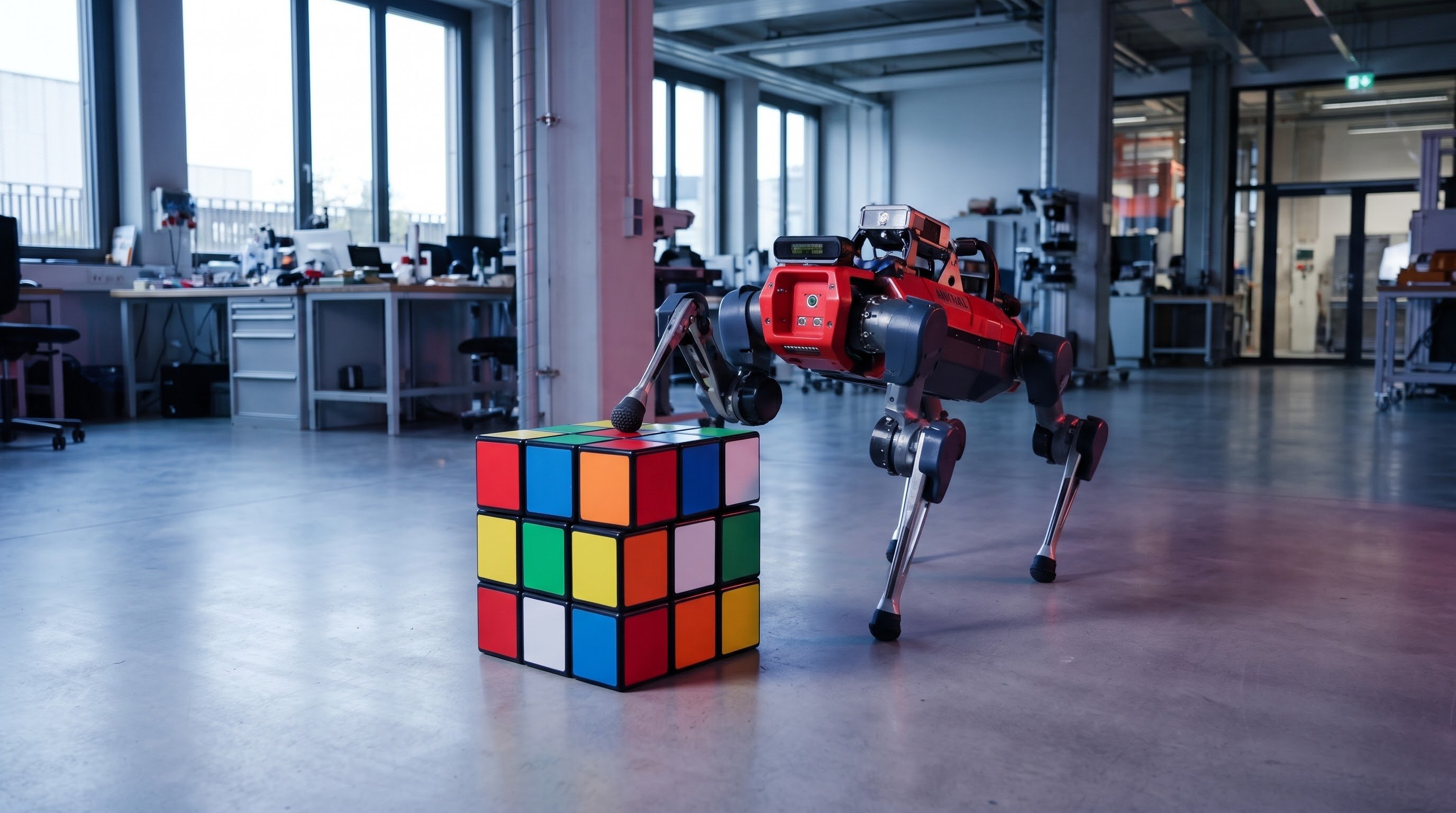
Four-legged robot solves a giant Rubik's Cube using only its legs
Researchers at ETH Zürich and Nvidia taught a four-legged inspection robot to solve a giant Rubik's Cube using only its legs. It tips the cube over and turns the layers, without human help. All three attempts succeeded, each in eight to nine minutes.
-
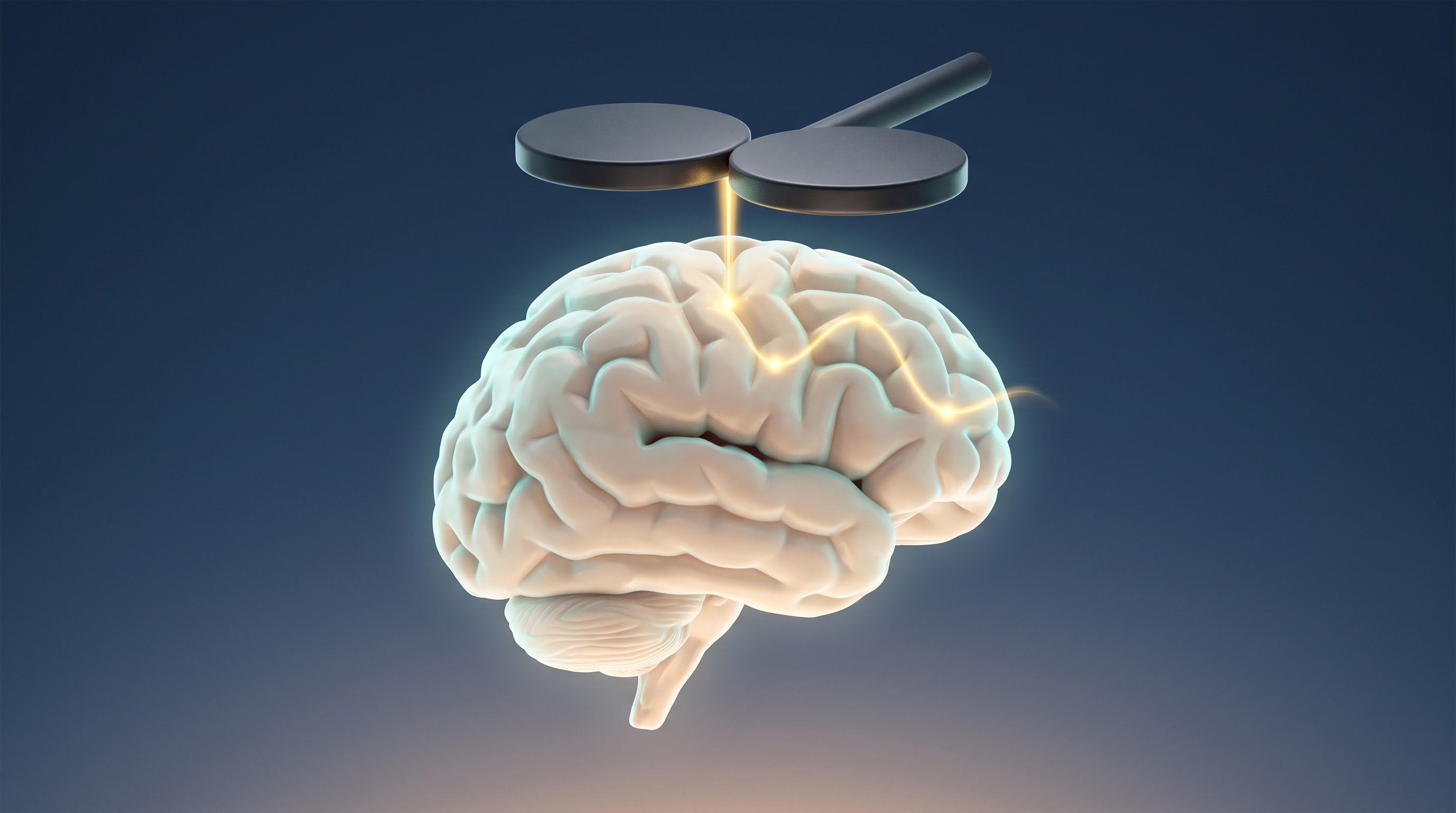
Magnetic brain treatment tuned to the patient's own rhythm cleared for PTSD
In the US, a PTSD treatment has been cleared that tunes magnetic pulses to the patient's own brain rhythm. In a trial with 158 adults it worked better than a sham treatment, without serious side effects. A scientific publication is still to follow.
-
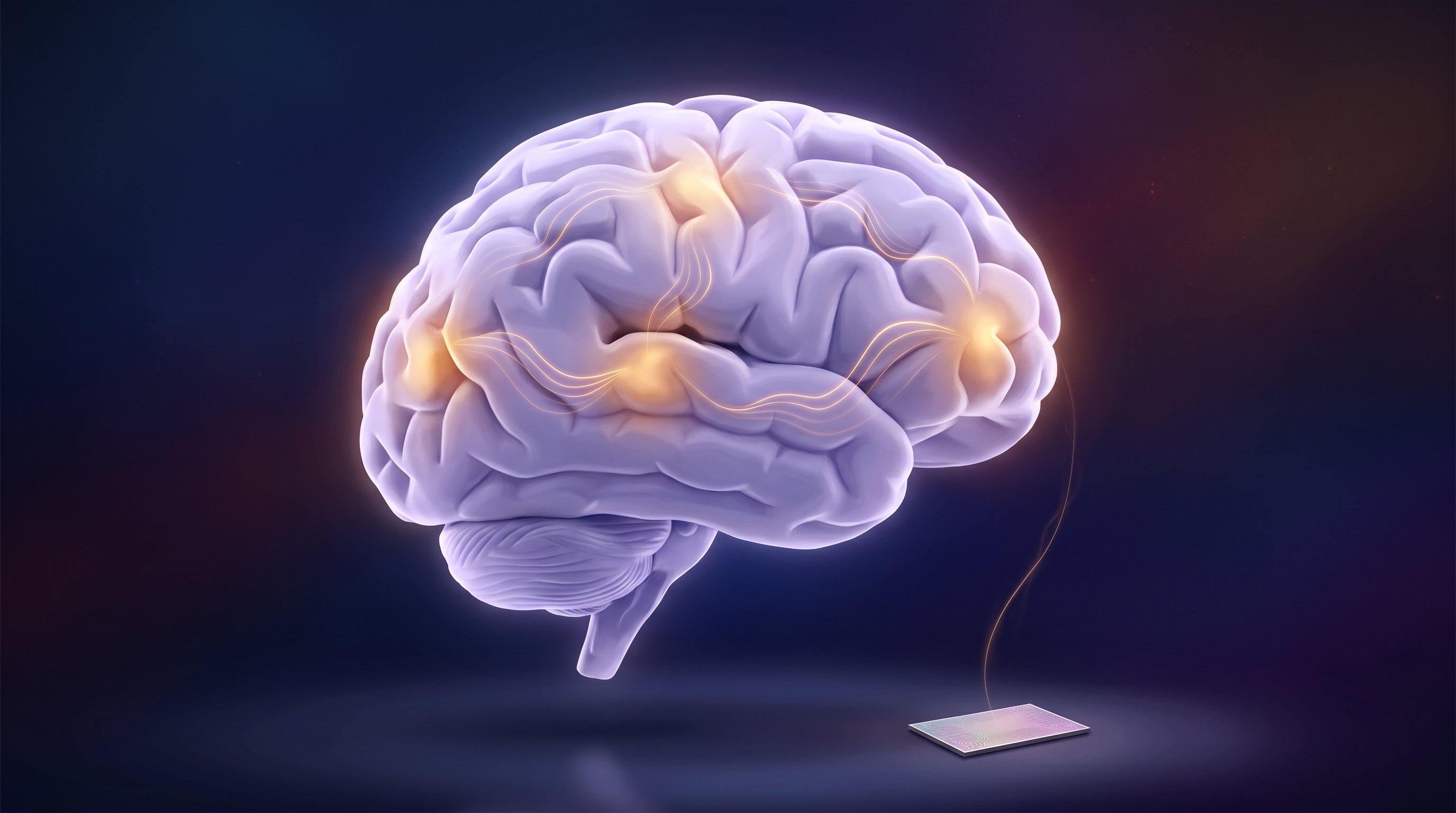
Low-power brain implant recognises mental state from how brain regions work together
Researchers at EPFL have built a chip of 4 by 2 millimetres that measures how brain regions work together and so recognises concentration and emotional arousal. It uses very little power. The chip already works on recordings from people and in rats; patients are the next step.
-
Personalised mRNA vaccine cuts the risk of melanoma returning by 42 per cent
A vaccine made to measure for each patient cut the risk of recurrence or death by 42 per cent in a large study of 1,137 people with melanoma. The full results have now been presented at the European cancer congress ESMO.
-
AI designs molecular scissors that cut disease proteins at a chosen spot
The lab of Nobel laureate David Baker used AI to design enzymes that cut other proteins at a preselected position, including the protein that clumps together in Alzheimer's disease. Some of those enzymes also work in living cells.
-
Free coding model for the laptop was largely developed by AI itself
The AI company Recursive has released Flint, a free AI model that helps with programming and runs on an ordinary laptop. According to the company, its own research AI did a large part of the work: a first step towards AI that improves itself.
-
Quantum computer catches its own errors so well that only 5 in a million remain
Quantinuum's Helios quantum computer set a new record in error correction: on average, something went wrong five times in a million checking rounds. That is ten times better than the previous record. The next step is to show this for more complex calculations too.
-
Unitree has humanoid robot do kung fu and lift cars as a bodyguard
The Chinese robot maker Unitree shows the H2-X, a humanoid robot that fights, jumps and lifts a car to rescue someone. It is mainly a demonstration of what the underlying H2 platform can do; there is no price or sale date yet.
-
AI model designs working proteins from a sentence in plain language
Researchers in China have built an AI model that designs proteins from a description in plain language. In four trials, the result actually did what was asked of it: give off light, break down plastic, convert alcohol and help capture CO2.
-
AI model trained on almost four million fossils sheds new light on the great mass extinctions
Chinese researchers trained an AI model on almost four million fossils. It maps the history of life in unprecedented detail and suggests that three of the five great mass extinctions happened more gradually than thought. Other palaeontologists are somewhat more cautious.