Nederlands
All posts
Latest news
All WATTBA posts, newest first.
-
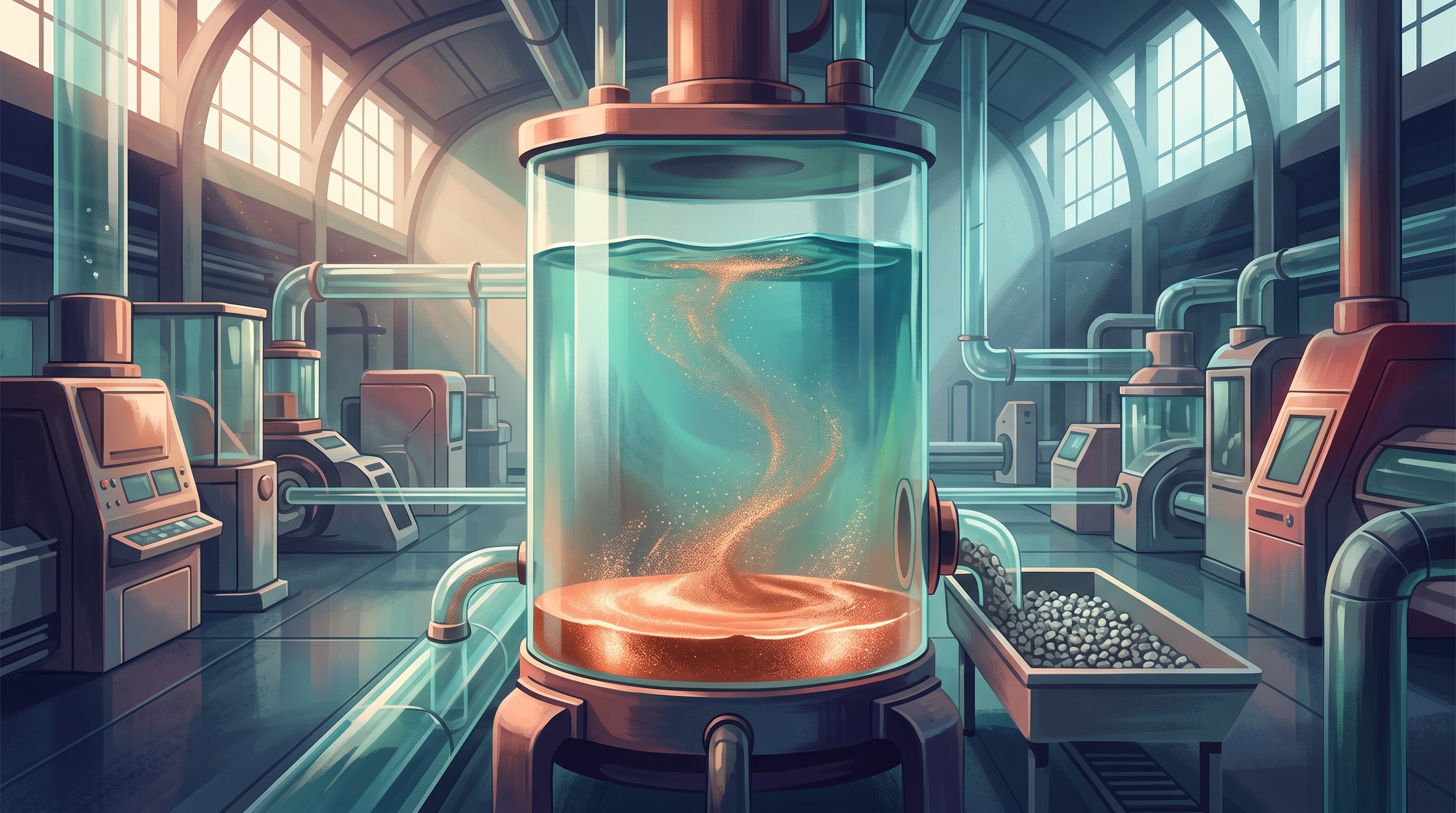
New method removes toxic arsenic from copper without a hot furnace
The Australian mining company Fortescue removes arsenic from copper ore with a liquid instead of a hot furnace. After four years of trials, the first batch of clean copper concentrate has been sold. That could make much copper usable that now stays in the ground.
-
Robot arm with artificial skin feels where it is touched, even without looking
Researchers in Hong Kong built a robot arm with a soft skin that feels touch over almost the whole arm. This lets the arm balance a ball and stop when a hand is in the way, even when its camera sees nothing.
-
Nvidia releases open AI models for digital assistants on servers and laptops
Nvidia has released three new open AI models for assistants that carry out tasks on their own. The largest runs in companies' data centres; the smaller ones simply work on a laptop. According to Nvidia, the large model beats top models on specialist tasks after extra training.
-
Oxford keeps a quantum link between atoms in two places alive for more than ten seconds
Physicists at the University of Oxford linked atoms of strontium and calcium in two places into a single quantum state. By passing the link on to calcium, it lasted more than ten seconds instead of milliseconds. A step towards networks of quantum computers.
-
KAIST's AI fills in the ground beneath clouds on satellite images
Researchers at South Korea's KAIST built an AI model that learns what the Earth looks like from above, including location and scale. This lets it remove clouds from satellite photos and turn radar images into ordinary photos. That will help with disasters and nature management.
-
Probiotics slow an early blood sign of Alzheimer's in Korean study
In a South Korean study, older people with early memory problems took good gut bacteria or a dummy treatment every day for half a year. In the probiotics group, a blood value linked to Alzheimer's went down. Larger and longer studies now need to confirm this.
-
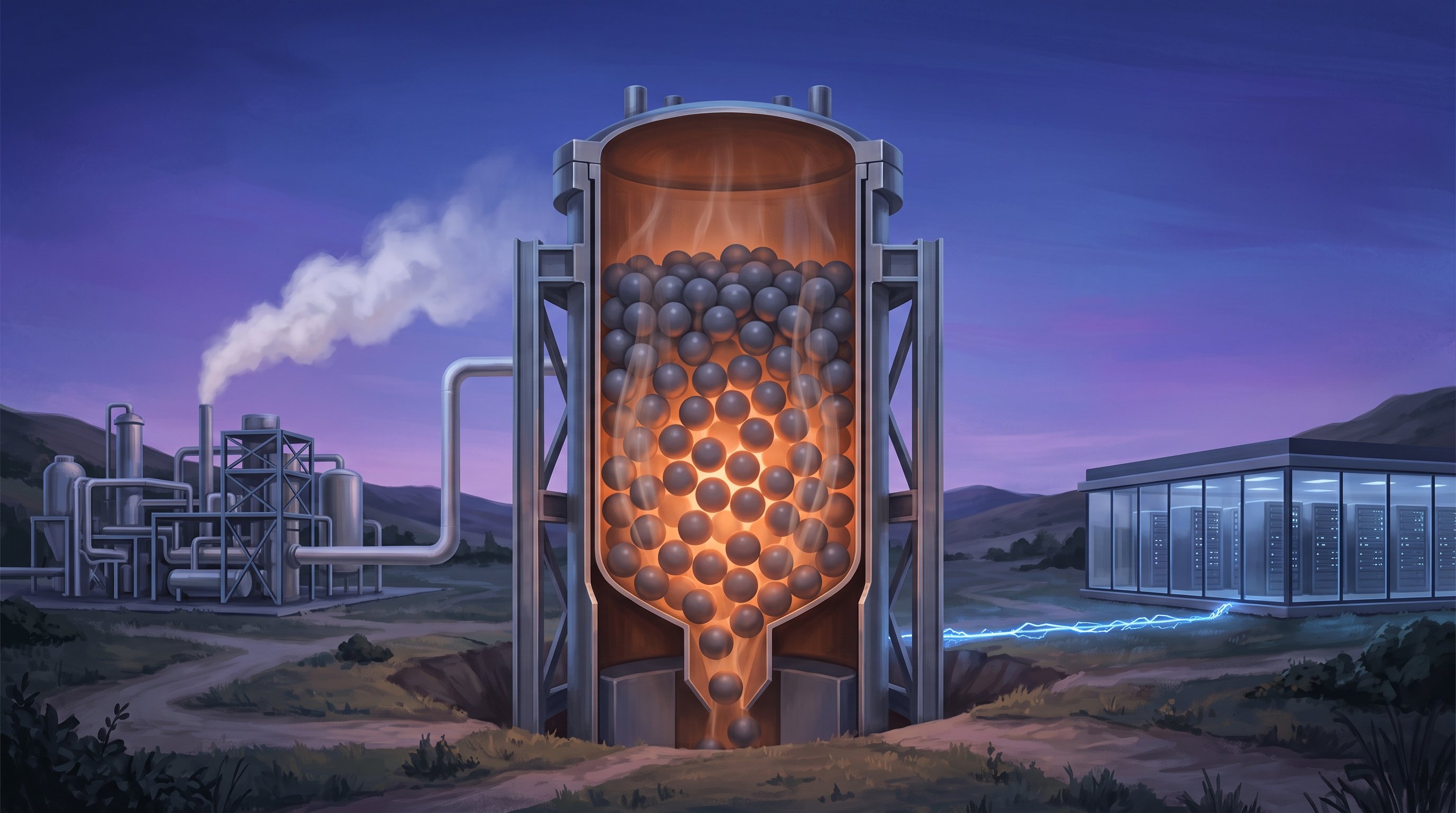
X-energy builds a small helium-cooled nuclear reactor for factories and data centres
The American company X-energy is developing a small nuclear reactor that is cooled with helium gas and supplies hot steam for factories and electricity for data centres. Chemical company Dow and Amazon want to build with it. The first reactors are due to run in the 2030s.
-
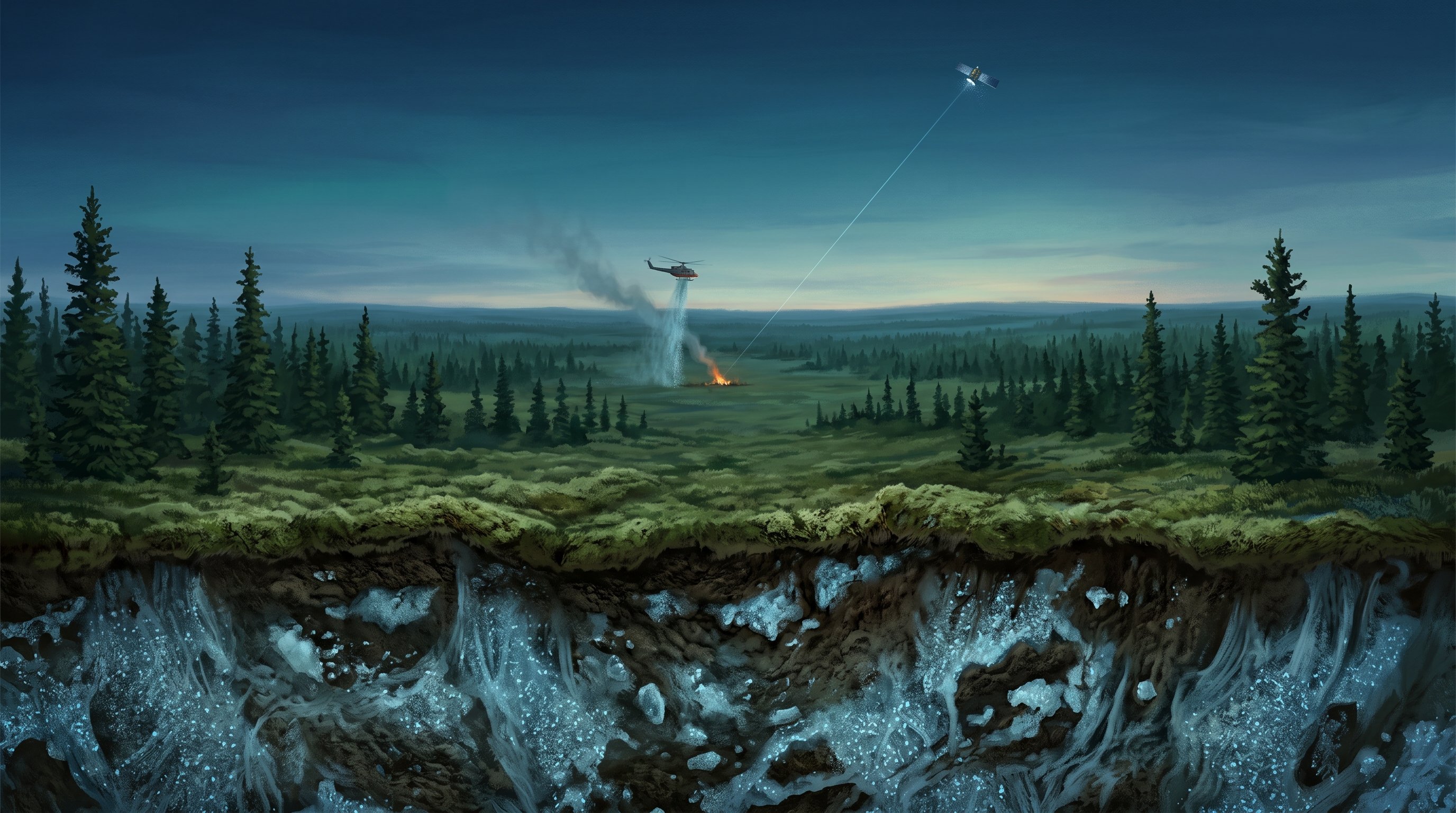
Firefighters in Alaska put out forest fires to protect frozen ground and its carbon
In the north of Alaska and Canada, researchers and firefighters are trying to stop forest fires before they thaw the permanently frozen ground. That keeps a lot of carbon in the soil. New satellites and maps should help; how well it works is now being studied.
-
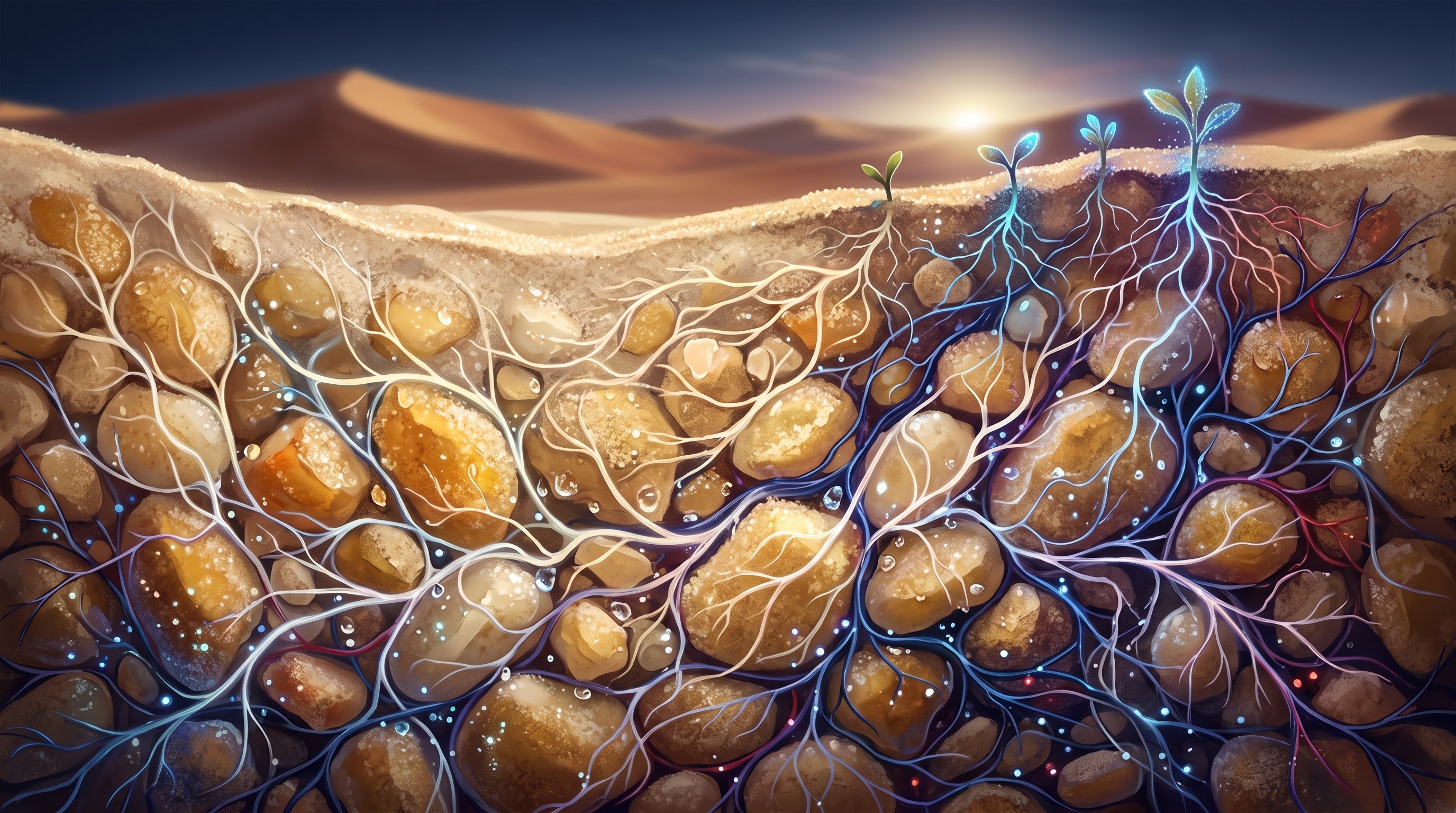
Bacteria and fungi make 'living desert sand' that holds water for longer
Researchers from Switzerland and Abu Dhabi let bacteria and fungi make fibres between grains of sand. As a result, water drains away up to six times more slowly, and with layers of bacterial cellulose even 28 times. It is a first step in the lab; trials with plants will follow.
-
Bacteria turn sand into building material, without a hot kiln
Researchers at ETH Zurich let bacteria glue grains of sand together into a kind of stone, at room temperature. They print and spray facade and wall elements with it. The material is now about as strong as mortar; the next step is to make it stronger and cleaner.
-
Does Claude learn by playing on a desert island?
MIT researchers let the AI assistant Claude loose on a virtual island for thirty hours without any task. It invented its own games, made drawings with blocks and did small experiments. With that experience, it later did better on most new tasks than a version of Claude without that play experience.
-
Made-up company data with a known answer teaches AI agents to analyse better
Researchers from Meituan and Chinese universities build fake worlds full of messy files, and they know exactly what lies behind them. That makes it possible to check whether an AI agent really draws the right conclusion. A model that practised with them became clearly better at data analysis.
-
Researchers let an AI agent think partly without words: faster and cheaper
Researchers from Stanford and Together AI let an AI agent do part of its thinking without writing it out. It only switches to text to look something up or to answer. According to them, it works up to 2.6 times faster this way and scores better than comparable systems.
-
Electron pairs survive after superconductivity is gone
Physicists saw that electrons in a metal keep forming pairs even when it is just too warm for superconductivity. That helps to understand how electricity without losses comes about. The next step is to see whether it also happens inside the material.
-
Lid insert with a sunlight catalyst takes the stink out of the bin
Chinese researchers have built a transparent insert for the lid of a wheelie bin. A lens focuses sunlight onto a cheap catalyst, which breaks down the sour smell of rotting waste. In an outdoor test it did so for more than 40 days in a row.