Nederlands
All posts
Latest news
All WATTBA posts, newest first.
-
Chinese company Sugon shows computing cluster with 100,000 home-grown AI chips
China's Sugon is showing its Sugon 8000: a computing cluster that links 100,000 computing cards made in China. The system combines AI with classic supercomputing and, according to Sugon, has already run ten research projects.
-
Japan launches space probe that is to be the first to bring soil from a moon of Mars to Earth
The Japanese space agency JAXA has launched the probe MMX. In 2031 it is to bring at least 10 grams of soil from the Martian moon Phobos to Earth. That has never been done before, and it could explain how the moons of Mars came to be.
-
One-gram wireless microscope follows thousands of brain cells in freely moving mice
Chinese researchers built a one-gram microscope that a mouse wears on its head. Without cables, it films the activity of more than 8,500 brain cells at once while the mouse walks around, swims and interacts with other mice.
-
Stanford builds a grid of more than 600 light traps to link quantum computers made of atoms
Physicists at Stanford built a grid of more than 600 tiny light traps, each of which can catch the light of a single atom. That helps to read out quantum computers made of atoms faster and later to link them together.
-
Meta has a subsea cable built with two light channels per glass fibre: twice as much data across the ocean
Meta is having a subsea cable laid between the United States and France that can carry 1 petabit per second, according to Meta twice as much as the best cables today. The secret: each glass fibre has two light channels instead of one. The cable is due to work in 2029.
-
Physicist lets AI swap calculation methods between fields: 36 papers in three months
Harvard physicist Matthew Schwartz had the AI model Claude apply calculation tricks from one field in another. With 19 colleagues, that produced 36 scientific papers in three months, from sunspots with a life expectancy to a rainforest that changes faster than expected.
-
AI that knows a head is symmetrical tracks the moving head of an unborn baby during an MRI scan
An unborn baby moves during an MRI scan, so images of the brain fail or come out skewed. Researchers at MIT and Boston Children's Hospital built an AI model that quickly tracks the position of the head. The secret: the model already knows that a head is the same on the left and the right.
-
Robot Digit 5 swaps its bird legs for human legs to work safely alongside people
Agility Robotics has completely redesigned its humanoid robot Digit. The fifth version lifts heavy crates, recharges in nine minutes and sits down by itself when someone comes too close. Co-founder Jonathan Hurst explains why.
-
Working AI server rack lets chips talk through light, with the optics right next to the chip
At a major data centre trade show in the US, three tech companies showed a working server rack in which chips talk through light, with the light components right next to the computing chip. That could make AI data centres much more energy-efficient. Large-scale production is next.
-
Microsoft finds a more economical recipe for training large AI models
Microsoft AI has completed the first training phase of its new base model MAI-Base-2. According to the company, its new approach reaches the same level as a strong Chinese model with a quarter to a twelfth of the computing. The model is now being trained further.
-
Daily exercise keeps astronauts' hearts ready for Mars
Astronauts' hearts shrink slightly in their first weeks in space, but with daily training they recover during a six-month stay. After returning, the hearts coped well with simulated Martian gravity, American researchers report.
-
Humanoid robot walks 560 kilometres on a treadmill in nine days
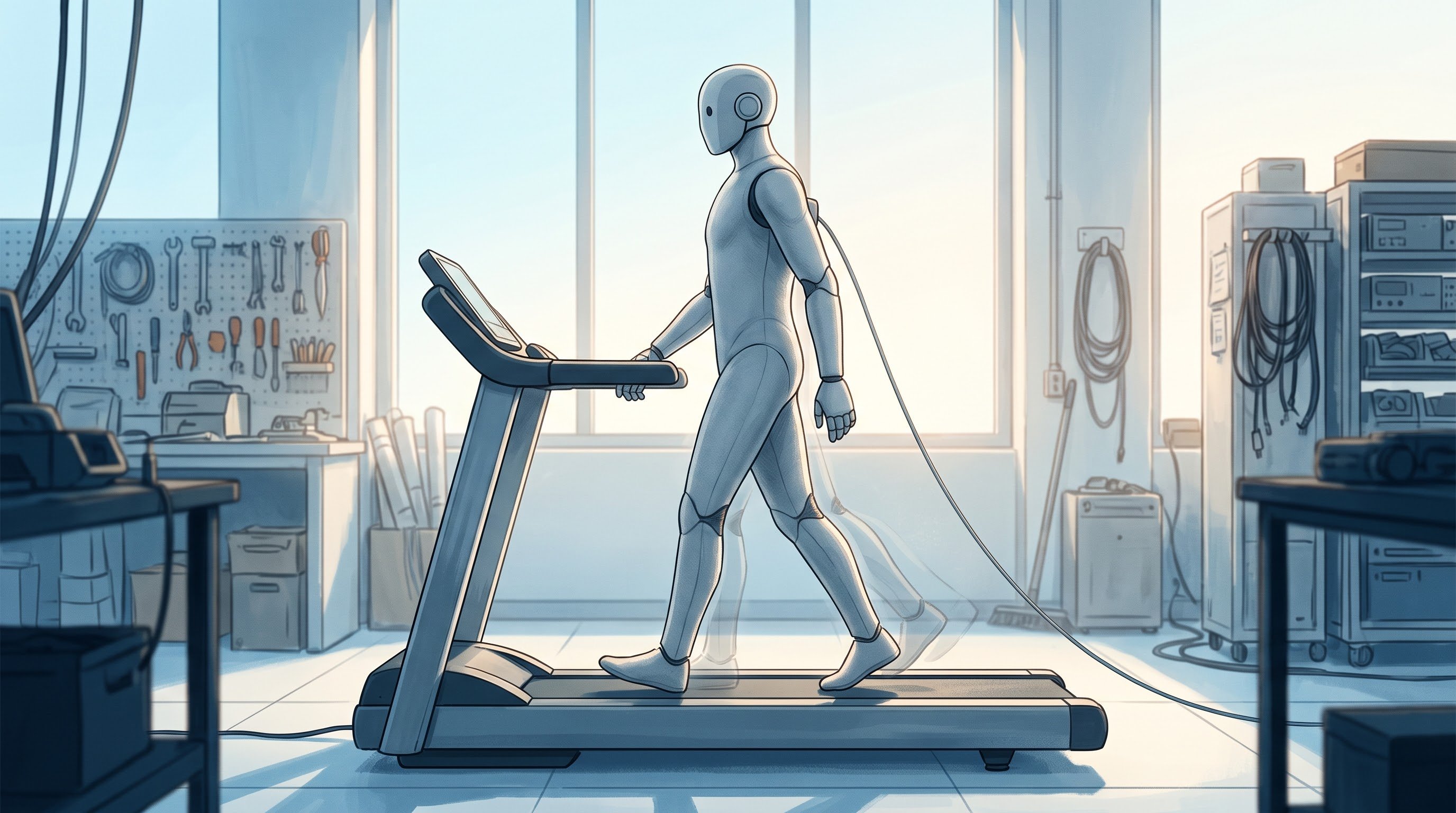
A humanoid robot from the American company Figure AI has been walking on a treadmill for nine days in a row: more than 560 kilometres and 1.2 million steps, reports chief executive Brett Adcock. The trial is meant to find weak spots in the hardware and is still running.
-
Home-built drone flies and steers with a single propeller
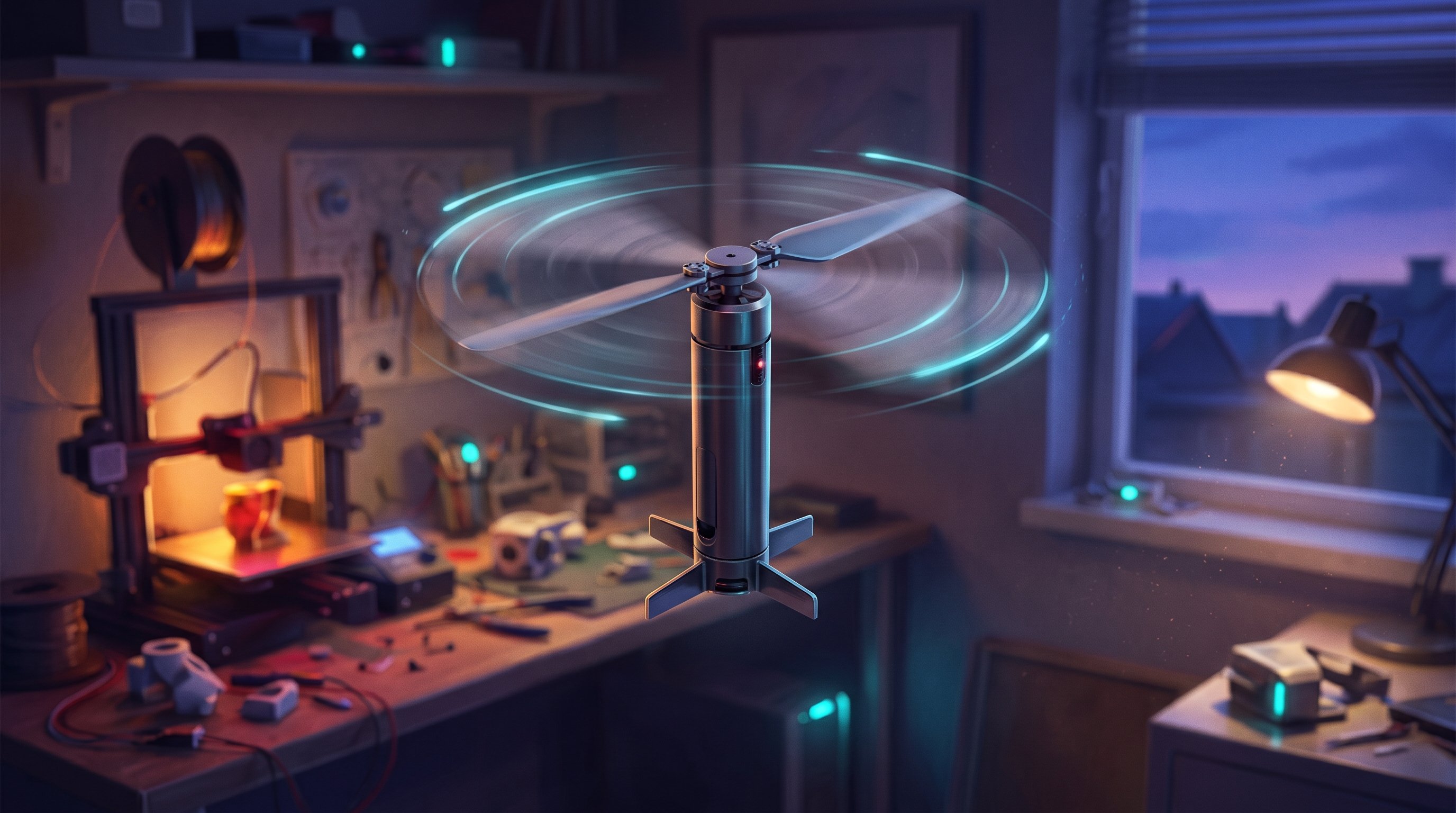
Maker Joshua Bird built a small drone at home that flies and steers with one motor and one propeller. The secret lies in a hinge in the hub and lightning-fast motor control. The design files and code are free online.
-
Chinese company MiniMax releases fast and cheap AI model for agents
The Chinese AI company MiniMax has released M3.1 Flash, a model for AI agents that carry out tasks on their own. According to MiniMax, it is almost three times as fast as its predecessor and an agent task costs 70 per cent less. Independent tests will now follow.
-
Brain-inspired chip keeps up with a million measurements per second from a fusion reactor
An American team tested a superconducting chip that works like a network of brain cells. It processed measurements from a fusion reactor as fast as they came in. Next year, a chip ten times larger will monitor the reactor itself.